

More news on this day
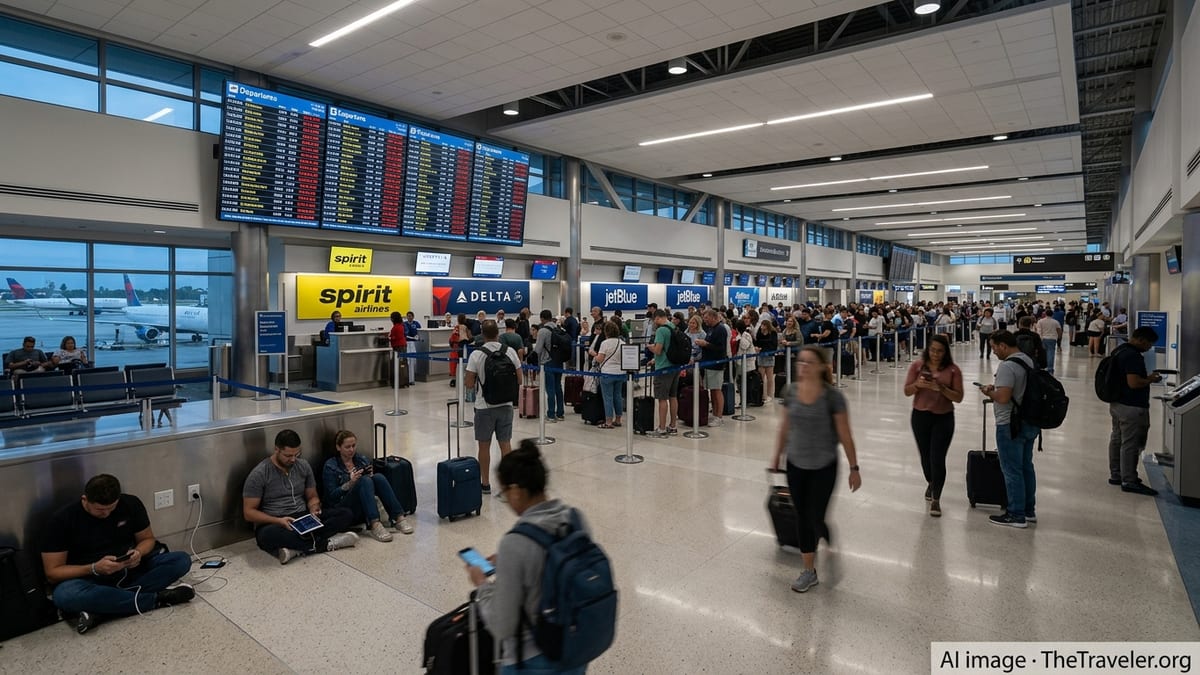
Travelers at Fort Lauderdale–Hollywood International Airport faced a turbulent start to their journeys as Spirit Airlines, Delta Air Lines and JetBlue Airways suspended 17 flights and logged well over 100 delays, sending disruption ripples through major domestic and Caribbean routes including New York, Kansas City, Columbus, Detroit and Sint Maarten.
Get the latest news straight to your inbox!
Operations Snarled as Cancellations and Delays Mount
Publicly available flight tracking data for Fort Lauderdale–Hollywood International Airport on Friday shows an unusual spike in schedule disruptions affecting several of the airport’s largest carriers. Spirit Airlines, Delta Air Lines and JetBlue Airways collectively suspended 17 flights while more than 100 additional services experienced significant departure or arrival delays, creating rolling backups across terminals.
The affected flights include a mix of early morning and peak daytime departures, which has intensified congestion as passengers attempt to rebook onto later services. As delays compounded, aircraft and crew rotations were pushed further off schedule, leading to additional knock-on impacts beyond the original cancellations.
Fort Lauderdale–Hollywood International is a major base for ultra low cost and leisure focused flying, and schedule disruptions tend to cascade quickly. The latest interruptions have further exposed how sensitive the airport’s operations can be when multiple carriers encounter problems at the same time.
Reports from aviation trackers indicate that delay intervals stretched well beyond an hour for many departures, with some aircraft held at gates while airlines worked through congestion in both the terminal and the wider route network.
Key Routes to New York, Midwest Hubs and the Caribbean Affected
The wave of disruptions has been felt far beyond South Florida. Flight records for the day show suspended and heavily delayed services on routes from Fort Lauderdale to major hubs such as New York area airports, Detroit, Kansas City and Columbus, as well as leisure destinations including Sint Maarten in the Caribbean.
New York bound services are among the most heavily traveled routes from Fort Lauderdale, and interruptions there tend to spread quickly through airline networks. Delays on these sectors mean passengers misconnect with onward flights to other East Coast and transcontinental destinations, forcing carriers to rebook travelers over a period of days rather than hours.
Midwest cities including Kansas City and Columbus have seen a smaller number of direct cancellations, but these routes often rely on tightly timed aircraft turns. When an inbound aircraft arrives late or does not arrive at all, the corresponding outbound flight from Fort Lauderdale is either pushed back substantially or removed from the schedule, narrowing options for travelers attempting to return home at the end of the workweek.
Service to Sint Maarten and other Caribbean airports has also been affected, complicating itineraries for vacationers and cruise passengers. With limited daily frequencies on many of these leisure routes, a single cancellation can disrupt plans for an entire weekend, particularly when alternative seats are scarce during peak travel periods.
Travelers Confront Long Lines, Rebookings and Added Costs
Accounts shared on social platforms by passengers at Fort Lauderdale describe long lines at check in counters, crowded gate areas and extended waits for updated information about revised departure times. Travelers report repeatedly pushed back boarding estimates and same day cancellations announced only after several hours of delay.
Some passengers indicate they have turned to competing carriers at significant additional expense when their original flights were suspended or when the next available seat on the same airline was one or two days later. In several cases described publicly, last minute one way fares on other airlines have run into the hundreds of dollars, on top of nonrefundable hotel nights and missed work days.
Others have opted to reposition to nearby South Florida airports when possible, booking new tickets out of Miami or West Palm Beach to salvage travel plans. However, with South Florida in the midst of a busy travel period, same day availability has been limited, deepening frustration among stranded travelers.
Customer experiences shared online highlight a familiar pattern seen during previous disruption events across the United States, where relatively small numbers of flight cancellations can translate into widespread inconvenience as rebooking options narrow and support channels become overwhelmed.
Underlying Strains Highlighted in Airline and Airport Networks
While the immediate causes of the specific suspended flights and delays vary by carrier and route, the disruptions at Fort Lauderdale have drawn renewed attention to structural strains within the broader aviation system. Recent coverage of air traffic control staffing shortfalls in key sectors, along with weather related bottlenecks and tight airline scheduling, has underscored how quickly routine operations can fall behind.
Analysts note that Fort Lauderdale–Hollywood International has grown rapidly as a focus city for low cost and hybrid carriers, which often run aircraft on intensive daily rotations to keep fares low. This model leaves relatively little slack in the system when irregular operations occur, whether due to congestion, crew availability issues or broader network constraints.
Industry commentary also points to the cumulative effect of recent national weather events and infrastructure challenges, which have forced airlines to reposition fleets and crews repeatedly in early 2026. Under such conditions, a local spike in delays at a major leisure hub like Fort Lauderdale can quickly ripple through connecting cities across multiple regions.
For passengers, that means a higher likelihood that a delay or cancellation at one airport will affect travel plans hundreds or thousands of miles away, as seen in the knock on impacts on flights serving New York, Midwest gateways and Caribbean islands.
Guidance for Upcoming Travelers Using Fort Lauderdale
With irregular operations at Fort Lauderdale–Hollywood International still working their way through airline schedules, travel experts are advising passengers with upcoming departures to build in additional buffer time. Many suggest arriving earlier than usual at the airport, monitoring flight status frequently and keeping airline apps or notification services enabled throughout the day.
Public guidance from aviation and consumer advocates emphasizes the importance of knowing passenger rights in the event of cancellations or long delays, particularly when disruptions are not attributed to severe weather. Travelers are encouraged to review airline policies on meal vouchers, hotel accommodations and rebooking options before arriving at the airport.
Those connecting through Fort Lauderdale are also being urged to consider longer layovers where possible, or to examine alternative routings through other hubs if their itineraries involve tight connections to or from cities such as New York, Detroit, Kansas City, Columbus or Caribbean destinations.
As airlines work to restore normal operations, the situation at Fort Lauderdale–Hollywood International serves as another reminder of how fragile busy travel corridors can be, and how a concentrated burst of suspensions and delays in one major market can quickly reverberate across an entire region.