

More news on this day
Fort Lauderdale-Hollywood International Airport experienced a fresh wave of operational disruption, with publicly available tracking data showing 11 flight cancellations and roughly 240 delays affecting major U.S. airlines and hundreds of passengers across South Florida.
Get the latest news straight to your inbox!
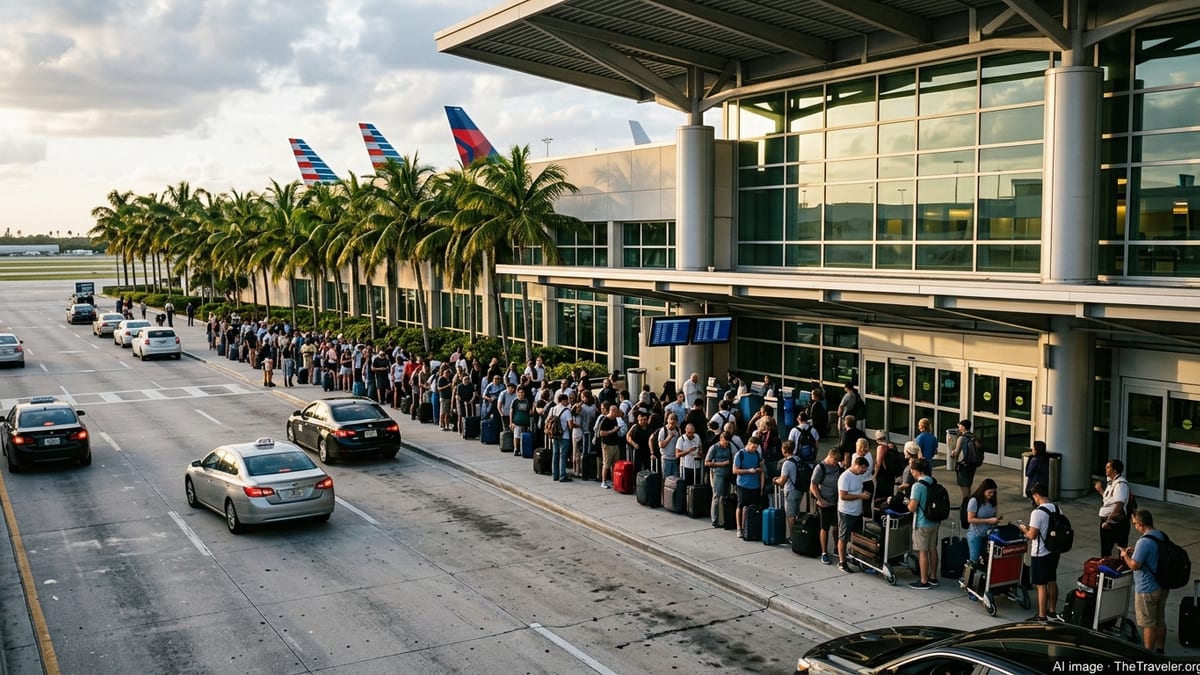
Tracking Data Shows Concentrated Disruptions at FLL
Flight-tracking platforms monitoring Fort Lauderdale-Hollywood International Airport on Saturday indicated a cluster of schedule problems, with 11 flights canceled and around 240 departures and arrivals delayed over the course of the day. The figures placed the busy South Florida hub among the more affected U.S. airports for operational reliability, even as many other major gateways reported comparatively smoother operations.
Published coverage and airport operations dashboards suggest that the bulk of disruptions unfolded gradually rather than as a single dramatic shutdown. Delays built through the morning and afternoon periods, a pattern that aviation analysts often describe as a cascading effect, where an early backlog of late-arriving aircraft and crews ripples through the rest of the schedule.
The disruption totals at Fort Lauderdale remain far below the large-scale meltdowns seen during severe winter storms or major airline system failures in recent years, but they are still significant for passengers moving through one of Florida’s most important leisure and cruise gateways. Travel data for South Florida consistently show that even moderate schedule shocks can generate long customer service lines and missed onward connections when they coincide with peak travel periods.
Operational statistics compiled in recent transportation reports indicate that Fort Lauderdale has periodically ranked among the more delay-prone large airports in the United States, particularly during periods of strong thunderstorm activity or when national air traffic control constraints intersect with the region’s busy tourism demand.
Major Airlines Feel the Strain Across Their Networks
The latest disruptions at Fort Lauderdale affected operations for the country’s largest carriers, including American Airlines, Delta Air Lines, United Airlines and Southwest Airlines, all of which maintain sizable schedules in South Florida. Publicly accessible timetables and delay logs indicate that many of the affected flights were part of broader multi-leg routings, meaning issues in Fort Lauderdale quickly spread to other airports in the network.
Industry commentary following recent winter storms and technology outages has highlighted how tightly scheduled modern airline operations have become. When an aircraft or crew ends up out of position because of a delay in one city, the impact frequently extends to several subsequent flights, sometimes in completely different regions. This dynamic appears to have played a role in the pattern visible at Fort Lauderdale, where scattered early delays contributed to a larger grid of late departures by evening.
Recent federal transportation statistics and independent analyses of U.S. flight performance show that carrier-related causes, including tight scheduling, maintenance checks and crew availability, are responsible for a substantial share of delays. Weather and traffic-control constraints remain critical factors, but the balance between controllable and uncontrollable causes has been a growing focus for consumer advocates and policymakers.
Major airlines have responded over the past two years by trimming some off-peak frequencies, adjusting connection windows and investing in new tools to reassign aircraft and crews more quickly when irregular operations occur. However, the level of disruption seen at Fort Lauderdale underlines that even with these measures, relatively modest operational shocks can still translate into hundreds of delayed flights in a single day at a major leisure hub.
Weather, Airspace Constraints and Seasonal Crowds Intersect
South Florida’s aviation system is particularly sensitive to the combined effects of convective weather, congestion in the broader East Coast airspace and pronounced seasonal travel peaks. Historical reporting on the 2023 and 2024 flooding events in the region documented how intense rainfall and ground stoppages at Fort Lauderdale and nearby Miami significantly disrupted schedules for days at a time, illustrating the vulnerability of airports built near low-lying coastal areas.
Even in the absence of extreme events, routine afternoon thunderstorms and high humidity can reduce arrival and departure rates, forcing air traffic managers to space flights farther apart. When this coincides with heavy weekend travel periods, as has frequently occurred during recent spring and summer seasons, airports like Fort Lauderdale can see on-time performance decline sharply in a matter of hours.
Nationally, a series of powerful winter storms in early 2026 and ongoing staffing challenges in segments of the air traffic control system have also contributed to elevated delay and cancellation numbers at several large hubs. Although Fort Lauderdale has avoided some of the worst weather, its role as a destination for connecting passengers from northern cities means that schedule problems elsewhere often translate into late or canceled flights in South Florida.
Aviation analysts note that this web of dependencies limits the ability of any single airport to insulate itself fully from national disruptions. For travelers, that reality translates into a heightened risk of irregular operations during busy holiday periods and throughout the traditional spring break and winter escape season in Florida.
Impact on Passengers and Travel Plans
The 11 cancellations and roughly 240 delays at Fort Lauderdale translated into missed connections, extended time in terminals and, in some cases, overnight stays for passengers attempting to reach cruises, resort stays and international onward flights. Publicly available social media posts and online message boards captured frustration from travelers confronting long customer service lines and rebooking challenges as schedules shifted throughout the day.
Consumer advocates regularly emphasize that passengers affected by cancellations or significant delays should document their experiences carefully, monitor airline notifications and review the specific policies of their carrier. Recent federal initiatives have encouraged airlines to display customer service commitments more clearly, including whether they provide meal vouchers, hotel accommodation or rebooking on other airlines during controllable disruptions.
Reports indicate that some travelers at Fort Lauderdale were able to secure same-day rebooking or alternative routings through Miami, Orlando or Tampa, depending on seat availability and fare conditions. Others faced longer waits as limited spare capacity and weather-driven backlogs in other parts of the country constrained options. For travelers on tightly timed cruise departures from Port Everglades, even relatively short delays at the airport can introduce considerable stress and financial risk.
Travel-planning specialists often recommend that cruise passengers and those with important events in South Florida arrive at least a day early during periods of elevated disruption risk. The latest sequence of delays and cancellations at Fort Lauderdale is likely to reinforce that advice for many visitors who experienced first-hand how quickly a routine travel day can unravel.
What Travelers Can Expect Next at Fort Lauderdale
As airlines and airport operators work through the latest wave of disruptions, operational data typically show a gradual return to more normal schedules over the following 24 to 48 hours, assuming no renewed weather or system shocks. For Fort Lauderdale, that means a focus on clearing aircraft and crew imbalances, accommodating displaced passengers and restoring on-time departure rates to seasonal norms.
Publicly available forecasts and airline booking trends suggest that demand for South Florida travel will remain strong into the spring and early summer period, keeping pressure on airport infrastructure and airline operations even after the current disruption subsides. Carriers may adjust scheduling patterns, swap aircraft types or add contingency buffers on key routes to and from Fort Lauderdale in an effort to improve resilience.
For passengers planning upcoming trips through the airport, travel experts recommend closely monitoring flight status on the day of departure, considering earlier departures when possible, and allowing extra time for check-in, security and potential re-accommodation needs. While no strategy can fully eliminate the risk of disruption, proactive itinerary planning and awareness of passenger rights can soften the impact of irregular operations when they occur.
The latest episode at Fort Lauderdale highlights enduring structural pressures across the U.S. aviation system, where busy leisure gateways, high seasonal demand and interconnected airline networks make it increasingly difficult to contain even moderate operational shocks. As travel continues to rebound and infrastructure projects progress slowly, similar disruption clusters are likely to remain a recurring feature of the national air travel landscape.