

More news on this day
Fort Lauderdale–Hollywood International Airport faced a sudden operational meltdown this week, as hundreds of flights to major hubs including New York JFK, Atlanta and Charlotte were abruptly cancelled, leaving spring break and business travelers scrambling for scarce alternatives and overnight accommodations.
Get the latest news straight to your inbox!
Storm Chaos and a Fragile Spring Network
The disruption at Fort Lauderdale unfolded against a wider backdrop of severe mid-March storms sweeping across large parts of the United States. Publicly available aviation and weather data for March 16 and March 17, 2026, show a powerful system driving thousands of cancellations at major airports from New York to Atlanta, creating a fragile national network that quickly cascaded into Florida.
Although Fort Lauderdale itself avoided the worst of the blizzard and ice conditions seen farther north, the airport’s heavy reliance on connections through weather-hit hubs amplified local impacts. Flights scheduled to depart for New York JFK, Atlanta and Charlotte were among those most affected, as crews, aircraft and arrival slots upstream were thrown off schedule or removed from service entirely.
Published airline-status dashboards on Tuesday and Wednesday showed wave after wave of cancellations and rolling delays on key trunk routes, with some airlines suspending entire blocks of flights to the Northeast during peak hours. With national operations already stretched by the broader storm complex, Fort Lauderdale’s problems quickly shifted from a local inconvenience to a full-fledged meltdown.
Travel industry trackers reported that the situation was exacerbated by the broader surge in March travel demand, with leisure passengers, cruise traffic and early spring break crowds all converging on South Florida. That combination of packed planes and limited slack in schedules left little room to absorb the shock of so many grounded flights at once.
Hubs Cut Off: JFK, Atlanta and Charlotte Hit Hard
Fort Lauderdale’s role as a key Southeast gateway meant the cancellations had outsized consequences for passengers needing to connect through major hubs. Flights to New York JFK, one of the nation’s busiest international and domestic transfer points, saw extensive disruption as carriers adjusted operations in response to weather and air-traffic constraints in the Northeast. Publicly available reports indicated that several early-morning and mid-day departures were dropped outright, while others were delayed beyond connection windows.
Links to Atlanta and Charlotte, both critical connecting hubs for travelers heading into the Midwest, West Coast and smaller regional markets, also deteriorated during the height of the meltdown. Airline status boards showed multiple Fort Lauderdale departures to those cities scrubbed or pushed back by hours. For travelers counting on same-day transfers, a single missed leg often meant an unscheduled overnight stay, unexpected hotel costs or the need to rebook entirely different routings.
Capacity constraints at the hubs further complicated recovery. With Atlanta and Charlotte dealing with their own volume of weather-related cancellations and residual backlogs, there were limited open seats available for rebooked Fort Lauderdale passengers. Industry tools that monitor load factors suggested many replacement flights were already close to full, forcing some travelers to accept multi-stop routings or departures several days later.
The ripple effect extended well beyond the headline hubs. As space into JFK, Atlanta and Charlotte tightened, airlines also pulled back on connections to secondary cities, concentrating scarce aircraft and crews on the densest routes. This in turn left travelers bound for smaller destinations with even fewer options and longer recovery timelines.
Scenes of Gridlock and Growing Frustration
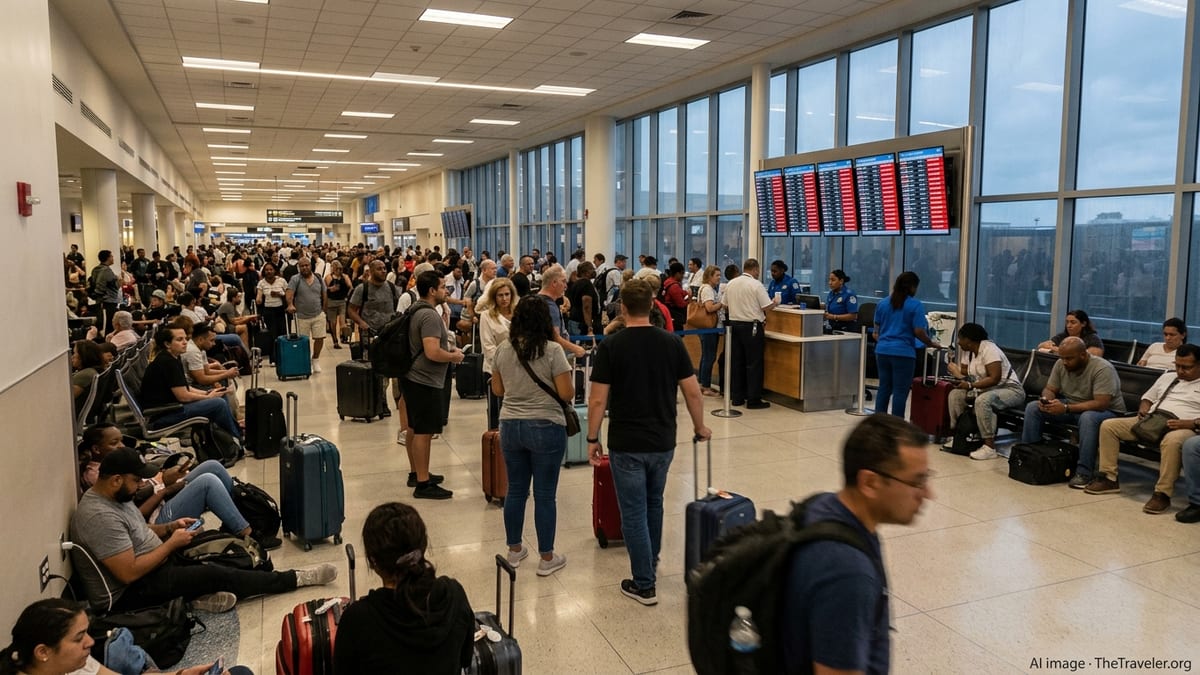
Inside Fort Lauderdale–Hollywood International, the collapse of the schedule translated quickly into crowded concourses, jammed customer-service lines and lengthy queues at rebooking counters. Social media posts from the airport late Tuesday and into Wednesday showed passengers clustered around gate podiums and departure boards, as more flights to northern and inland hubs flipped from delayed to cancelled.
Reports from travelers described hours-long waits to speak with airline staff, with some passengers resorting to calling customer-service hotlines while standing in the same queues. With so many flights scrapped in quick succession, rebooking options for the same day evaporated early, leaving many to choose between standby lists or flight dates several days in the future.
Hotels near the airport and along the Fort Lauderdale waterfront saw a spike in last-minute bookings as stranded travelers scrambled for rooms. Publicly available listings from major hotel platforms showed rapidly tightening availability by Tuesday night, alongside noticeable price increases compared with earlier in the week. Some passengers reported splitting rooms or moving farther inland to find more affordable or simply available accommodations.
Ground transportation added another layer of stress. Recent discussion threads about Fort Lauderdale’s rideshare pickup layout, particularly congestion near the Palm Garage, took on new urgency as surging demand met already stressed traffic flows. With multiple flights offloaded at once and many travelers needing to exit the airport to reach hotels or alternate airports, waits for rideshare vehicles lengthened, and some drivers reportedly avoided the terminal area due to gridlock.
Airlines Struggle to Rebook and Recover
On the airline side, recovery was slowed by the same factors driving the initial cancellations. Published operational updates showed a patchwork of responses, from broad weather waivers allowing free changes on affected routes to targeted re-accommodations for flights touching specific hubs like JFK and Atlanta. However, the sheer number of travelers moving through Fort Lauderdale during the March peak meant that even generous policies did not translate into quick solutions.
Carriers that concentrate their networks in South Florida faced particularly complex logistics, as aircraft rotations through Fort Lauderdale intersected with affected hubs all along the East Coast. When one leg was cancelled due to conditions in a distant city, aircraft and crew availability for subsequent Fort Lauderdale departures could be compromised hours later, resulting in fresh waves of cancellations that appeared disconnected from the original storm.
Publicly available data on aircraft movements indicated that some airlines tried to reposition planes overnight from less affected airports to restore a baseline schedule. Yet with connecting hubs still catching up from earlier disruptions, there were limits to how quickly normality could be restored. Industry analysts noted that in tightly optimized networks with high aircraft utilization, events of this scale can take several days to fully unwind.
The experience also highlighted the vulnerability of popular leisure markets that depend heavily on a small number of trunk routes for connectivity. With JFK, Atlanta and Charlotte all experiencing strains, Fort Lauderdale’s role as an easy-access gateway temporarily disappeared, reminding travelers that even sun-destination airports are tightly bound to the broader national grid.
What Travelers Can Learn for Future Disruptions
The Fort Lauderdale meltdown offers a stark lesson in how quickly conditions can deteriorate when severe weather intersects with peak travel and a tightly wound airline system. Travel advisors and frequent flyers reviewing the episode point to several practical takeaways for those planning trips through busy hubs in volatile seasons.
One key recommendation is to build more margin into itineraries that rely on same-day connections through weather-prone cities, especially during late winter and early spring. Nonstop flights to final destinations, even at a higher fare, may offer more resilience than multi-leg routings that depend on timely arrivals into congested hubs like JFK or Atlanta.
Another lesson is the importance of flexible planning tools. Travelers who had airline apps installed, multiple contact methods set up and alternative routings pre-identified appeared better positioned to grab scarce open seats when cancellations began to spike. Those who acted early, once weather forecasts and preliminary waivers were published, often avoided the worst of the gridlock at Fort Lauderdale.
While the immediate crisis is expected to ease as the national weather pattern stabilizes, the events of mid-March 2026 are likely to inform how airlines and travelers alike approach future storm seasons. For visitors heading into or out of South Florida, the episode serves as a reminder that even a sunny departure gate can be one disrupted hub away from a long and unexpected stay.