

More news on this day
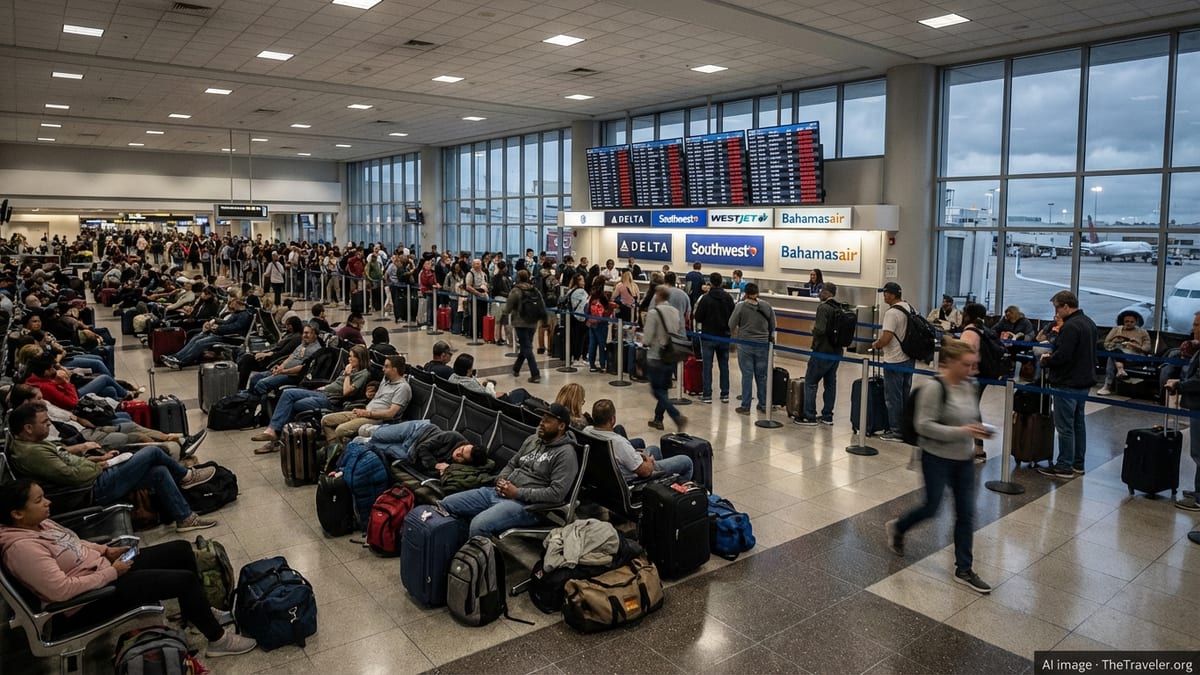
Hundreds of passengers were left camping out at Fort Lauderdale–Hollywood International Airport this week as a wave of delays and cancellations affecting Delta, Allegiant, WestJet, Bahamasair, Southwest and other carriers rippled across the United States, Canada, Mexico and the Caribbean, snarling connections and exposing the fragility of the region’s air travel network.
Fort Lauderdale Becomes the Flashpoint of a Wider Disruption
Fort Lauderdale–Hollywood International Airport in Broward County, Florida, has again become a focal point for travel disruption, with 9 cancellations and more than 100 delays reported on Wednesday, February 19. Airlines operating at the airport, including Delta Air Lines, WestJet, Southwest, Bahamasair, Allegiant, JetBlue and others, reported a combined 110 delays, according to operational tallies shared by aviation data trackers. While the number of outright cancellations remained relatively low, the sheer volume of late departures and arrivals created a cascading wave of missed connections and overnight strandings.
Performance data for the day show that JetBlue logged 34 delayed flights out of Fort Lauderdale, accounting for 19 percent of its scheduled operations, while Delta reported 6 delays and 2 cancellations and Southwest 6 delayed departures. Bahamasair and WestJet, key regional links for the Bahamas and Canada, each recorded multiple delayed services, putting pressure on already tight schedules to Nassau, Freeport, Toronto and other regional hubs. For many travelers, especially those connecting onward to Mexico and the Caribbean islands, the disruption in South Florida quickly turned a routine transit stop into an unexpected layover.
The crisis at Fort Lauderdale unfolded as part of a broader pattern of operational strain across North American carriers. On Thursday, February 20, U.S. airlines reported more than 6,600 delays and over 180 cancellations nationwide, with Delta, Southwest, Allegiant and smaller regional operators such as SkyWest and Horizon all posting significant numbers of late departures. Taken together, the statistics highlight how issues at a single coastal gateway can reverberate across the continent’s tightly interconnected route map.
Fort Lauderdale’s vulnerability is not new. Recent performance analyses have placed the airport among the worst large hubs in the United States for on time operations, with roughly one third of flights arriving late and a small but persistent share canceled. The latest disruption reinforces its reputation as a high risk connection point during periods of operational stress, whether driven by weather, staffing or air traffic constraints.
Passengers Stranded Overnight as Rebooking Options Vanish
Inside the terminals, the statistics translated into a long night for passengers stuck in security halls and gate areas. With hotels near the airport quickly filling up, many travelers resorted to sleeping in seats or on the floor as they waited for rebooked departures. Families returning from Caribbean cruises, winter sun holidays in Mexico and resort stays in the Bahamas described queues at airline counters stretching deep into the concourses as ground staff tried to rebook hundreds of disrupted itineraries onto already crowded flights.
Several travelers reported being told that the next available seats to key hubs such as Atlanta, Toronto, Dallas and Chicago would not be available until late on Thursday or even Friday, turning a single delayed segment into an unplanned multi day interruption. Those connecting to smaller Caribbean islands or secondary Canadian cities were among the hardest hit, because they rely on limited daily flights and have fewer alternative routing options once a single leg is canceled or heavily delayed.
The situation was particularly tense for passengers traveling with small children or elderly relatives, who struggled to secure both information and assistance. Although airlines distributed meal vouchers to some affected travelers, many complained that food outlets were overwhelmed or closed by the time they reached the front of the line. Others said that customer service hotlines and mobile apps were so congested that they were unable to secure rebookings without physically waiting at the airport counter.
For international passengers whose delays turned into overnight stays, complications multiplied. Some foreign travelers transiting through Fort Lauderdale found that they needed to clear immigration and collect their bags, then navigate last minute hotel bookings at elevated prices. Others chose to remain airside, hoping that early morning departures would operate as scheduled, only to face further knock on delays as aircraft and crews remained out of position from previous disruptions.
Airlines Caught Between Weather, Crew Shortages and Network Strain
Behind the departure boards, airlines cited a mix of factors for the spike in delays and selective cancellations. While weather conditions in South Florida were largely favorable, winter storms, low visibility and runway constraints at major hubs elsewhere in the United States and Canada triggered schedule slowdowns that rippled into Fort Lauderdale’s arrivals and departures. When a key inbound aircraft or flight crew reached the airport hours late, it often forced outbound flights to depart behind schedule or be scrubbed entirely when duty time limits for pilots and cabin staff were reached.
Across the broader U.S. network, data from aviation analytics providers show that carriers such as Delta, American, United and Southwest are all contending with elevated delay levels as they push record schedules to meet strong leisure and business demand. On Thursday alone, Delta recorded more than 690 delayed flights, while Southwest approached 1,250 delayed operations. Allegiant and other ultra low cost carriers also reported dozens of delays, even if their outright cancellations remained limited, underscoring how thinly stretched many airlines remain after years of pandemic recovery and fleet reshuffling.
Operational experts say that staffing remains a critical pressure point. Some airlines have only recently rebuilt pilot and flight attendant ranks after earlier furloughs and early retirement programs, and are still training new hires on specific aircraft types and route structures. That leaves little slack when weather or air traffic control programs reduce capacity. Although the most recent Fort Lauderdale disruption did not mirror the mass cancellations seen during major winter storms in January, it nonetheless revealed how quickly delays can pile up when schedules operate near their limits.
Regional factors also played a role. Fort Lauderdale is heavily reliant on carriers that run point to point leisure service to beach destinations, cruise gateways and resort cities, rather than on traditional hub and spoke models. When an aircraft running a multi segment rotation between, for example, Toronto, Fort Lauderdale, Cancun and a Caribbean island falls behind schedule, each subsequent leg risks further delay. That pattern, repeated across multiple airlines, contributed to the 231 delays reported by North American carriers serving the Fort Lauderdale corridor into the Caribbean, Mexico and Canada across the two day disruption period.
Ripple Effects Across Canada, Mexico and the Caribbean Islands
The immediate chaos at Fort Lauderdale concealed a broader regional picture of disrupted travel. Canadian carriers such as WestJet and Air Transat reported knock on delays affecting flights linking Fort Lauderdale and other U.S. gateways to Toronto, Montreal and western Canadian cities, complicating winter sun itineraries for travelers escaping the cold. In some cases, passengers arriving late from Florida missed onward domestic Canadian flights, forcing overnight stops far from their final destinations.
In the Caribbean, national and regional airlines including Bahamasair, Western Air and others saw schedules stretch as aircraft and crews were forced to wait for late arriving connecting passengers and inbound aircraft from Florida. With relatively small fleets and limited spare capacity, these carriers have less flexibility to swap aircraft or crews at short notice. A late arriving Fort Lauderdale flight into Nassau or Freeport, for example, can delay a subsequent departure to a family island, setting off a chain of late flights that lasts throughout the day.
Mexico’s major resort gateways also felt the strain. Airlines operating between Fort Lauderdale and popular destinations such as Cancun and Cozumel reported rolling delays as aircraft repositioning from other disrupted U.S. hubs arrived behind schedule. Though outright cancellations on these routes remained modest, even a one to two hour delay can lead to missed hotel check in windows, lost prebooked excursions and added expense for ground transport and meals, particularly during the busy winter travel season.
Industry analysts note that such ripple effects are now a defining feature of modern air travel in the Americas. With airlines optimizing schedules for efficiency and maximizing aircraft utilization, there is little margin to absorb disruption at a key node such as Fort Lauderdale. As a result, a seemingly localized spike in delays and cancellations can quickly manifest as a regional challenge stretching from Canadian snow belt cities to Caribbean islands and Mexican beach towns.
Fort Lauderdale’s Troubled Record on Punctuality
The latest disruption has renewed scrutiny of Fort Lauderdale–Hollywood International’s record on reliability. Recent analyses of U.S. airport performance show that Fort Lauderdale has some of the highest delay rates among major international airports, with roughly one in three flights arriving late and a nontrivial share being canceled. This places it alongside other congestion prone hubs such as Denver, Orlando and Baltimore in terms of operational volatility.
Several factors contribute to the airport’s challenges. Its role as a base for multiple low cost carriers means that many airlines schedule tight turnarounds, leaving limited padding for delays. High volumes of leisure travel, cruise ship turnarounds and seasonal peaks amplify the pressure, especially during holidays and long weekends. In addition, Fort Lauderdale’s coastal location exposes it to periods of intense rain, thunderstorms and strong winds, particularly during the summer, that can quickly overwhelm runway capacity and ground operations.
The airport’s physical constraints also play a role. While past investments have expanded terminals and improved runway infrastructure, Fort Lauderdale still operates in a relatively compact footprint compared with nearby Miami International. Gate availability can become a bottleneck when irregular operations force aircraft to remain parked longer than scheduled. Ground handling crews and baggage systems, already working at high utilization, can struggle to keep up when multiple flights arrive late in quick succession.
Local tourism and business groups have called for closer collaboration between the airport, airlines and federal agencies to improve resilience. Proposals include smarter scheduling during peak periods, better data sharing between carriers and air traffic control to anticipate bottlenecks, and expanded customer care facilities for stranded travelers. For now, however, passengers are advised to build extra time into their itineraries when connecting through Fort Lauderdale, particularly during winter and summer weather seasons.
What Stranded Passengers Can Expect in Terms of Support
As the disruption unfolded, questions quickly surfaced about what airlines are required to provide when flights are heavily delayed or canceled. In the United States, there is no single comprehensive federal rule mandating compensation for delay, but airlines are obliged to offer either a rebooked itinerary or a refund when they cancel a flight or significantly change its schedule. Many major carriers also provide meal vouchers, hotel accommodations and ground transport when disruptions are deemed within the airline’s control, such as maintenance or crew scheduling problems.
Passengers affected by the Fort Lauderdale delays reported mixed experiences. Some said that agents proactively rebooked them on the next available flight and issued hotel and meal vouchers when overnight stays became unavoidable. Others, particularly those traveling on basic economy or discounted tickets, said they were simply directed to online tools and told that accommodation would be at their own expense. Travel insurance, where purchased, became a critical safety net for some families, covering hotel stays and rebooked flights when airline support fell short of expectations.
Consumer advocates advise that stranded travelers document their interactions with airlines, keep receipts for any out of pocket expenses and check both the carrier’s contract of carriage and any credit card travel protections that might apply. In Canada and parts of the Caribbean, where passenger rights frameworks can be more prescriptive, travelers may be entitled to additional compensation when disruptions are within an airline’s control. However, when delays stem from severe weather or air traffic control restrictions, carriers often classify them as outside their control, limiting the scope of compensation.
For international passengers passing through Fort Lauderdale on their way between Canada, Mexico and the Caribbean, rules can be particularly complex. Different regimes may apply depending on whether the journey is considered a single itinerary, what airline is operating each segment and where the disruption occurs. Experts recommend that travelers planning multi leg journeys through South Florida review policies in advance and build sufficient time between connections to reduce the risk of missed flights.
Calls for Greater Transparency and Planning as Peak Travel Continues
The latest wave of delays and cancellations has prompted renewed calls from passenger groups and industry observers for greater transparency around airline operations, especially during busy travel periods. With more than 6,600 delays recorded across the United States in a single day and 231 affecting routes linked to Fort Lauderdale alone, advocates argue that travelers need clearer, earlier information about the likelihood of disruption so they can adjust plans before arriving at the airport.
One proposal gaining attention is for airlines and airports to share more real time performance dashboards, detailing where bottlenecks are emerging and what steps are being taken to recover operations. Some carriers already provide estimated recovery times during severe weather events, but critics say that information is often inconsistent or only available through scattered statements rather than centralized, consumer friendly tools. Improved transparency, they argue, could help travelers decide whether to accept voluntary rebooking or refunds before a disruption escalates.
In the meantime, aviation analysts say that passengers can take practical steps to mitigate risk. Booking earlier flights in the day, avoiding tight connections, favoring hub airports with more alternative routing options and closely monitoring flight status through airline apps and third party trackers can all reduce the likelihood of being stranded. For those transiting through Fort Lauderdale to reach the Bahamas, Mexico or the Caribbean islands, choosing slightly longer layovers and considering alternative gateways such as Miami or Orlando may also offer added insurance during peak seasons.
The events of this week underline a broader reality: as airlines across the United States, Canada, Mexico and the Caribbean continue to chase strong demand with dense schedules, the system remains vulnerable to sudden shocks. Until carriers and airports build more resilience into their operations, passengers connecting through critical nodes like Fort Lauderdale will remain exposed to the risk of abandoned itineraries and nights spent under fluorescent lights instead of tropical skies.