

More news on this day
Hundreds of passengers departing Fort Lauderdale–Hollywood International Airport were left stranded after a cascading wave of cancellations disrupted flights to New York JFK, Atlanta, Charlotte and other major hubs, compounding a week of severe weather and fragile airline operations across the eastern United States.
Get the latest news straight to your inbox!
Stormy Skies and System Strain Trigger Fresh Disruptions
The latest meltdown at Fort Lauderdale unfolded against a backdrop of powerful storms sweeping across large parts of the country and a broader pattern of stressed airline operations. Recent reports describe severe weather systems pushing across the eastern half of the United States, prompting thousands of cancellations and delays at major airports from New York to Atlanta. As those hubs struggled to recover, Fort Lauderdale’s tightly timed schedule began to unravel.
Publicly available weather summaries for mid-March indicate that strong storm fronts and high winds have repeatedly disrupted flight paths along the busy East Coast corridor. When conditions deteriorate at primary hubs such as New York JFK, Atlanta and Charlotte, aircraft and crews that normally cycle through Fort Lauderdale are often delayed or diverted, leaving gaps in the schedule that can quickly cascade into widespread cancellations.
Operational data shared in recent aviation performance reviews also highlight that Fort Lauderdale already suffers an above-average rate of delays compared with many U.S. airports, with arrival holdups frequently averaging close to an hour. In periods of severe weather, that baseline vulnerability can magnify into the kind of large-scale disruption now playing out for spring travelers.
Reports from flight-tracking dashboards and airline advisories on Wednesday showed Fort Lauderdale departures heavily affected on routes to key connection points. JFK-bound services, high-frequency shuttles to Atlanta, and trunk flights to Charlotte saw successive cancellations through the day, while remaining departures faced rolling delays as carriers worked to reposition aircraft and crews.
Ripple Effects Hit JFK, Atlanta, Charlotte and Beyond
The problems at Fort Lauderdale quickly rippled through already crowded networks centered on New York, Atlanta and Charlotte. Airlines rely on these hubs to redistribute passengers around the country; when feeders from South Florida are cut, missed connections and aircraft imbalances spread the disruption to cities far from the original storm zone.
According to published coverage on recent storm-related travel chaos, the Federal Aviation Administration has periodically slowed traffic into major East Coast airports, including JFK and Atlanta, during bursts of severe weather. Those directives force airlines to trim schedules, delay inbound flights and, in many cases, cancel entire rotations when crews and aircraft can no longer be kept in legal working patterns.
In practice, that means a single grounded departure from Fort Lauderdale can strand travelers not only in South Florida, but also in secondary destinations such as smaller Midwestern or Southern cities that rely on connections through the big hubs. Social media posts in recent days have described travelers rebooked multiple times, routed through unfamiliar airports or offered connections several days later as carriers attempt to absorb the shock.
Charlotte, a key connection point for flights linking Florida to the Midwest and Northeast, has also featured prominently in passenger accounts of disruption. Observers note that when storms or congestion choke Atlanta, airlines sometimes shift additional widebody aircraft into Charlotte or other hubs, but that strategy can temporarily worsen bottlenecks when inbound flights from Fort Lauderdale and other Florida airports do not arrive as planned.
Passengers Confront Long Lines, Sparse Information and Limited Options
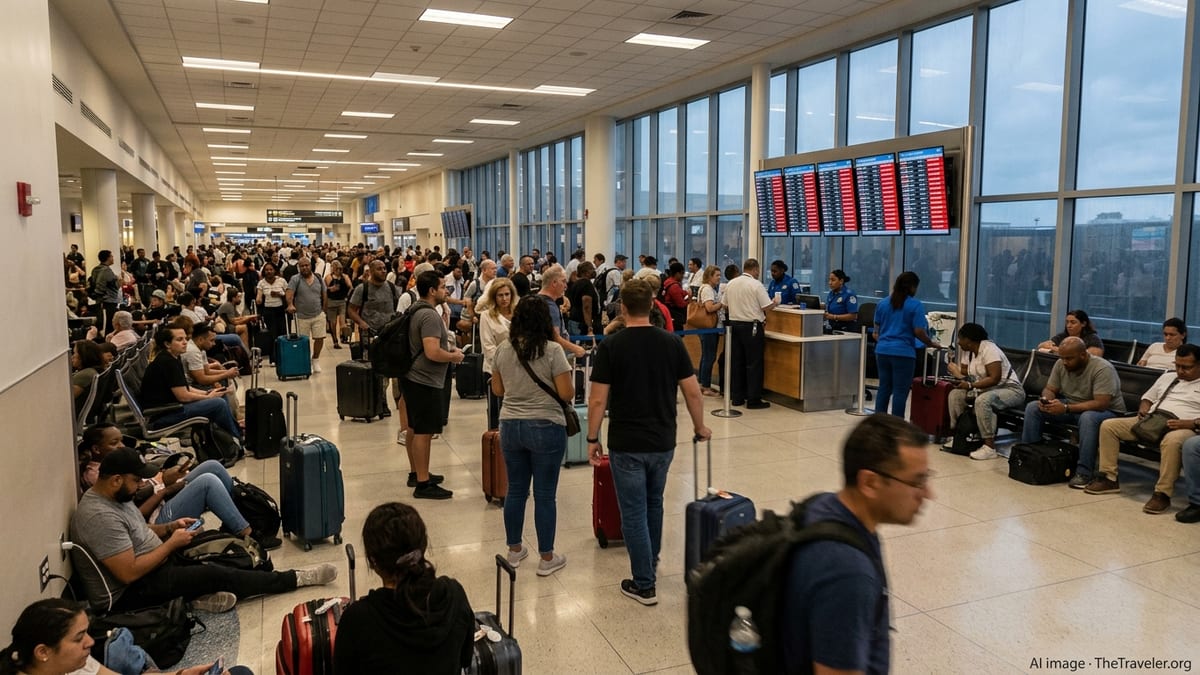
Inside Fort Lauderdale’s terminals, travelers reported scenes of mounting frustration as departure boards filled with red cancellation notices. Long queues formed at airline service counters as passengers attempted to secure new seats, vouchers or hotel rooms amid shrinking same-day options. With many flights into major hubs already oversold or heavily booked for spring travel, rebooking quickly became a challenge.
Accounts circulating on travel forums and social platforms describe passengers sleeping in gate areas, waiting hours in line for assistance, or trying to rearrange multi-stop itineraries involving JFK, Atlanta and Charlotte. Some travelers reported that their original nonstop flights from Fort Lauderdale were replaced with complex routings through secondary hubs, often departing a day or more later.
Limited staffing has added another layer of strain. Public information from recent federal performance reviews points out that peak travel periods have tested airport resources across the country, especially during early mornings and late evenings when storm-related delays begin to stack up. At Fort Lauderdale, long security lines and crowded concourses have been a recurring concern for travelers, and the latest meltdown appears to have amplified those conditions.
Ride-hailing backups and hotel shortages near the airport have also surfaced in traveler reports, as stranded passengers compete for last-minute rooms and late-night transportation. For visitors unfamiliar with the area, the sudden need to find same-day accommodation along the busy Broward County coastline has added cost and complexity to already disrupted plans.
Airlines Juggle Recovery as Peak Travel Season Looms
The Fort Lauderdale disruption comes at a sensitive moment for U.S. carriers, which are navigating volatile weather, lingering staffing imbalances and high demand heading into the spring and early summer travel season. Recent industry analyses note that large-scale events earlier in the year, including significant winter storms and isolated operational breakdowns at major airlines, have already stressed networks and customer confidence.
Publicly available airline statements in recent months describe a focus on building more buffer into schedules, adding spare aircraft where possible and improving communication tools to keep customers informed when disruptions occur. Yet the latest events around Fort Lauderdale suggest that even with these measures, a combination of strong storms and congested hubs can still push systems to the breaking point.
Analysts observing the current wave of cancellations point out that Florida’s heavy reliance on a few large hubs, particularly Atlanta and Charlotte for connecting traffic, leaves airports such as Fort Lauderdale exposed when those centers falter. When severe weather forces ground delays or route restrictions in the Southeast and along the Mid-Atlantic, the knock-on effects often hit Florida leisure travelers first, with limited alternative routes available on short notice.
As recovery efforts continue, flight-tracking data shows airlines gradually restoring departures from Fort Lauderdale while warning of residual delays and sporadic cancellations. Passengers with upcoming trips through JFK, Atlanta or Charlotte are being advised in public travel alerts to monitor their bookings closely and consider flexible timing where possible, as schedules may continue to shift with changing weather patterns.
What Travelers Can Expect in the Coming Days
Looking ahead, forecasters indicate that the most severe weather associated with the recent storm systems is expected to move away from South Florida, although unsettled conditions could persist along parts of the East Coast. That offers some hope for Fort Lauderdale-bound and departing travelers, but the backlog of displaced passengers and out-of-position aircraft may take additional days to work through.
Based on patterns seen in previous disruptions, airlines are likely to prioritize restoring core trunk routes between Fort Lauderdale and major hubs such as JFK, Atlanta and Charlotte, gradually rebuilding thinner connections once those flows stabilize. Travelers connecting onward to smaller destinations may therefore experience longer rebooking windows or less convenient routings in the short term.
Industry observers recommend that passengers remain prepared for continuing schedule changes, even after skies clear. Same-day notifications, rolling delays and gate changes have become common during recovery phases, especially at airports like Fort Lauderdale where a high percentage of flights already operate near capacity. Carrying essentials in hand luggage, allowing longer connection times and checking flight status repeatedly on day of travel can reduce the risk of missed departures.
For now, the Fort Lauderdale airport meltdown underscores how quickly aviation networks can seize up when adverse weather collides with densely scheduled hub systems. With the peak spring break and early summer travel rush approaching, the episode is likely to renew questions about how much resilience remains in the U.S. air travel system when multiple pressure points align.