

More news on this day
Fort Lauderdale is inviting travelers from around the world to make Black history part of their 2026 travel plans, as the city’s Africana Arts & Humanities Festival prepares an expanded program of literature, performance and cultural dialogue celebrating the African diaspora.
Get the latest news straight to your inbox!
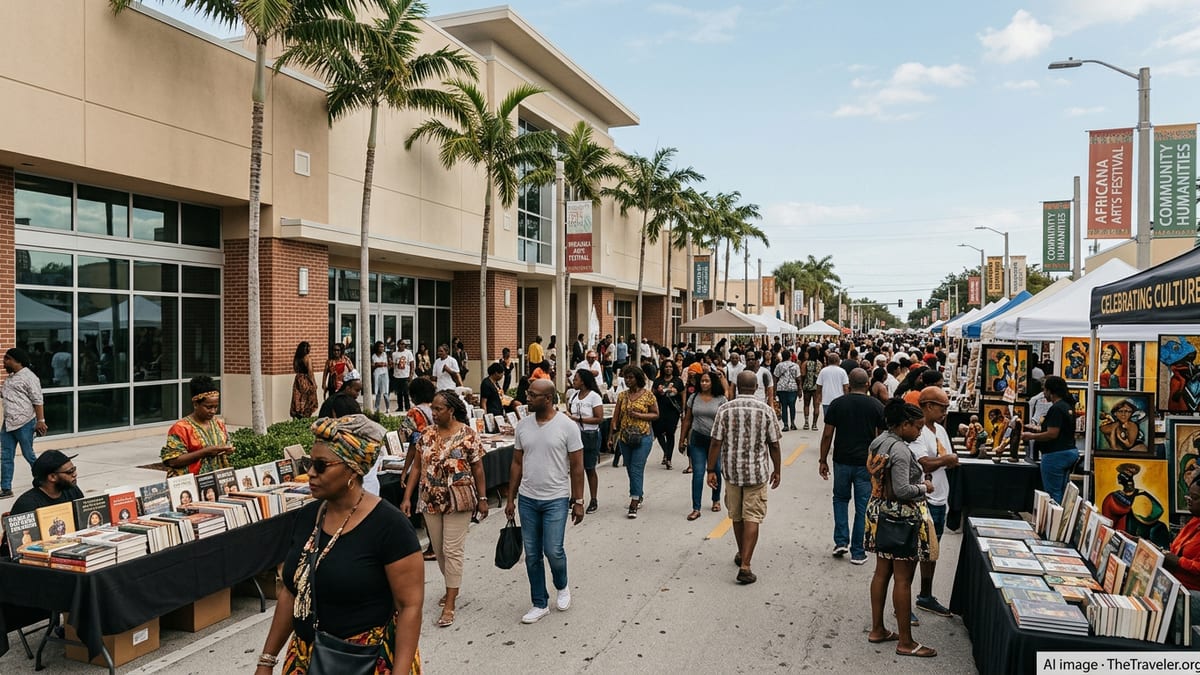
A Showcase for the African Diaspora in South Florida
Hosted by Broward County Library and centered at the African-American Research Library and Cultural Center on Sistrunk Boulevard, the Africana Arts & Humanities Festival has grown into one of South Florida’s signature celebrations of Black culture. Organizers say the 2026 edition will build on recent momentum, inviting a broader international audience to experience the city through the lens of the African diaspora.
The festival blends author talks, academic lectures, youth programming, live performances and curated exhibitions that highlight Black history across the Americas, the Caribbean and Africa. Previous editions have featured conversations with scholars, readings by acclaimed writers and performances from local and visiting artists, turning the library’s 300-seat auditorium and gallery spaces into a hub for cultural exchange.
In 2026, the program is expected to continue that interdisciplinary approach, tying together history, literature, visual arts and community storytelling. While full details are still being finalized, library officials and cultural partners have signaled that the coming year’s theme will focus on how Black communities have shaped global cities like Fort Lauderdale through migration, labor and creative expression.
For Greater Fort Lauderdale, the festival also underscores the city’s effort to spotlight neighborhoods with deep Black roots, including the historic Sistrunk corridor, as essential stops on any cultural travel itinerary.
Programming That Connects Past, Present and Future
The Africana Arts & Humanities Festival is designed as both a learning opportunity and a celebration, with programming that ranges from scholarly conversations to family-friendly activities. Recent festivals have included panels on Black women’s intellectual history, discussions of West African family life, and sessions exploring the evolution of Black aesthetics in fashion and hair, alongside live music, dance and youth workshops.
For 2026, organizers are working with partners across Broward County’s cultural landscape to deepen those offerings. The festival is typically supported by a mix of philanthropic donors, friends groups and the county’s cultural division, which helps bring in guest speakers, artists and curators. That backing has allowed the event to commission new work, host traveling exhibitions and develop youth literacy components that introduce children to Africana literature and storytelling traditions.
Travelers can expect a schedule that moves fluidly between history and contemporary issues, with sessions examining topics such as the Great Migration, Caribbean influence in South Florida, and the role of Black creatives in reshaping urban public spaces. Evening programs often spotlight poetry, theater and music, with performances that invite audience participation and reflect the region’s blend of African American, Afro-Caribbean and Afro-Latin communities.
Importantly, organizers emphasize accessibility. Many events are free and open to the public, a cornerstone of the library’s mission to serve as a cultural commons for locals and visitors alike.
Fort Lauderdale Positions Itself as a Gateway to Black Heritage Tourism
The 2026 Africana Arts & Humanities Festival comes as Fort Lauderdale and Broward County continue to court culturally minded travelers. Tourism officials already promote a year-round calendar of heritage events, from neighborhood festivals to gallery exhibitions and performing arts initiatives that center Black voices. The Africana festival adds a dedicated focus on scholarship and storytelling, offering a deeper dive for visitors seeking more than sun and sand.
The African-American Research Library and Cultural Center itself is a draw. The 60,000-square-foot facility includes an expansive research collection, a permanent art gallery and dedicated spaces for community programming. For international visitors, curated tours and festival-related exhibits provide context on the local Black experience, tracing stories from early settlement through the civil rights era and into contemporary cultural movements.
Beyond the library, the festival’s timing gives travelers a chance to explore other institutions and events across Greater Fort Lauderdale that highlight Black history and creativity. Local arts centers, museums and neighborhood cultural groups frequently coordinate complementary programming during the season, creating an informal circuit of talks, performances and pop-up installations.
Travel planners say this clustering of events makes it easier for visitors to build itineraries that weave together beach time, dining and nightlife with museum visits, walking tours and community gatherings rooted in Black heritage.
A Platform for Local Voices with Global Resonance
While the Africana Arts & Humanities Festival draws on international scholarship and diasporic perspectives, it remains firmly grounded in Broward County’s own communities. Local writers, historians, educators and performing artists are central to the program, using the festival stage to share research, memoir, poetry and performance that reflect life in and around Fort Lauderdale.
This local-global balance is part of the festival’s appeal to international travelers. Sessions often explore how themes in Black history, such as resistance, migration, spirituality and artistic innovation, resonate from South Florida to cities across the Americas and beyond. Visiting scholars and authors bring comparative perspectives, while local participants anchor those discussions in the realities of Sistrunk Boulevard, downtown Fort Lauderdale and neighboring communities.
For many attendees, the atmosphere feels less like a conventional conference and more like an ongoing conversation, where audiences are encouraged to ask questions, share experiences and connect across generations. Youth programming, in particular, gives teenagers and children an active role, from reading circles to creative workshops that respond to festival exhibitions.
Organizers say that openness is intentional, positioning the festival as a living humanities laboratory where travelers can listen, learn and contribute rather than simply observe.
Planning a 2026 Visit Around the Festival
With Fort Lauderdale already preparing for a busy 2026 calendar, including major beachside music festivals and arts events across the region, travel experts recommend that visitors interested in the Africana Arts & Humanities Festival start monitoring dates and program announcements early. The festival typically unfolds over several days with a mix of daytime and evening events, making it possible to balance cultural activities with broader exploration of the city.
Greater Fort Lauderdale’s hospitality sector has been promoting cultural tourism more prominently, highlighting hotels near downtown, Sistrunk and the New River arts corridor for travelers seeking easy access to libraries, museums and theaters. Public transit connections and rideshare options make it straightforward to move between the festival hub, the beach and other neighborhoods.
For global travelers, the Fort Lauderdale-Hollywood International Airport offers extensive domestic and international connections, and the region’s cruise infrastructure adds another entry point for visitors looking to extend a sailing itinerary with a land-based cultural stay. Tourism officials note that interest in heritage-focused travel has been rising, and the 2026 Africana Arts & Humanities Festival is positioned as a timely anchor for such journeys.
As the program takes shape, the message from Fort Lauderdale’s cultural leaders is clear: the city wants the world to see its Black history not as a side note, but as a central narrative in understanding South Florida’s past, present and creative future.