

More news on this day
Fort Lauderdale’s Port Everglades has marked a historic milestone, closing Fiscal Year 2025 with a record 4.7 million cruise passengers and signaling a powerful new phase of Atlantic and Caribbean tourism growth for South Florida.
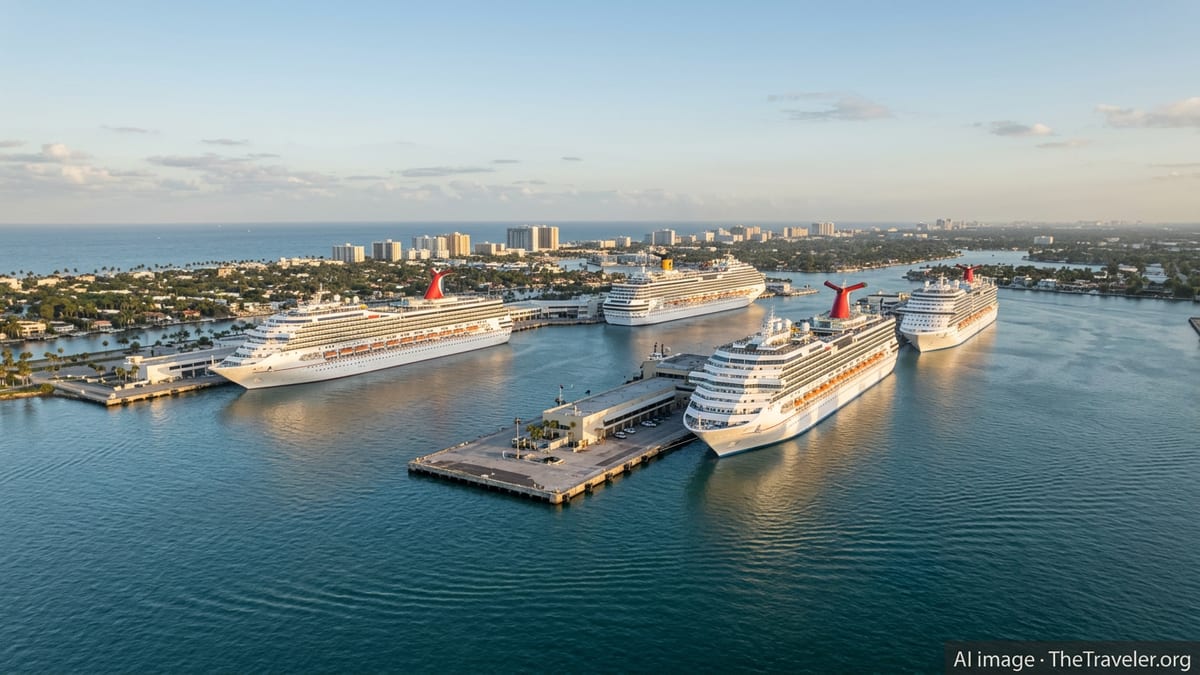
Record-Breaking Year Repositions Fort Lauderdale on the Global Cruise Map
The 4.7 million passenger total for Fiscal Year 2025 firmly establishes Port Everglades among the world’s busiest cruise homeports and underscores how quickly the sector has rebounded and expanded since the pandemic slowdown. Port data and industry reports show cruise throughput rising roughly 16 percent compared with the prior year, when just over 4.1 million guests moved through the port.
The surge reflects a combination of strong consumer demand, expanded ship deployments and the return of full-capacity operations across major brands. With nearly 4.8 million guests now recorded in a single fiscal year, Port Everglades has not only surpassed its pre-2020 performance but also set a new benchmark for cruise activity in Broward County.
Analysts say the numbers are significant because they reposition Fort Lauderdale in the hierarchy of global cruise gateways. While nearby PortMiami and Port Canaveral still handle larger absolute volumes, Port Everglades’ growth rate and mix of international itineraries place it at the center of a broader reshaping of cruise travel across the Atlantic and Caribbean basin.
New Ships, New Itineraries and a Broader Atlantic-Caribbean Footprint
The record year at Port Everglades has been driven in part by a wave of new and larger vessels, along with a deepened roster of itineraries across the Eastern and Western Caribbean and into the Atlantic. Nine major cruise lines now homeport ships in Fort Lauderdale, with around 40 vessels scheduled to sail from the port in the 2025–2026 period.
Among the headline additions are new-build ships such as Celebrity Cruises’ Celebrity Xcel, Princess Cruises’ Star Princess and Disney Cruise Line’s Disney Destiny, each bringing thousands of additional lower berths per sailing and a strong family and premium travel draw. Their arrival for the winter 2025–26 season effectively locks in higher capacity and more frequent departures to marquee island destinations.
At the same time, operators are broadening their deployment strategies beyond traditional seven-night loops. Shorter three- and four-night getaways to the Bahamas and longer, more diverse itineraries reaching into the Southern Caribbean and transatlantic crossings are increasingly common. Industry observers note that this diversification both smooths seasonal peaks and spreads economic benefits to a wider array of ports and island economies.
Economic Engine for Broward County and the Wider Region
The record cruise throughput is also a story of economic impact on shore. Recent analyses place Port Everglades’ total economic contribution to the regional economy at more than 28 billion dollars annually, with cruise operations a major driver of jobs in tourism, hospitality, ground transportation and port services.
Each ship turnaround translates into thousands of hotel room nights in Fort Lauderdale and neighboring communities, along with spending in restaurants, attractions and retail. Local officials estimate that direct and indirect cruise-related employment now supports tens of thousands of jobs in Broward County, from longshore labor and customs services to tour operators and independent drivers.
The port’s role as a “triple threat” hub for cruise, cargo and petroleum also reinforces its importance to Florida’s broader growth story. While cruise passengers dominate the headlines, cargo tonnage and fuel imports handled through Port Everglades underpin everything from regional logistics networks to the state’s aviation and ground transport sectors, making the facility a cornerstone of South Florida’s infrastructure.
Infrastructure Upgrades Aim to Ease Growing Pains
Success has not come without strain. On peak days, with as many as eight cruise ships in port, social media posts and local reports have highlighted heavy traffic congestion on roads leading into Port Everglades, along with long waits for ride-hail pickups and terminal drop-offs. For some residents and visitors, those bottlenecks have become the most visible side effect of the cruise boom.
Port and county officials are responding with a slate of infrastructure improvements designed to keep pace with rising volumes. These include terminal modernization projects, expanded berth capacity and upgraded security and check-in technology aimed at smoothing the flow of passengers from curb to cabin. Several older terminals have undergone renovations to handle larger vessels and more simultaneous embarkations.
Longer term, regional mobility plans such as Broward County’s Premium Mobility initiative envision stronger links between Fort Lauderdale-Hollywood International Airport, the downtown convention center district and Port Everglades. Concepts under study include enhanced bus rapid transit and future light-rail connections that could relieve pressure on key roadways and provide more predictable transfer times for cruise guests.
Strategic Outlook: Toward a New Era of Atlantic and Caribbean Tourism
Looking ahead, Port Everglades is positioning its 2025 performance as a springboard for further expansion. Forecasts in state seaport planning documents suggest the port could surpass 4.7 million cruise guests again in the 2025–26 window and potentially approach 5 million annual passengers before the end of the decade if current order books and deployment trends hold.
For the wider Atlantic and Caribbean region, Fort Lauderdale’s ascent means more homeport options for major brands and greater resilience across the network of island and coastal destinations that depend on cruise arrivals. As new, more efficient ships enter service and itineraries stretch farther into the Atlantic, tourism officials expect a broader spread of calls to smaller ports that can offer unique shore experiences and support sustainable growth.
From the perspective of travelers, the record-breaking year at Port Everglades translates into more choice: a denser calendar of sailings, an array of ship styles and price points, and easier access to a growing constellation of Caribbean and Atlantic destinations. For Fort Lauderdale and South Florida, the 4.7 million passenger milestone in 2025 marks not just a statistical record, but the opening chapter of a new era as one of the world’s most influential cruise gateways.