

More news on this day
The first vessel from Four Seasons Yachts, Four Seasons I, has been delivered in Italy and is positioning itself as a new benchmark in ultra-luxury travel at sea, combining residential-style suites, near one-to-one service, dedicated wellness spaces and a diverse culinary program designed to mirror the brand’s high-end hotels on land.
Get the latest news straight to your inbox!
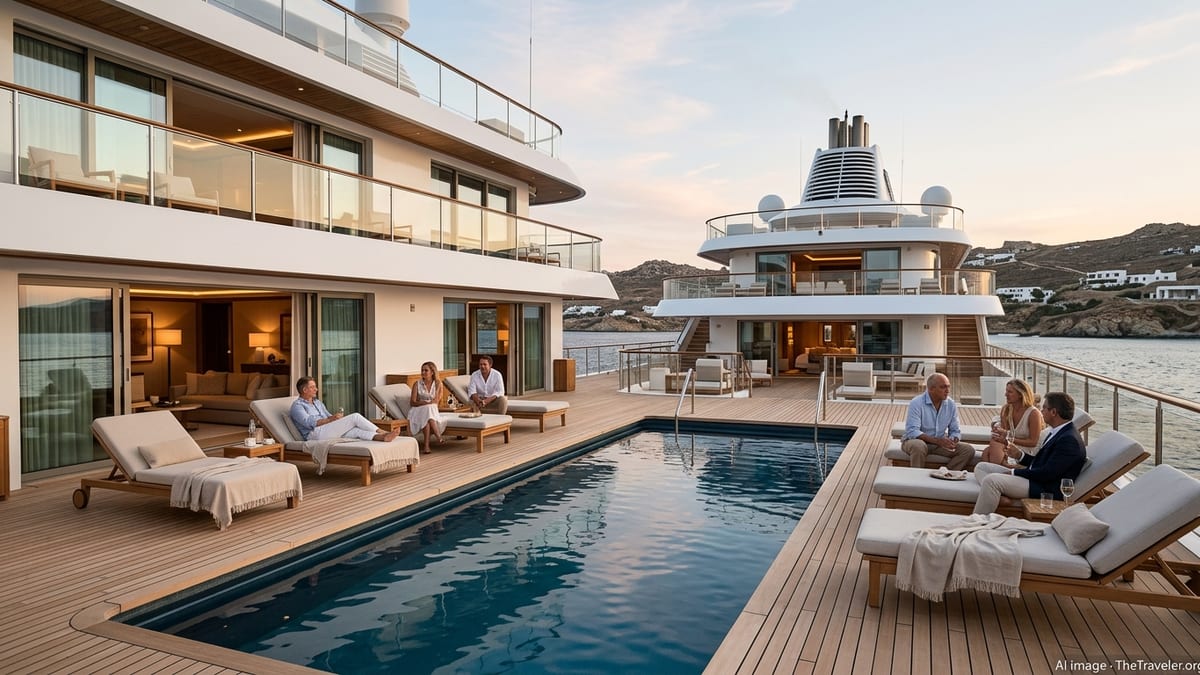
A Yacht-Inspired Ship With Space and Privacy as the Core Luxury
Four Seasons I marks the debut of Four Seasons Yachts, a small-ship concept that aims to bridge the gap between private yacht charters and traditional cruises. Public information on the inaugural 2026 to 2027 season indicates that the vessel carries just 95 suites, each designed as a residential-style sanctuary with expansive terraces and floor-to-ceiling sea views. This relatively low guest capacity, combined with generous square footage per suite, is intended to create a more intimate and private environment than is typical on larger cruise ships.
Brochure materials describe an industry-leading space-to-guest ratio, with significantly more living space per guest than the conventional cruise standard. Suites range from entry-level sea-view layouts to the multi-level Funnel Suite, which spans several hundred square meters and incorporates indoor and outdoor entertaining areas, private plunge-style features and panoramic views from the ship’s upper decks. The design approach focuses on blurring the line between interior and exterior, so that terraces, daybeds and open-air lounges extend the living space out toward the water.
Beyond the accommodations, the yacht incorporates large open decks and a transverse marina at the stern, bringing guests level with the sea for swimming and watersports. Reports indicate that the aim is to deliver the atmosphere of a private yacht, with the operational platform of a purpose-built, 207-meter hospitality vessel.
One-to-One Personalized Service and Tech-Enabled Hospitality
A key differentiator for Four Seasons I is its emphasis on highly personalized service. Planning documents and marketing materials highlight a one-to-one staff-to-guest ratio, signaling that each guest should, in principle, have an equivalent number of crew available to anticipate preferences and tailor the experience. This approach mirrors high-end hotel service, but applied at sea with butler-style attention for suites, dedicated concierges and staff assigned across dining, wellness and shore experiences.
Industry coverage of the vessel’s construction notes that shipbuilder Fincantieri has integrated an advanced digital platform to support operations on board. The system is described as an AI-supported, data-informed architecture intended to streamline everything from energy management to guest-facing services. While the technical details remain largely in specialist reports, the practical outcome for travelers is expected to be more responsive service, such as fine-tuned climate control in suites, smarter scheduling of activities and more efficient management of reservations for restaurants and spa treatments.
Observers note that this combination of human-led hospitality and technology-enabled customization aligns with broader trends in luxury travel, where guest profiles, preferences and past patterns are increasingly used to tailor itineraries. On Four Seasons I, that could translate into pre-arranged wellness programs, curated shore excursions and dining experiences that reflect individual tastes identified before guests even step on board.
Wellness Retreats at Sea: Spa, Fitness and Marina Experiences
Wellness is positioned as a central pillar of the Four Seasons I concept rather than a secondary amenity. Promotional materials describe the onboard spa as a “wellness oasis,” with tranquil treatment rooms, relaxation areas and spaces designed around light, sound and scent. The focus is on restorative therapies, likely drawing from both classic spa treatments and regionally inspired rituals aligned with the yacht’s Mediterranean and Caribbean itineraries.
The fitness offering is framed around a modern, fully equipped gym that supports cardio, strength training and stretch work. Group exercise classes are planned on a complimentary basis when available, adding structure for guests who prefer instructor-led sessions. The design reportedly incorporates floor-to-ceiling windows and outdoor workout options, aiming to connect movement directly with sea views and fresh air.
At the waterline, the transverse marina at the stern is intended to serve as another wellness-focused space. When sea conditions permit, the platform is expected to open for direct access to swimming and a range of non-motorized and motorized watersports. This arrangement allows guests to move easily from a morning yoga class or gym session to paddleboarding, snorkeling or lounging on the marina deck within a short walk from their suites.
Combined, these elements give Four Seasons I the feel of a floating wellness resort, with the option to build day-by-day retreat-style schedules or simply dip into spa and fitness programming as desired.
Gourmet Dining: Eleven Restaurants, Local Flavors and Flexibility
Culinary ambition is another major point of focus for Four Seasons I. Official brochures reference eleven distinct dining and lounge venues, bringing what the company describes as Michelin-calibre, hotel-grade gastronomy to sea. The lineup is set to include a mix of formal and informal concepts, such as a fine-dining restaurant, a Mediterranean-inspired venue with indoor and outdoor seating, a champagne and caviar bar, a sushi omakase counter and a craft cocktail bar with rare spirits.
Menus are expected to lean into regional sourcing, with Mediterranean itineraries highlighting coastal ingredients and Caribbean sailings showcasing local produce and seafood. Al fresco terraces play a prominent role in the restaurant design, allowing guests to dine outdoors overlooking the sea or harbors. Suites are also equipped with terraces configured for private in-suite dining, giving guests the option to enjoy multi-course meals in a more secluded setting.
Unlike many traditional luxury cruise lines, Four Seasons Yachts is positioning its voyage fares closer to a luxury hotel model. Publicly available information indicates that breakfast and select non-alcoholic beverages are included, while many lunches, dinners and premium drinks are priced a la carte. For travelers accustomed to fully inclusive cruise pricing, this structure represents a shift, though it aligns closely with the way high-end urban and resort hotels manage food and beverage across multiple outlets.
Industry commentators suggest that this approach gives the culinary team more flexibility to operate specialty venues at a high level, without being constrained by fixed per-passenger cost models. For guests, it allows greater choice in how much they spend on dining, particularly if they plan to mix simple breakfasts and occasional in-suite meals with more elaborate evenings in specialty restaurants.
Targeting a New Segment of Ultra-Luxury Sea Travelers
Four Seasons I is entering an increasingly competitive market for small, high-end ships operated by hotel and lifestyle brands. Analysts point to the vessel’s limited suite count, expansive guest space and one-to-one service ratio as central to its positioning. The residential-style design, with suites intended to feel more like apartments than cabins, is also likely to appeal to travelers who already favor Four Seasons properties on land and are looking for continuity of experience at sea.
The itinerary strategy, as outlined in current brochures, focuses on Mediterranean and Caribbean routes with an emphasis on marquee ports and smaller yachting harbors. These sailings are being marketed as “yacht-style” journeys, with longer stays in port and access to marinas and anchorages that larger ships often cannot reach. Shore experiences are expected to be heavily curated, with a focus on local culture, gastronomy and bespoke private touring.
At the same time, early commentary from the luxury travel community highlights that pricing and the non-inclusive dining model may make Four Seasons I a niche proposition compared with all-inclusive ultra-luxury cruise brands. For high-spend travelers who prioritize brand familiarity, suite space and personalized service over bundled value, however, the ship is being viewed as a significant new option. With the vessel now delivered and inaugural voyages planned for 2026 and 2027, attention is turning to how this new interpretation of yacht-style cruising will perform once guests begin to experience it in service.