

More news on this day
Four Seasons Hotel Madrid has named seasoned luxury hotel executive Patrick Pollak as regional vice president and general manager, a move that strengthens the brand’s leadership presence in Spain and across Southern Europe.
Get the latest news straight to your inbox!
Strategic Leadership Shift at Four Seasons Hotel Madrid
The appointment of Patrick Pollak at Four Seasons Hotel Madrid places a veteran of the company at the helm of one of its most high-profile European properties. Publicly available corporate and industry information indicates that the regional vice president and general manager role in Madrid has historically been entrusted to senior leaders with a track record of stewarding flagship hotels. Pollak’s move into this position aligns with that pattern and underscores the importance of the Spanish capital within the group’s global network.
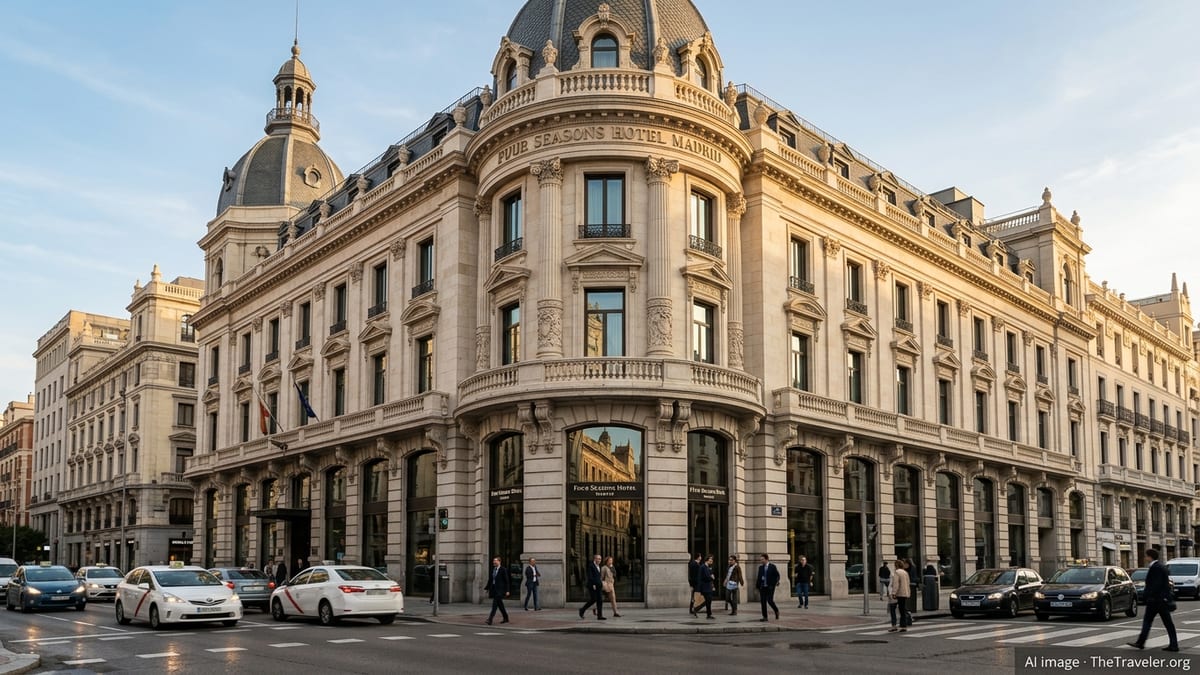
Four Seasons Hotel Madrid, which opened in 2020 within a meticulously restored historic complex near Puerta del Sol, has quickly become a showcase for the company’s ambitions in Spain. The property brings together hotel rooms, branded residences, dining venues and retail, giving its top executive an influential platform that stretches beyond traditional hospitality operations. With the new leadership structure, Four Seasons is positioning the Madrid hotel as both a regional management base and a destination-defining property.
Industry observers note that aligning the regional vice president title with the general manager position tends to streamline decision-making and ensures closer oversight of performance, service standards and brand positioning across nearby markets. In Madrid, that model gives Pollak direct responsibility for day-to-day operations while also expanding his remit to broader regional strategy.
A 25-Year Four Seasons Career Spanning the Americas and Asia
According to company biographies and trade coverage, Pollak brings roughly a quarter century of experience with Four Seasons to his new Madrid-based role. His career with the brand began in Mexico City in the 1990s in food and beverage management, followed by positions in Chicago and at Four Seasons Resort Punta Mita. This early focus on restaurant and bar operations is viewed in the industry as a strong foundation for running urban luxury hotels where culinary concepts play a central role in the guest experience.
Pollak later took on senior leadership assignments in Asia, including at Four Seasons Hotel Guangzhou, before being tapped to lead Four Seasons Hotel Toronto, the company’s global flagship. In Toronto he presided over a multi-year period in which the hotel and its spa repeatedly secured top ratings from Forbes Travel Guide, while the property celebrated its tenth anniversary and completed a significant guestroom renovation program. Reports indicate that under his leadership, the hotel maintained a coveted combination of Five-Star designations for both rooms and spa services.
This international progression across the Americas, Asia and now Europe positions Pollak as a leader with broad exposure to different markets and guest expectations. His background is expected to influence how Four Seasons Hotel Madrid refines its service culture and programming to appeal to both local clientele and international travelers who increasingly compare experiences across global gateway cities.
Implications for Madrid’s Luxury Hospitality Market
Madrid has emerged as one of Europe’s most closely watched luxury hotel markets, with a wave of high-end openings in recent years. Industry publications highlight that the Spanish capital has attracted several international brands and substantial investment in heritage building conversions. Four Seasons Hotel Madrid, developed as part of the Canalejas complex, is among the most prominent of these projects, combining historical architecture with contemporary design and a mix of hospitality and retail offerings.
With Pollak in place as regional vice president and general manager, analysts expect the property to further sharpen its competitive positioning. His previous roles at a global flagship in Toronto and at major city hotels are likely to inform strategies around guest personalization, partnerships with cultural and entertainment institutions, and the use of the hotel as a base for high-profile events. These elements are increasingly important in Madrid, where hotels compete not only on room product and location but also on their role as social and cultural hubs.
The leadership change also comes at a time when Spain’s tourism sector continues to rebound and evolve, with growing demand from North American, Middle Eastern and Asian travelers. Four Seasons is widely seen as targeting this international mix, and a senior executive with experience across multiple continents can help tailor the Madrid offering to diverse markets while maintaining brand consistency.
Regional Role Extends Beyond a Single Landmark Property
The regional vice president designation attached to Pollak’s Madrid posting suggests responsibilities that reach beyond one hotel. In the Four Seasons organizational model, regional executives typically provide support and strategic oversight to multiple properties in a given geography, coordinating standards, talent development and brand initiatives. Madrid’s status as Spain’s political and business capital makes it a logical base for such a role.
Publicly available information on Four Seasons’ European portfolio indicates that the company is maintaining an active pipeline and exploring opportunities across key cities and resort destinations. From this perspective, a regional vice president based at Four Seasons Hotel Madrid will likely be involved in shaping how the brand responds to shifting travel patterns, particularly as high-spend leisure travel and bleisure segments continue to expand.
The Madrid appointment can also be seen as part of a broader effort to integrate local cultural identity into a consistent global brand framework. Executives in regional roles are frequently tasked with balancing globally recognized service hallmarks with locally rooted experiences, from culinary direction to partnerships with artisans, galleries and events. Pollak’s history of working with cultural institutions and high-profile happenings in previous postings suggests that Four Seasons Hotel Madrid will continue to lean into this approach.
What the Appointment Signals for Guests and the Brand
For guests, the leadership change is expected to translate into a renewed focus on service innovation and experiential offerings. Under Pollak’s previous leadership in Toronto, trade publications documented investment in wellness facilities, updated guestroom product and collaborations around major citywide events. Applying similar thinking in Madrid could mean new spa and fitness concepts, refreshed suites and expanded programming that integrates the hotel even more closely with the city’s arts and gastronomy scenes.
For Four Seasons as a brand, anchoring a regional vice president in Madrid highlights the strategic weight of the Iberian Peninsula and Southern Europe. As luxury travelers increasingly seek year-round urban destinations with strong cultural appeal, Madrid has gained prominence alongside other established European capitals. The company’s decision to place an experienced executive there indicates confidence in the market’s long-term potential.
While specific development plans for the wider region have not been publicly detailed in connection with the appointment, industry watchers view the move as consistent with Four Seasons’ strategy of coupling flagship urban hotels with selected resort properties in nearby leisure destinations. The presence of a regional vice president and general manager at Four Seasons Hotel Madrid positions the property as both a leading city hotel and a command center for the next phase of the brand’s growth in Spain and beyond.