

More news on this day
Major airlines in France, Germany, the United Kingdom, the United States, the Netherlands and other markets are rapidly adding new routes and capacity on key long-haul corridors as Gulf carriers from the United Arab Emirates, Saudi Arabia, Qatar and Bahrain grapple with sweeping airspace closures and operational disruption linked to the widening Middle East conflict.
Get the latest news straight to your inbox!
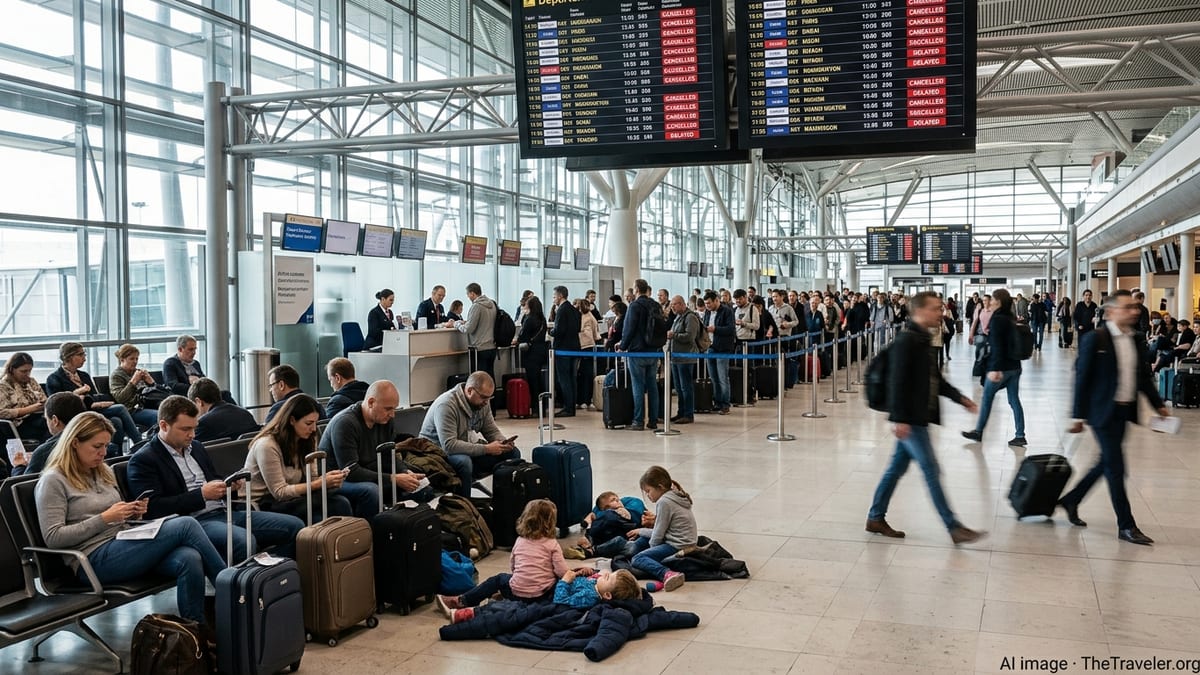
Middle East Conflict Forces Rerouting and Cuts at Gulf Hubs
Airspace closures and military restrictions across parts of the Gulf and wider Middle East since late February 2026 have upended long established traffic flows that relied on hubs in Dubai, Doha, Abu Dhabi and other regional gateways. Publicly available data from aviation analytics providers indicates that tens of thousands of flights in and out of the region have been canceled or rerouted in recent weeks, with some estimates suggesting more than 43,000 cancellations in a short period at the start of the crisis.
According to industry summaries and freight market analyses, Asia Europe connections have been hit particularly hard. Gulf airlines such as Emirates, Qatar Airways and Etihad previously operated around 180 weekly flights on this corridor alone, but capacity on some Middle East sectors has been cut by more than half as carriers suspend frequencies or divert around closed skies. New routings via Turkey, India and Southeast Asia add two to four hours of flying time, increase fuel burn and erode the time saving advantages that once underpinned the Gulf super-connector model.
The disruption is not confined to passenger traffic. Cargo specialists report that the shutdown or restriction of Gulf airspace has removed a significant portion of global air freight capacity almost overnight. Industry commentary points to an 18 percent drop in worldwide air cargo capacity and a reduction approaching 40 percent on some Asia Europe lanes, underscoring how central Gulf hubs have become to global supply chains.
These cuts come on top of lingering constraints from the closure of Russian airspace to many Western airlines since 2022, compounding the complexity of long haul planning. For Gulf carriers already operating around Russian routes rather than over them, the latest Middle East conflict has further narrowed the options and increased operating costs, opening competitive space for rivals to the west.
France Steps Up With New Routes and Larger Aircraft
French flag carrier Air France is among the European airlines moving quickly to capture demand displaced from Gulf hubs. Company schedules for the winter 2024 2025 and summer 2025 seasons show an expanding long haul network, with the airline serving close to 170 destinations in more than 70 countries and planning up to 900 daily flights in peak periods.
Recent network announcements highlight both new destinations and added frequencies on existing long haul routes. Air France has opened or extended services such as Paris Charles de Gaulle to Salvador de Bahia and other Brazilian cities, increased flights to Lima, Santiago and Rio de Janeiro, and reinforced its presence in East Africa, including routes that link Paris with Zanzibar and Kilimanjaro. Capacity to key African capitals such as Brazzaville and Nairobi is also being raised through additional weekly flights or larger aircraft.
In North America, Air France has rolled out or maintained seasonal routes including Paris to Orlando and expanded connectivity from French cities through the broader Air France KLM transatlantic joint venture. Industry coverage notes that the group has been deploying bigger jets from Asian cities such as Tokyo, Shanghai and Mumbai in response to strong bookings and reduced one stop options via the Gulf.
France’s growing role is not limited to the Americas and Africa. Network plans for the 2025 summer season also point to new service between Paris Charles de Gaulle and Riyadh, strengthening direct links with Saudi Arabia at a time when some regional flights are constrained. Taken together, the moves indicate that French carriers intend to use the current volatility to deepen their reach on long haul markets that have historically been contested by Gulf rivals.
Germany, UK, US and Dutch Carriers Rebuild Long Haul Networks
Other major Western airlines are following a similar path, expanding nonstop options that bypass disrupted Gulf hubs. German group Lufthansa and its subsidiaries have adjusted schedules across Asia and the Middle East, with publicly available timetables showing both selective suspensions, such as extended pauses on Tel Aviv services, and the deployment of capacity on alternative long haul routes in Asia and Africa.
In the United Kingdom, British Airways has been reshaping its network around evolving security assessments in the region while investing in additional North America, Africa and South Asia flying. Aviation trade publications highlight how the airline and other UK based carriers, including low cost long haul operators, are leaning more heavily on point to point services to Bangkok, key Indian metros and African holiday destinations when Gulf connectivity becomes less reliable.
US airlines are also rebalancing their approach. Transatlantic heavyweights such as United Airlines and Delta Air Lines have repeatedly paused and then resumed services to Tel Aviv as conditions shift, while at the same time boosting capacity on routes to Europe, India and Southeast Asia that can avoid the most volatile airspace. These adjustments reflect a broader strategy of relying on alliance and joint venture partners in Europe, rather than Gulf carriers, to provide onward connections to the Middle East, Africa and Asia.
Dutch carrier KLM, working closely with Air France under their joint group structure, has similarly shifted capacity. Reports from European media describe how KLM and partner airlines have added seats on Asia bound services and strengthened links between Amsterdam and major European cities, positioning Schiphol as an alternative one stop hub for travelers who might previously have flown through Dubai or Doha.
Disruption Opens a Rare Window in the Gulf Carrier Dominance
For more than a decade, the competitive landscape on long haul routes between Europe, Asia, Africa and Oceania has been shaped by the rise of Gulf super connector airlines. Their geographic position and heavy investment in widebody fleets allowed them to siphon traffic from legacy European and Asian carriers, particularly on journeys requiring a single connection. The sudden, conflict driven constraints on these hubs have unsettled that balance.
Analysts cited in recent business and logistics coverage argue that the current period represents a rare opportunity for European and North American airlines to claw back share on some of these markets. With flights through the Gulf reduced or rerouted, passengers are increasingly channeled through hubs such as Paris, Amsterdam, Frankfurt and London, or shifted onto nonstops between North America and Asia that had been rebuilt cautiously after the pandemic.
The opportunity, however, comes with risks. The same geopolitical tensions that are restricting Gulf airspace are also pushing up oil prices and insurance costs, which affects all carriers. French industry, for example, is already confronting higher energy bills and logistical bottlenecks linked to the regional conflict, and airlines are exposed to the same macroeconomic pressures. Rising jet fuel prices can quickly erode the financial gains from higher load factors.
Still, in the near term, many Western airlines appear willing to absorb added complexity in exchange for capturing demand redirected away from the Gulf. Capacity increases on selected Asia Europe and transatlantic routes, alongside new point to point links from major European hubs, suggest that the competitive map of global aviation is undergoing another structural shift, this time driven less by commercial strategy and more by geopolitical instability.
Travelers Confront Longer Journeys and Higher Fares
For passengers, the rapid redrawing of route maps has translated into a mix of new options and fresh pain points. Travel advisory sites and airline schedule trackers show rerouted flights taking longer paths to avoid closed skies, with extended flight times already visible on journeys between Europe and South or Southeast Asia. For those who previously relied on one stop Gulf connections, itineraries may now require additional legs through European or Asian hubs.
Fare data compiled by industry observers indicates that prices on many affected corridors have climbed since the latest Middle East escalation. With Gulf carriers cutting capacity and Western airlines only partially filling the gap, the supply demand imbalance has pushed yields higher. Frequent flyers report fewer promotional deals and tighter availability in premium cabins, even as airlines such as Air France and KLM roll out new products like updated first class suites to attract high spending travelers.
The logistical knock on effects also extend to cargo, where higher freight rates and reduced bellyhold capacity on mixed passenger freighter routes are feeding through to supply chains. Freight forwarders and shippers are being forced to reconsider routing choices and inventory strategies, a process that could ultimately reinforce some of the new patterns of airline connectivity emerging from the crisis.
How enduring these changes prove to be will depend on the trajectory of the conflict and the speed at which Gulf airspace can safely reopen at scale. For now, the combination of expanded European and US carrier networks and constrained Gulf operations marks one of the most significant shifts in global aviation since the pandemic, with France playing a prominent role in the latest realignment.