

More news on this day
France has joined a growing chorus of European governments, airports and airlines warning that the EU’s new biometric Entry/Exit System could trigger hours-long queues at borders this summer, prompting calls to slow or even suspend the rollout during peak holiday months.
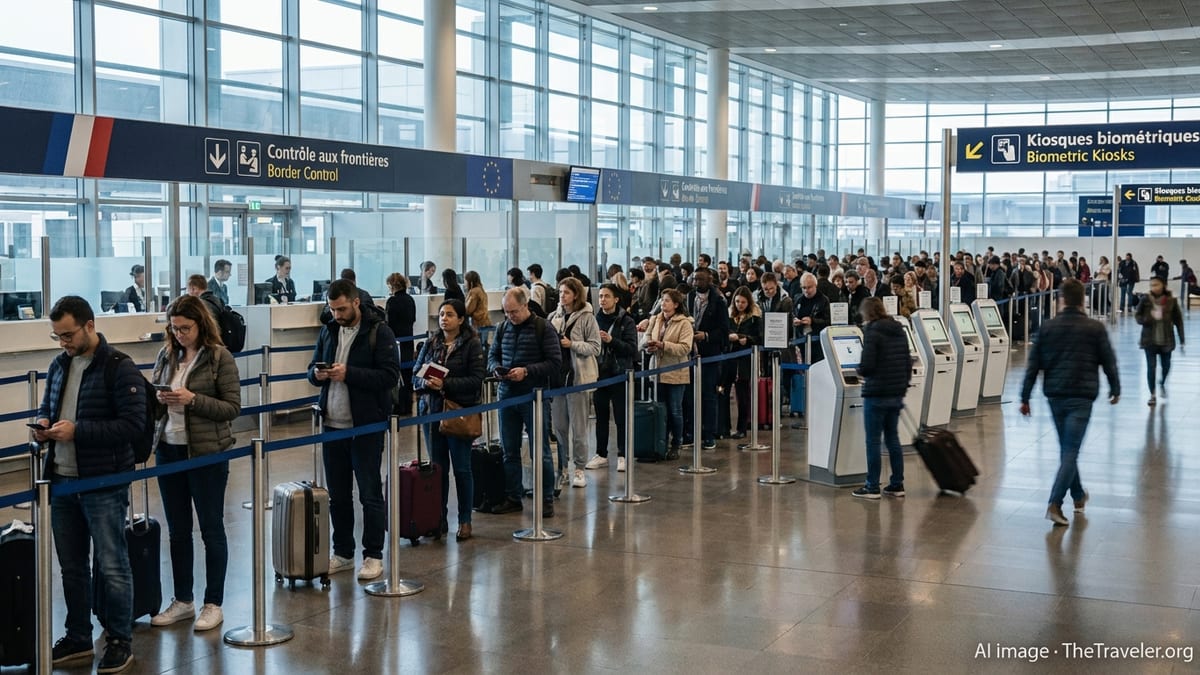
France Adds Its Voice to Mounting EES Concerns
With the EU’s Entry/Exit System (EES) moving toward full enforcement by 10 April 2026, French officials have shifted from cautious support to open concern over its impact on the coming summer holiday season. Paris has aligned with several other Schengen governments and industry bodies urging the European Commission to allow sweeping flexibility, including the power to switch the system off when queues spiral.
French border authorities have already seen the strain at major gateways such as Paris Charles de Gaulle and the Channel ports, where biometric checks and first-time registrations for non-EU visitors have lengthened processing times. Reports of delays stretching beyond two hours at peak periods in Spain, Italy and France during the current phased rollout have reinforced fears of a far more disruptive summer if all passengers must be processed through EES.
Echoing warnings from airport trade group ACI Europe and airline associations, French officials are pressing Brussels to guarantee that member states can partially or fully suspend EES at bottleneck locations through the end of the busy holiday period in late August or even October. Without such safeguards, they argue, the risk of gridlock at border checkpoints is unacceptably high.
What the New Entry/Exit System Actually Changes
The EES replaces traditional passport stamping for most non-EU travellers entering or leaving the Schengen area. Instead of a quick ink stamp, passengers have their passport scanned and their biometric data, including facial images and, in most cases, fingerprints, recorded and stored in a central database. Officials say the system is designed to strengthen security, automate the calculation of allowed stay periods and eventually make repeat crossings faster.
In practice, the initial registration can take several minutes per person, particularly for those unfamiliar with self-service kiosks or travelling in family groups. During the current phase, only a portion of third-country nationals are being processed through EES, yet airports have already documented border-control times increasing by up to 70 percent at some hubs and queues stretching to three hours in worst cases.
From April, all non-EU nationals entering or exiting Schengen external borders, including most British, American, Canadian and other visa-exempt tourists, must be registered. While the EU insists that staffing increases and new equipment will keep traffic moving, operators on the ground say chronic border-guard shortages and unresolved technology glitches are still hampering throughput.
Airports and Airlines Warn of ‘Four-to-Six-Hour’ Queues
European airports and airlines have been among the loudest voices calling for a slower EES ramp-up. In joint letters to the European Commission this month, associations representing airports, full-service carriers and low-cost airlines warned that enforcing full biometric checks during the peak July and August rush could push waiting times at some major hubs to four, five or even six hours.
The groups point to recent experience at Madrid-Barajas, Rome-Fiumicino and Lisbon, where long queues and missed flights have already occurred despite only 35 percent of eligible travellers being routed through EES. In Lisbon, authorities temporarily suspended use of the system at the end of last year after border lines reportedly stretched to seven hours, underscoring how quickly terminals can grind to a halt when kiosks malfunction or staff are overwhelmed.
Industry leaders argue that, without guaranteed powers to pause or limit EES checks when lines become unmanageable, airports will have little room to protect passengers from severe disruption. They warn that the reputational damage to Europe as a destination, at a time when transatlantic and long-haul tourism demand is rebounding strongly, could be significant.
How France’s Position Could Shape Your Summer Holiday
France’s stance matters because it hosts some of the busiest entry points into the Schengen area, from Paris airports to Channel Tunnel and ferry terminals that handle millions of British and Irish holidaymakers each year. Any slowdown at these border posts tends to ripple outward, causing knock-on delays for airlines, rail operators and cruise lines serving the wider region.
If French and other Schengen authorities secure the right to suspend EES checks during surges, travellers might see a mix of experiences this summer: some crossings handled via the new biometric kiosks, others reverting to familiar passport stamping when queues build. For passengers, that could mean inconsistent procedures but a better chance of avoiding extreme waits.
If, however, the Commission insists on a faster, stricter rollout, holidaymakers heading for France, Spain, Italy, Greece and other popular destinations should be prepared for longer lines at immigration, especially on Friday evenings, weekends and school-holiday changeover days. Travel industry bodies are already advising passengers to arrive earlier at airports, complete airline check-in formalities online and keep travel documents ready to speed up processing where possible.
Will Your Trip Be Affected and What Can You Do Now?
Whether your holiday is affected will depend on several variables: when you travel, which border you use, how quickly EES technology stabilises and whether France and its neighbours win the flexibility they are demanding. Early-morning and late-night arrivals may see shorter delays, while midday and late-afternoon peaks could strain border-control capacity, particularly at big hubs and busy car and coach crossings.
Non-EU travellers planning to enter the Schengen zone this summer should build extra time into every stage of the journey. That means arriving at departure airports at least three hours before short-haul flights and even earlier for complex itineraries involving connections within Europe. At land and sea borders, be prepared for slower vehicle and foot traffic through control points, with additional time needed for first-time biometric registration.
Families, older travellers and those with tight connections should pay particular attention to airline guidance and airport advisories in the weeks before departure. While EES is intended to make European borders more secure and, eventually, more efficient, the transition period is likely to feel anything but seamless. If France and fellow member states succeed in pressing for temporary suspensions during crunch periods, that may blunt the worst of the disruption, but summer travellers should still plan for a more time-consuming border experience than in previous years.