

More news on this day
Dozens of passengers traveling through France faced an abrupt change of plans today as more than 15 flights operated by carriers including SAS, Lufthansa, Air France, Pegasus and others were cancelled, disrupting services to Oslo, Istanbul, Berlin, Copenhagen, Munich, Florence, Bahrain and several additional destinations.
Get the latest news straight to your inbox!
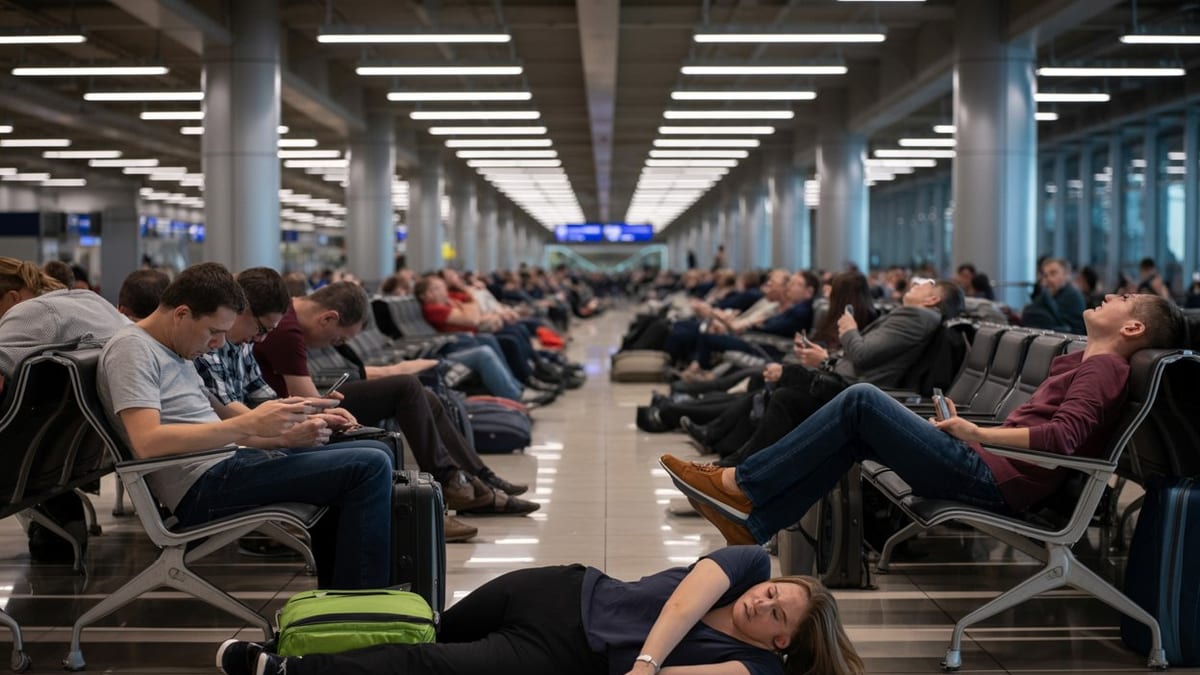
Image by Travel And Tour World
Latest Cancellations Across French Airports
Publicly available airport departure and arrival boards in France on March 29 indicate a cluster of same-day cancellations affecting short and medium haul routes within Europe as well as selected services to the Gulf. Flights involving Scandinavian Airlines (SAS), Lufthansa, Air France, Pegasus Airlines and at least one additional European carrier were listed as cancelled on routes linking France with Norway, Denmark, Germany, Italy, Turkey and Bahrain.
Disruptions were concentrated at Paris Charles de Gaulle and Paris Orly, with a smaller number of affected services at regional hubs. Routes to Oslo, Copenhagen, Berlin, Munich and Florence featured prominently, alongside eastbound journeys to Istanbul and Bahrain. In several cases, both outbound and inbound sectors for the same city pair were removed from the schedule, effectively suspending that connection for the day.
Operational notes published by individual airlines show that some of the cancellations were pre-emptive, announced hours in advance, while others were marked “late cancellation,” appearing on boards closer to departure time. This pattern left many travelers reliant on last-minute rebooking, overnight stays or complex rerouting via alternative European gateways.
While the total number of affected flights remains modest in comparison with large-scale strike days in France, the fact that more than a dozen services on popular city pairs were pulled during a busy spring travel weekend amplified the disruption for leisure and business passengers.
Drivers Behind the Latest French Travel Disruption
Airline advisories and industry commentary point to a combination of factors behind today’s cancellations rather than a single nationwide shutdown. Recent congestion in European airspace, staffing constraints at certain control centers, and knock-on delays linked to wider geopolitical disruptions on long-haul corridors have all contributed to tighter operating margins on short-haul networks.
In recent weeks, aviation analysis covering Europe has highlighted how rerouted long-haul flights avoiding conflict-affected airspace have been funneled into narrower corridors, increasing pressure on air traffic management and lengthening flight times. As aircraft and crew operate closer to duty-time limits, short-haul rotations around hubs such as Paris can be vulnerable when earlier sectors run late or require additional fuel stops.
At the same time, French airports are entering the busy shoulder season, with higher passenger volumes heading into April. Industry observers note that when demand rises faster than staffing and available aircraft capacity, carriers may consolidate or cancel lower-yield flights to preserve operational resilience elsewhere in their schedules.
No single nationwide industrial action has been linked specifically to today’s cancellations, but France’s aviation system remains sensitive to localized staff shortages and sporadic work-to-rule actions that can have disproportionate effects on tightly timed networks.
Which Airlines and Routes Have Been Hit
Among the most visible disruptions were Scandinavian links, where SAS services between Paris and key Nordic hubs including Oslo and Copenhagen appeared among the cancelled departures. Travelers connecting onward to regional airports in Norway and Denmark reported reduced options and longer total journey times via alternate hubs such as Frankfurt or Amsterdam.
Lufthansa’s schedule from France into Germany also saw targeted cuts, including flights to Berlin and Munich. For passengers who rely on these routes to connect to long-haul services from German hubs, cancellations translated into missed onward journeys or forced overnight stays. Some travelers were rerouted through other Star Alliance hubs where capacity allowed.
On the Franco-Italian axis, an Air France-operated flight to Florence was among the services showing as cancelled, temporarily narrowing options for travelers heading into Tuscany at the height of spring break. Turkish routes were also affected, with a Pegasus Airlines service to Istanbul removed from the board, impacting both point-to-point passengers and those connecting to onward flights into the Middle East and Asia.
Coverage from Gulf-focused travel outlets additionally referenced disruption on services linking France with Bahrain, a route often used by business travelers and those connecting via Bahraini hubs to destinations across the region. With other Middle East gateways managing their own schedule reductions due to regional tensions, the loss of even a single daily link can significantly limit available itineraries.
Impact on Travelers and How Airlines Are Responding
For passengers caught up in today’s disruption, the practical impact varied widely depending on carrier, ticket type and onward connections. Many airlines continue to offer flexible rebooking policies for flights cancelled for operational or safety reasons, allowing travelers to change to a later date or, in some cases, reroute through a different hub at no additional fare.
Public guidance from major European airlines underscores the importance of using official digital channels to manage bookings. Travelers affected by cancellations have been encouraged to use airline apps and websites to request changes, as call centers and airport ticket desks have experienced heavy demand whenever multiple flights are pulled from the schedule on the same day.
Reports from passenger forums show that some travelers were able to secure same-day alternatives via nearby airports, for example rebooking from Paris to fly via Brussels, Amsterdam, or Zurich to reach destinations such as Oslo, Berlin or Munich. Others, especially those heading to leisure destinations like Florence or to Gulf hubs including Bahrain, faced limited same-day options and were offered departures on subsequent days instead.
Travel insurance policies that include coverage for cancellations and missed connections may help offset costs for accommodation, meals and alternative transport, although the extent of coverage depends heavily on individual policy wording and whether the disruption is categorized as an extraordinary circumstance.
What Passengers Should Watch for in the Coming Days
Industry analysts caution that while today’s wave of cancellations in France is relatively contained, the underlying pressures on European aviation are likely to persist into the early summer season. Continued regional tensions affecting airspace, combined with strong leisure demand and lingering staffing constraints, create conditions where individual days of disruption can flare up quickly.
Travelers planning to fly to or from France in the coming days, particularly on routes to Oslo, Copenhagen, Berlin, Munich, Florence, Istanbul or Bahrain, are advised by consumer travel advocates to monitor their flight status frequently. Many airlines update schedules the evening before departure, with further changes possible on the day itself.
Booking slightly longer connection times, favoring early-morning departures where possible, and building contingency into itineraries that rely on same-day onward connections can help reduce the risk of missed flights. Passengers holding nonrefundable hotel or tour reservations at their destination may also wish to review cancellation terms in case further disruption affects their arrival time.
While today’s French flight cancellations fall short of the large-scale shutdowns seen during past nationwide strikes, they serve as a reminder that Europe’s air travel network remains finely balanced. Even a few dozen cancelled rotations on popular routes can ripple outward, complicating travel plans for passengers across multiple countries and continents.