

More news on this day
France has joined a growing list of European countries using the European Union’s new Entry/Exit System at their external borders, a decisive step toward a more digital, data-driven frontier that will set the stage for the launch of the ETIAS travel authorization by the end of 2026.
Get the latest news straight to your inbox!
A New Phase in Europe’s Digital Border Controls
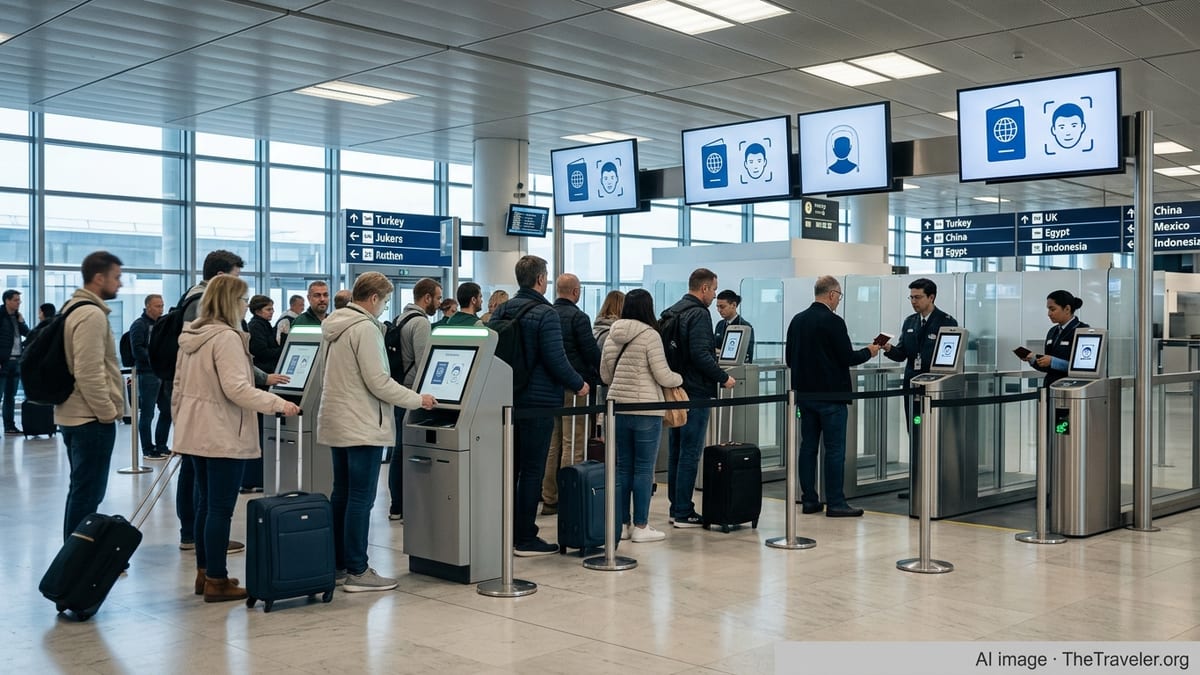
France’s activation of the Entry/Exit System, widely known as EES, aligns it with early adopters such as Germany, Italy, Norway, Poland, Portugal and Denmark, signaling a Europe-wide shift away from manual passport stamping toward biometric checks for non-EU travelers. Public information from EU institutions describes EES as a shared database that records the time and place of entry and exit for third-country nationals crossing the external borders of the Schengen area.
The system has been rolling out progressively across the 29 participating Schengen states since October 2025, with European Commission documents indicating that it is expected to be fully operational at all external border crossing points by 10 April 2026. France’s foreign affairs ministry has highlighted this date as the moment when EES will be considered fully live at French air, land and sea borders.
For travelers, the most visible change is the move to biometric registration. On first entry after EES activation, non-EU visitors generally have their facial image and fingerprints captured alongside passport details, which are then stored for future crossings. The aim is to speed up subsequent checks, reduce errors associated with manual stamps and improve authorities’ ability to track overstays across the Schengen zone.
While implementation details vary by country and specific border point, reports from airports and land crossings across Europe indicate that EES kiosks and automated gates are becoming a common feature. Member states have been adding staff, signage and dedicated lanes in an effort to manage the learning curve for both border officers and travelers.
From Passport Stamps to Seamless Entries
The transition to EES marks one of the biggest overhauls of European border procedures in decades. Instead of relying on ink stamps to prove when a traveler entered or left, EES creates a digital record that calculates remaining days under the standard Schengen short-stay rule of 90 days in any rolling 180-day period.
Travel industry analysis notes that this change is intended to curb overstays, identify repeated violations more quickly and close information gaps between different Schengen states. In practice, it should become harder for travelers who exceed their permitted stay in one country to re-enter via another without detection, since their movements will be logged in a single, EU-wide system.
For legitimate travelers, particularly frequent visitors, the long-term promise is smoother flows once initial data are captured and systems stabilize. Airlines, airports and tourism bodies across countries like France, Germany and Italy have been preparing guidance to help travelers understand when and where they will be asked to complete biometric enrollment, especially during the first months of full operation.
However, early commentary from border regions and transport operators suggests that the transition period may bring temporary bottlenecks, especially at peak times. Authorities in several member states have publicly signaled plans for phased deployment, staff reinforcements and communication campaigns designed to minimize disruption as the new technology beds in.
ETIAS on the Horizon: What Changes by 2026
Running parallel to EES is the European Travel Information and Authorisation System, or ETIAS, a new pre-travel screening requirement for visa-exempt nationals planning short stays in most European destinations. According to the European Commission’s migration and home affairs updates and the official ETIAS information portal, ETIAS is scheduled to become operational in the final quarter of 2026.
ETIAS will apply to travelers who currently enter Schengen countries without a visa, including visitors from the United States, Canada, the United Kingdom and many other parts of the world. Before departure, these travelers will need to complete an online application, pay a small fee and receive an electronic authorization linked to their passport, similar in concept to systems already used by destinations such as the United States and Canada.
The authorization is expected to be valid for multiple trips over a period of up to three years, or until the passport expires. European sources indicate that most applications should be processed automatically within minutes, with only a small share requiring manual review based on security or migration risk indicators.
Importantly for trip planning, ETIAS will not replace the Schengen short-stay rules or national visa policies. Instead, it will function as an additional layer of advance risk assessment for travelers who do not need a visa, using information supplied in the application and, in the background, data from systems such as EES once these are fully operational.
How EES and ETIAS Work Together for Future Trips
The rollout of EES is designed to precede ETIAS and provide part of the technological foundation for it. European policy documents describe EES as the system that will reliably record when and where a traveler enters and leaves, while ETIAS will help screen travelers before they arrive, based on information submitted online.
Once both systems are active, a typical journey for a visa-exempt traveler heading to France, Italy or another Schengen destination will involve several steps. Before departure, the traveler will submit an ETIAS application and receive authorization. At the border, airlines will check that authorization as part of boarding procedures, and on arrival, border control will use EES to confirm the traveler’s identity and register the actual entry.
This combined approach is intended to improve detection of security concerns and migration risks at an earlier stage while making it easier to monitor compliance with stay limits. Schengen-wide monitoring via EES should also help reduce disputes over remaining days in the area, since border officers will have access to a consolidated record of previous visits rather than relying on incomplete stamps in a passport.
Travel advisers and consumer outlets have started highlighting the importance of consistency between ETIAS applications and EES records, encouraging travelers to double-check passport details when applying and to keep track of their days in Europe. For frequent visitors, particularly those combining several Schengen countries in a single itinerary, understanding how these systems interact will be critical.
What Travelers to France and Europe Should Do Now
With EES moving into full operation in early 2026, travelers planning trips to France and other Schengen countries are being urged by tourism boards, airlines and travel media to build extra time into border crossings, especially in the first months after activation. Passengers can expect longer initial checks as biometric data are collected and as border staff and systems adapt.
Current guidance circulating in travel industry briefings recommends that non-EU visitors check their passport validity carefully, ensure that document chips are undamaged and follow airport signage toward EES kiosks or designated lanes. Families and groups may experience staggered processing if some members are enrolling biometrics for the first time while others already have records in the system.
Looking ahead to the introduction of ETIAS in late 2026, affected travelers are being advised to monitor official EU and national government information channels for the formal launch date and application instructions. Once the system opens, applying well before departure is expected to be the safest strategy, particularly around busy travel seasons when application volumes may spike.
For destinations such as France, Germany, Italy, Portugal, Denmark and other popular Schengen countries, the combination of EES and ETIAS represents a structural shift in how borders are managed. While the goal is to enhance security and streamline legitimate journeys, the next two years will be a period of adjustment in which clear information and careful preparation from travelers will play a key role in keeping trips as seamless as possible.