

More news on this day
France has discreetly moved to suspend most new travel visa applications and slow-roll passport processing, aligning itself with Bulgaria, Greece, Iceland, Portugal, Sweden, Luxembourg and a widening circle of countries that are freezing mobility as overlapping global conflicts upend international tourism and strain already fragile consular systems.
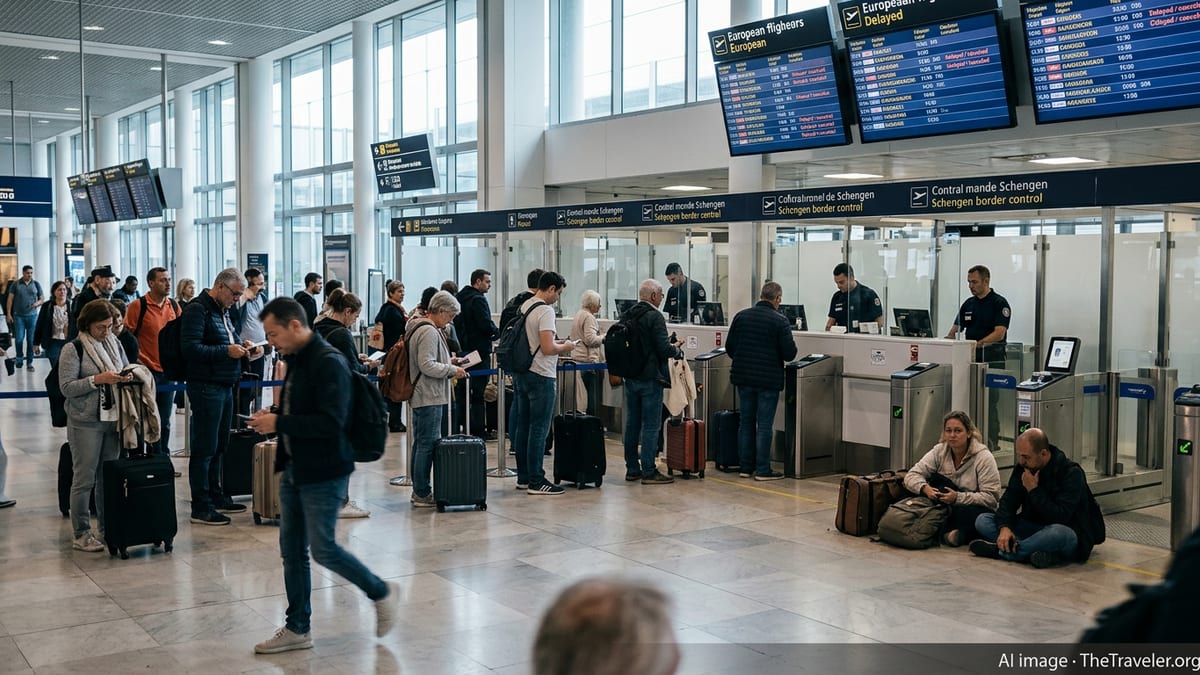
A Quiet Freeze Signals a New Phase in Europe’s Travel Disruption
While no single sweeping decree has been announced, French consular posts in multiple regions have begun treating most new visa requests as non‑priority cases, effectively pausing processing except for emergency, humanitarian or narrowly defined business travel. Travel industry analysts say the pattern mirrors steps already taken by Bulgaria, Greece, Iceland, Portugal, Sweden and Luxembourg, where authorities have temporarily frozen new travel visa applications and slowed or deferred passport issuance while they reassess security and capacity.
Across Europe, these measures are emerging against a backdrop of heightened geopolitical tension in the Middle East, uneven ceasefires, and intermittent airspace closures that have disrupted long‑haul routes. Airlines serving France and other Schengen hubs have repeatedly rerouted or halted flights to conflict‑adjacent destinations, forcing governments to reconsider how many new arrivals their consular and border systems can reliably support over the coming months.
For travelers, the effect is a de facto tightening of Europe’s external border even as the formal Schengen visa framework remains unchanged on paper. Tour operators and corporate travel managers say they are increasingly advising clients to assume that new visa appointments in affected countries will be unavailable or subject to abrupt cancellation, even where online booking systems still appear to accept applications.
Global Conflicts Collide With Strained Consular Capacity
The wave of freezes comes as conflicts in the Middle East and other flashpoints trigger security alerts and evacuation plans, forcing consular sections in numerous countries to pivot resources from routine services to crisis response. Staff who previously handled tourism and short‑stay visas are being reassigned to monitor risk, assist citizens abroad and manage emergency documentation, sharply reducing capacity for new applications.
Further compounding the pressure are rolling flight cancellations and diversions that have turned straightforward itineraries into multi‑stop marathons. In France, carriers have suspended or curtailed services to several destinations in the wider region, while other European airlines have followed suit. Each schedule change creates new visa requirements for transit points that travelers had not originally expected to enter, fueling fresh demand for short‑notice applications at the very moment consulates are pulling back.
Officials and policy advisers in several capitals argue that a temporary freeze on non‑essential visa and passport processing is preferable to accepting large volumes of applications that cannot be decided within reasonable timeframes. They point to growing backlogs in North America and parts of Asia, where applicants have waited months or longer for interviews, as a cautionary example of what they hope to avoid.
Tourism Industry Faces Another Season of Uncertainty
For Europe’s tourism sector, the timing of these freezes could hardly be worse. After several years of recovery from the pandemic, operators had been banking on strong demand for the 2026 peak season, particularly from long‑haul markets in Asia, the Middle East and Latin America. The sudden tightening of visa channels in France and its regional neighbors now threatens to interrupt that trajectory just as bookings were beginning to firm up.
Incoming tour companies report a spike in cancellations and postponements from travelers who can no longer secure consular appointments or who fear that their passports will not be returned in time. Multi‑country itineraries that rely on a first entry into France, Greece or Portugal are especially vulnerable, since a freeze or delay in a single destination can render the entire journey impossible under Schengen’s common visa rules.
Urban hot spots that depend heavily on international visitors, from Paris and Lyon to Reykjavik, Lisbon and Stockholm, face the prospect of a softer summer than previously forecast. While domestic and intra‑EU travel remains resilient, the higher‑spending long‑haul segment that supports many guided tours, luxury hotels and cultural attractions is precisely the cohort most exposed to visa hurdles and passport delays.
Travelers Confront Backlogs, Workarounds and Rising Costs
On the ground, affected travelers are encountering a confusing patchwork of restrictions rather than a single, clearly articulated policy. In some cases, online portals for French and other European consulates still allow users to begin applications, only to show no appointment availability for weeks or months. Elsewhere, applicants report receiving automated confirmations that are later canceled, with little explanation beyond generic references to operational constraints or security conditions.
Those who must travel regardless, such as executives with time‑critical meetings or families facing urgent personal circumstances, are increasingly turning to premium services, indirect routings and alternative gateways. Travel advisers say they are routing some passengers through countries whose visa and passport systems remain more flexible, even if this adds cost and complexity to itineraries, in order to keep essential trips viable.
At the same time, the freezes and slowdowns are widening the gap between travelers with the resources to navigate delays and those without. Higher fees for priority handling, last‑minute airfares on less affected routes and the need for longer hotel stays while documents are processed all add to the financial burden on would‑be visitors to France and the wider region.
Longer-Term Questions for Europe’s Role in Global Mobility
Beyond the immediate disruption to upcoming trips, policy experts say France’s alignment with Bulgaria, Greece, Iceland, Portugal, Sweden, Luxembourg and other countries on freezing new visa and passport processing raises deeper questions about Europe’s posture in an era of chronic geopolitical instability. The Schengen area was built on the premise of predictable, rules‑based mobility, but repeated crises have shown how quickly that predictability can evaporate when security concerns rise.
Some analysts argue that the current freezes could accelerate long‑discussed reforms to digital pre‑screening, data sharing and risk‑based vetting of travelers, potentially allowing consulates to process applications more efficiently without fully reopening the floodgates. Others warn that frequent recourse to emergency pauses risks undermining confidence among airlines, tour operators and travelers, who may begin to see European destinations as less reliable than competitors in regions where entry rules change less abruptly.
For now, travelers eyeing trips to France or neighboring countries are being urged by industry associations to check visa and passport timelines far earlier than they would have before the pandemic and recent conflicts. With no clear date for full resumption of normal processing in sight, the message from consular corridors to the global tourism market is cautious but unmistakable: discretionary cross‑border movement is no longer something Europe can guarantee on demand.