

More news on this day
Morocco has opened 2026 with what observers describe as an unprecedented tourism surge, surpassing one million international visitors in January alone as France joins the United Kingdom, Italy, Germany, Saudi Arabia, Brazil, Canada and other key markets in driving record demand and buoyant expectations for the rest of the year.
Get the latest news straight to your inbox!
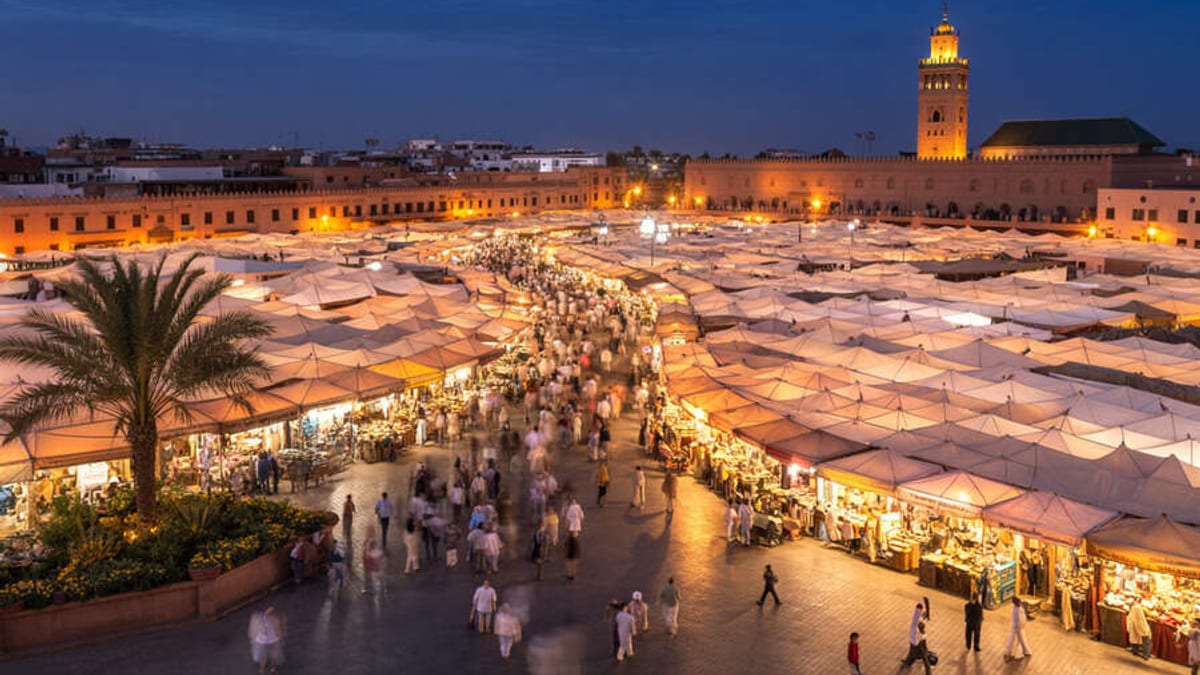
Image by Travel And Tour World
From Record-Breaking 2025 to a Blockbuster Start in 2026
The strong performance in January 2026 follows a milestone year for Morocco’s tourism industry. Publicly available figures for 2025 indicate that the country welcomed close to 20 million visitors, extending a post-pandemic rebound that had already pushed arrivals to a record 17.4 million in 2024. Analysts describe this two-year run as a structural shift rather than a temporary spike, with the kingdom consolidating its status as one of Africa’s leading destinations by arrivals and tourism receipts.
Financial data for January 2026 underscore the scale of the momentum. Information released by Morocco’s Office des Changes and highlighted in recent trade coverage shows tourism revenues of around 11.65 billion dirhams for the month, an increase of roughly 19 percent compared with January 2025. Sector observers note that such a rise, on top of an already high base, signals not only higher visitor numbers but also stronger per-capita spending, aided by longer stays and a move into higher-value segments such as premium cultural itineraries and coastal resorts.
Industry reporting links these results to the country’s multi-year tourism roadmap for 2023 to 2026, which prioritizes diversification of source markets, rapid expansion of air connectivity and the development of new themed destinations beyond the traditional city-break circuit. The January performance is being interpreted by travel analysts as confirmation that the roadmap is ahead of schedule, with several mid-decade benchmarks around arrivals and receipts already met or exceeded.
Against this backdrop, tourism is viewed as an increasingly central pillar of Morocco’s external accounts. Travel receipts have emerged as one of the country’s most important sources of foreign currency, helping to balance higher import bills and creating a buffer in the face of global economic uncertainty.
France Emerges as a Lead Driver Among International Source Markets
France has long been one of Morocco’s most important source markets, and recent data and industry assessments suggest that French travelers are once again at the forefront of the latest surge. Travel and tourism trend reports for 2025 and early 2026 describe France as both one of the world’s largest outbound markets and a consistent top contributor to Morocco’s visitor mix, alongside Spain and the United Kingdom.
According to sector analyses focusing on North Africa, France remains among the countries generating the highest volume of arrivals to Morocco, supported by historical ties, linguistic affinity and extensive air connectivity between French cities and hubs such as Casablanca, Marrakech, Agadir and Fez. The continued strength of this corridor is seen as a stabilizing factor, providing steady demand even as newer markets are developed.
In January 2026, travel industry commentary links the milestone of more than one million visitors partly to renewed French demand for winter sun and culture-focused holidays. Package operators and online travel agencies have widely promoted Morocco as a short-haul escape for French travelers seeking alternatives to more congested Mediterranean destinations, with the country’s diversified offer of riad stays, desert circuits and Atlantic surf spots proving particularly attractive.
Observers also point to the impact of Morocco’s international branding campaigns, which have featured prominently on French television and digital platforms since 2023. These initiatives, built around themes such as light, heritage and sport, aim to position the country as both familiar and continually rediscovered, encouraging repeat visits from France’s large pool of past visitors.
United Kingdom, Italy, Germany, Saudi Arabia, Brazil and Canada Add New Depth
While France remains a cornerstone, the breadth of Morocco’s tourism rebound is increasingly visible in the diversity of contributing markets. Travel intelligence covering 2024 and 2025 shows robust growth from the United Kingdom, Italy and Germany, with all three European markets benefiting from expanded air links to coastal and secondary cities and growing interest in multi-stop itineraries that combine culture, gastronomy and outdoor activities.
The United Kingdom has emerged as a particularly dynamic source, helped by year-round low-cost carrier capacity and the popularity of city breaks in Marrakech and coastal stays around Agadir and Essaouira. Industry briefings indicate that British demand has held up despite wider cost-of-living pressures, with travelers often trading long-haul trips for shorter journeys to destinations perceived as offering strong value for money.
In parallel, Gulf and Americas markets are adding new depth to Morocco’s visitor base. Saudi Arabia has been identified in regional travel reports as one of the fastest-growing outbound markets, with rising middle-class incomes and a preference for destinations that offer both leisure and cultural resonance. Brazil and Canada, although smaller in absolute volume, are flagged by global tourism outlooks as high-potential markets where improved connectivity and targeted promotion are beginning to translate into double-digit growth in arrivals.
Analysts note that this diversification is strategically important for Morocco, reducing dependence on any single region and mitigating exposure to localized economic or geopolitical shocks. The mix of mature European markets and fast-growing long-haul segments is seen as a key factor behind the resilience evident in the January 2026 numbers.
Air Connectivity, Infrastructure and Events Strategy Underpin Growth
Behind the headline figures, Morocco’s tourism surge is being underpinned by significant investments in infrastructure and air connectivity. Publicly available information from government and industry platforms refers to ongoing expansion of the national high-speed rail network, upgrades to key airports and port facilities, and plans to add tens of thousands of new hotel beds across the country by the end of the decade.
On the aviation side, market commentary highlights a wave of capacity increases agreed between the Moroccan National Tourist Office and airline partners for the 2025 to 2026 seasons. New routes from regional cities in France, the United Kingdom, Italy and Germany, along with added frequencies from Gulf and North American gateways, are widening the catchment area and making short-break travel to Morocco feasible for more consumers.
The country’s growing role as a host of major cultural and sporting events is also shaping tourism patterns. Morocco is co-hosting the 2030 FIFA World Cup and has been building a “land of football” narrative that aligns stadium construction and fan-focused infrastructure with broader destination marketing. Analysts suggest that these preparations, combined with a calendar of festivals and business events, are generating early visitation and encouraging repeat travel among sports fans and conference delegates.
These developments are framed by a wider policy emphasis on sustainable and regionally balanced growth. Industry documents describe efforts to spread tourism benefits beyond the traditional hubs of Marrakech and Casablanca, promoting Atlantic and Mediterranean coastal zones, Atlas mountain communities and desert towns as part of themed routes that aim to reduce pressure on heavily visited sites while extending average length of stay.
Optimistic Projections for 2026 as Morocco Targets New Milestones
With January’s performance already surpassing one million visitors and revenues climbing by nearly one-fifth, projections for the remainder of 2026 are markedly optimistic. Sector forecasts drawing on trends from 2024 and 2025 suggest that Morocco is on track to push well beyond the roughly 19.8 million arrivals recorded in 2025, with some outlooks pointing to the possibility of crossing the symbolic 20 million threshold depending on global economic conditions.
International tourism bodies have cited Morocco among the standout performers in Africa’s tourism revival, noting that the country has not only recovered pre-pandemic volumes but moved decisively beyond them. This trajectory is supported by expectations of continued stability in key European markets, further capacity additions on air routes from the Gulf and North America, and ongoing liberalization of entry conditions for selected nationalities through visa and e-visa reforms.
Analysts caution that external risks remain, including currency volatility, inflation in source markets and potential geopolitical disruptions in wider regional travel patterns. However, Morocco’s diversified portfolio of origin markets, its long-term infrastructure pipeline and its positioning ahead of the 2030 World Cup are widely viewed as offsets that could help sustain growth even in a more challenging environment.
For now, the early data from January 2026 are reinforcing perceptions of Morocco as one of the global tourism sector’s clearest success stories. With France, the United Kingdom, Italy, Germany, Saudi Arabia, Brazil, Canada and a growing roster of other markets feeding unprecedented demand, the country enters the remainder of the year with confidence that tourism will remain a key engine of investment, employment and international visibility.