

More news on this day
New links between the UK and France are joining a wave of new European routes from Newcastle International Airport, as carriers expand services to Belgium, Ireland, Spain, Poland, the Czech Republic, Hungary and beyond, positioning the North East hub for the busiest year in its history.
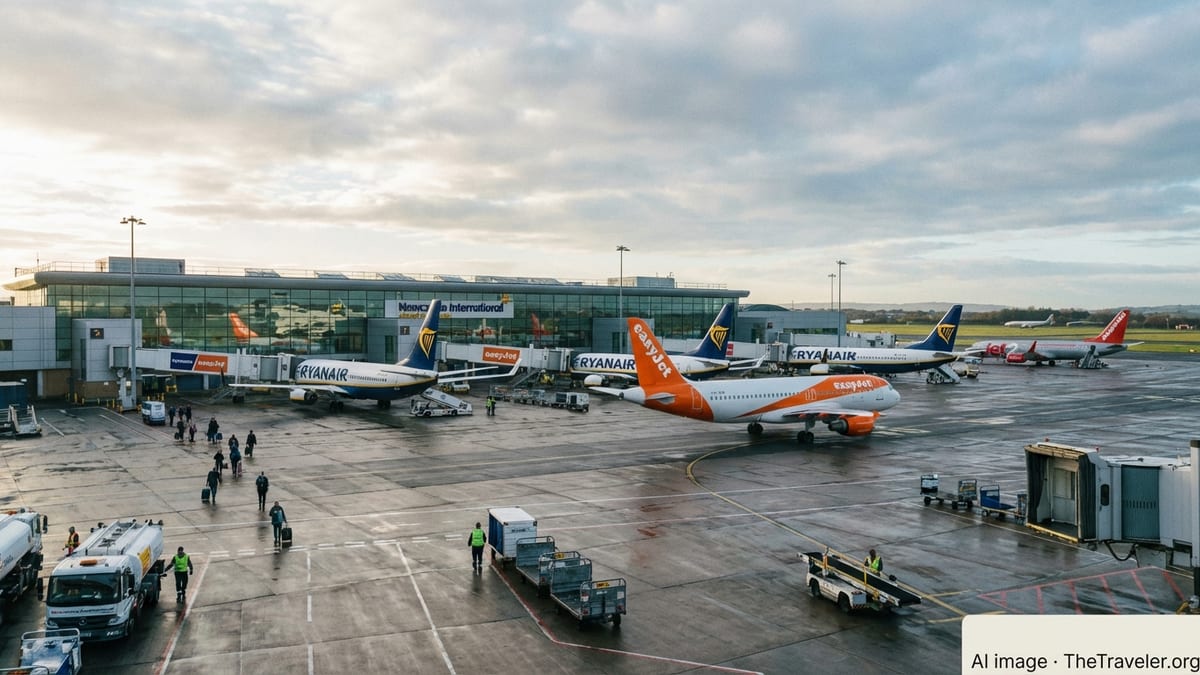
France Steps In As The Newest Growth Engine
France has become the latest country to deepen air links with the UK via Newcastle International Airport, as airlines add fresh capacity to key leisure and business markets. The move places French destinations alongside a fast-expanding line-up of European cities now directly connected to the North East, including recent and forthcoming services to Belgium, Spain, Portugal, Poland, the Czech Republic and Hungary.
New services to Nice are among the headline additions, giving passengers in the region direct access to the Cote d’Azur and strengthening Newcastle’s appeal to both holidaymakers and conference travellers. Airlines are also evaluating further French opportunities in response to rising demand for city breaks, sporting events and cultural tourism that can be reached within a two to three hour flight.
The growing focus on France mirrors a broader trend in European aviation, where secondary cities on both sides of the Channel are increasingly bypassing traditional hubs. For Newcastle, that shift is translating into more point-to-point options and a stronger role as a gateway for North East England.
Record Passenger Year In Sight For Newcastle
Newcastle Airport’s management expects 2026 to be the busiest year in the airport’s history, with traffic forecast to reach around six million passengers. That projection comes on the back of a record-breaking summer in 2025, when 1.3 million passengers travelled through the terminal during the school holiday period and international traffic surged.
To sustain growth, the airport is embarking on a major recruitment drive, seeking more than 100 new staff across security, passenger services, cleaning and airside operations. These roles will support an operation that now underpins about 3,200 on-site jobs and more than 17,000 positions in the wider regional supply chain, making the airport one of the North East’s most significant employers.
The strong outlook underlines how rapidly demand has returned since the pandemic and how important direct European connectivity has become for both leisure and business travellers in the region. Airport leadership has stressed that maintaining a reliable, efficient passenger experience will be crucial as volumes rise to new highs.
Ryanair, easyJet And Jet2 Lead A European Push
The latest expansion of routes from Newcastle is being driven by a combination of low-cost and leisure airlines, each targeting different corners of the European market. Ryanair has committed a third aircraft to the base for winter 2025, adding capacity on popular leisure routes and opening new links to Brussels, Budapest, Gdansk, Malta and Wroclaw. The airline expects to carry more than one million passengers annually from Newcastle under its expanded schedule.
easyJet is set to deepen its presence in 2026, opening a new base at Newcastle and launching services to destinations including Nice, Lisbon and Porto, as well as seasonal flights to Mediterranean favourites such as Malta and Faro. The carrier’s investment forms part of the airport’s biggest-ever flight schedule, which will include 19 new routes as part of a broader expansion programme.
Jet2, meanwhile, is focusing heavily on the sunshine and city break segment, with new flights to Palermo in Sicily and the Greek resort gateway of Preveza among the additions. These moves complement existing operations to Spain’s key holiday destinations and help ensure that passengers in the North East have access to a wide choice of short- and mid-haul options without travelling to airports further south.
Belgium, Ireland, Spain, Poland And Central Europe Strengthen Links
Beyond France, UK connectivity is being reshaped by a broader wave of European expansion that brings Newcastle into closer alignment with capitals and regional cities across the continent. Belgium is gaining its first direct link from the airport through new Brussels services, giving business travellers and EU-focused organisations in the North East a non-stop connection to one of Europe’s main political and corporate centres.
Ireland continues to be a core market, with increased frequencies to Dublin supporting both tourism and onward global travel via transatlantic connections. For many passengers in the region, Dublin now serves as an alternative long-haul gateway, sitting alongside Amsterdam, Paris, London Heathrow, Dubai and Frankfurt as a primary hub accessible via single-stop itineraries.
In Southern Europe, demand for Spain remains robust, with airlines adding capacity to established favourites such as Alicante, Ibiza and Barcelona. In Central and Eastern Europe, additional flights to cities in Poland, including Gdansk, Krakow and Wroclaw, as well as to Budapest in Hungary and Prague in the Czech Republic via partner networks, are feeding a growing appetite for cultural short breaks and visiting friends and relatives travel.
Infrastructure Investment To Support Growth
To accommodate record passenger numbers and a swelling route network, Newcastle Airport is midway through a substantial infrastructure programme worth close to £60 million. The project includes an extended terminal building with a larger departure lounge, an expanded international arrivals baggage hall and an upgraded security area designed to process passengers more quickly.
Additional seating and new food and beverage outlets are being introduced to ease congestion at peak times and improve the overall travel experience. Management has highlighted that more than 99 percent of passengers passed through security in under 10 minutes during the most recent summer peak, a benchmark it aims to preserve even as volumes grow.
The investment runs in parallel with sustainability initiatives and operational changes aimed at improving efficiency on the ground. For airlines weighing where to deploy scarce aircraft, modern facilities and smooth turnaround times are increasingly central factors, reinforcing the strategic importance of these upgrades for Newcastle’s long-term competitiveness.
Economic And Tourism Impact Across The North East
The expansion of European connectivity from Newcastle is expected to deliver broader economic benefits for the North East, beyond increased passenger throughput. Additional international arrivals bring direct tourism spending in hotels, restaurants and attractions across Tyne and Wear, Northumberland, Durham and the wider region.
Local businesses stand to gain from closer links to European markets such as Belgium, Ireland, Spain, Poland, Hungary and now France, which collectively represent some of the UK’s most important trading partners. Improved air access can shorten supply chains, facilitate face-to-face meetings and support inward investment by making the region more accessible to overseas executives.
Airport and airline officials also point to the job creation potential associated with each new aircraft and route based at Newcastle. From ground handling and maintenance to hospitality and retail roles in and around the terminal, the build-out of services is helping to sustain a diverse local employment base and provide career pathways in the aviation and tourism sectors.
UK Aviation Policy And Regional Competition
The momentum at Newcastle comes against the backdrop of wider debates over UK aviation taxation and the competitiveness of regional airports. Airlines serving the airport have warned that higher air passenger duty risks diverting traffic to continental hubs, particularly as countries such as Hungary and certain regions of Italy adjust or reduce aviation charges to stimulate growth.
Nevertheless, Newcastle’s recent performance suggests that strong local demand, a concentrated catchment area and proactive route development can counter some of these headwinds. By offering a broad mix of low-cost, leisure and network-carrier services, the airport is positioning itself as a viable alternative to larger UK hubs for both outbound and inbound travellers.
Competition from other regional gateways remains intense, but Newcastle’s focus on expanding direct links to countries including France, Belgium, Ireland, Spain, Poland, the Czech Republic and Hungary is helping it carve out a distinct role in the national network. The record year now in prospect will be an important test of how far that strategy can go in reshaping travel habits in the North East.
What The New Connectivity Means For Travellers
For passengers, the rapid growth in European routes translates into more choice on destination, price and schedule. The new links to France and other continental markets reduce the need for lengthy surface journeys to airports further afield and open up a wider range of weekend break and holiday options within a short flying time of the North East.
Frequent business travellers gain from shorter connections to hubs like Brussels and Dublin, while leisure customers benefit from greater competition on traditionally popular routes to Spain, Portugal and the Mediterranean islands. As airlines refine their schedules for the coming seasons, observers expect further adjustments to match demand patterns, with capacity likely to tilt towards destinations that show consistent year-round appeal.
With recruitment ramping up, terminal upgrades progressing and carriers investing in new aircraft and routes, Newcastle International Airport is moving quickly to ensure that the growth in connectivity is matched by a reliable on-the-day experience. For many in the North East, the latest wave of European expansion, led by new French links, signals a step change in how easily they can reach the continent from their local airport.