

More news on this day
Frankfurt Airport is stepping up its climate ambitions with the launch of the €8.5 million GREENVOLT project, a multi-year initiative designed to cut emissions on the ground and prepare one of Europe’s busiest aviation hubs for the next generation of sustainable flight.
Get the latest news straight to your inbox!
A Testbed for the Future of Low-Carbon Aviation
GREENVOLT is being framed as a strategic pilot platform rather than a single infrastructure build, using Frankfurt Airport’s complex operations as a real-world testbed for greener energy systems. Publicly available information indicates that the project focuses on integrating renewable electricity, advanced storage and intelligent distribution to reduce fossil power use across terminals, aprons and support facilities.
The €8.5 million budget is modest compared with the airport’s wider investment program, but analysts view GREENVOLT as an enabling step. By testing how to synchronise fluctuating solar output, battery storage and heavy ground loads, the project is expected to generate reference models that could be scaled up across the site and potentially replicated at other major hubs.
Frankfurt’s role as a leading European transfer airport adds weight to the initiative. Any successful operational changes that reduce emissions without disrupting high-frequency flight schedules are likely to be closely watched by peers in the region.
Building on Vertical Solar and a Rapidly Greener Grid
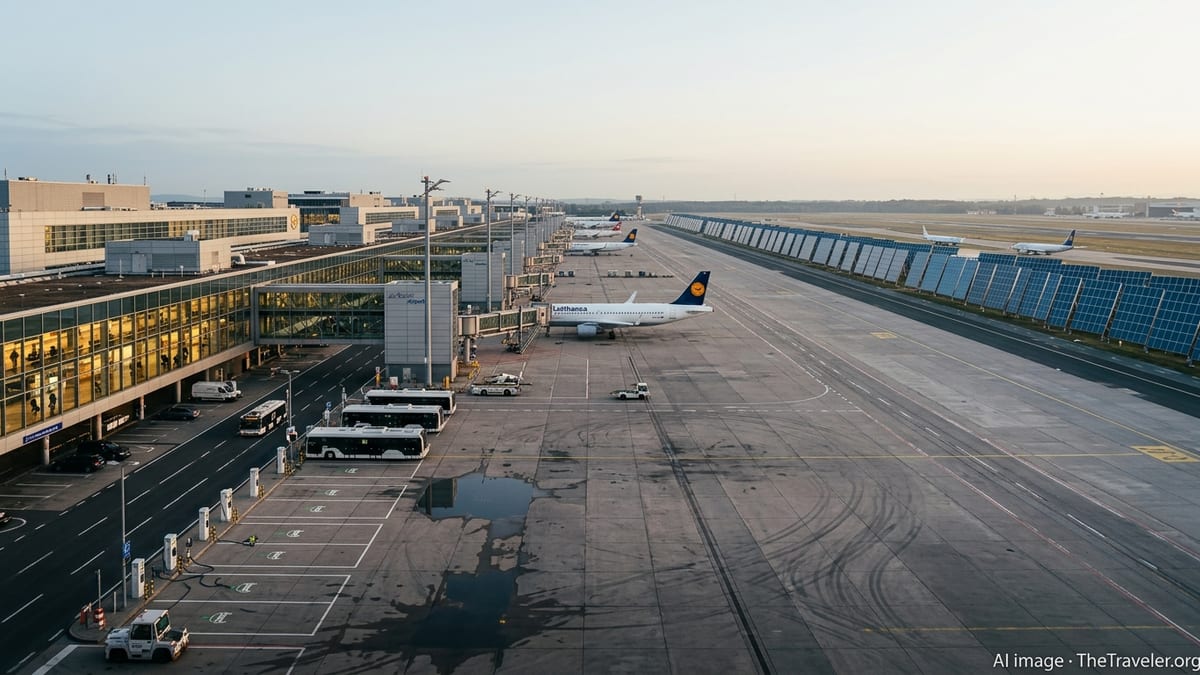
The GREENVOLT effort does not start from scratch. In recent months, Frankfurt Airport has brought online a large vertical photovoltaic installation along its western runway, featuring tens of thousands of modules designed to work efficiently even in low winter sun and with minimal impact on airport operations. Reports indicate that the system is expected to generate tens of millions of kilowatt-hours of electricity annually, feeding power directly into airport facilities and vehicle charging points.
Fraport, the airport operator, has already increased the share of green electricity in Frankfurt’s power mix significantly through off-site renewable power purchase agreements and on-site projects. Publicly available corporate disclosures show that the company is targeting net zero greenhouse gas emissions at its home base by the mid-2040s, relying heavily on solar and wind power.
GREENVOLT is set to leverage this growing renewable base by experimenting with more sophisticated load management. That includes timing energy-intensive activities, such as charging electric ground vehicles or running certain building systems, to coincide with peaks in solar generation. The results could help Frankfurt reduce reliance on conventional grid power at periods of high demand and lower overall emissions intensity per passenger.
From Ground Operations to Sustainable Aviation Fuels
While much of GREENVOLT’s scope is focused on electricity, the project is also being positioned within a broader decarbonisation pathway that includes sustainable aviation fuel, or SAF. Frankfurt is already connected to emerging SAF supply chains, with energy companies starting to blend sustainable alternatives into conventional jet fuel for airlines operating at the airport.
At the same time, the wider Frankfurt region is attracting investment in power-to-liquid and e-fuel facilities that aim to transform renewable electricity and captured carbon into synthetic kerosene. These projects are designed to produce e-SAF that can in future be delivered to major hubs such as Frankfurt, supporting compliance with tightening European blending mandates and helping airlines meet their own climate targets.
GREENVOLT’s contribution is expected to lie in preparing airport-side infrastructure and operational concepts for a higher share of low-carbon fuels. This includes evaluating how storage, pipeline and fueling logistics might need to evolve as SAF volumes grow, and how digital systems can track different fuel types for regulatory and reporting purposes.
Smarter Grids, Data-Driven Operations and Passenger Experience
A core feature of the GREENVOLT project is its emphasis on digitalisation. According to technical descriptions made available through project documentation, the initiative will model and monitor energy flows across the airport in far greater detail than before, using real-time data to optimise where and when electricity is used.
By combining sensor networks, predictive analytics and automated controls, Frankfurt aims to reduce unnecessary consumption in buildings, lighting, baggage systems and other energy-intensive components of the airport ecosystem. Even small percentage efficiencies can translate into substantial absolute savings at a hub that processes tens of millions of passengers each year.
For travellers, the impacts are expected to be mostly indirect but noticeable over time. More electric ground vehicles, quieter equipment and an increasing share of renewable power can change the feel of ramp and terminal areas, while transparent communication about climate initiatives may influence airline and route choices for sustainability-conscious passengers.
A Showcase Within Europe’s Green Aviation Push
GREENVOLT slots into a much larger transformation underway in European aviation, driven by new regulatory frameworks and climate targets. The EU’s RefuelEU Aviation rules will steadily increase the share of SAF required in jet fuel, while broader climate policy is pushing airports and airlines alike to address emissions not just in the air but across the entire value chain.
Within this context, Frankfurt Airport’s project is emerging as a high-profile case study in how a large hub can combine on-site renewables, smart grids and fuel innovation. The airport is already highlighted in specialist industry coverage as an example of how vertical solar arrays, electrified ground fleets and SAF supply can be integrated into a coherent decarbonisation roadmap.
The €8.5 million GREENVOLT initiative will not by itself transform aviation’s climate footprint. However, its focus on practical, system-level changes at one of Europe’s largest hubs positions it as an influential experiment. As results begin to emerge, other airports facing similar capacity pressures and climate expectations are likely to look closely at how Frankfurt manages to keep passengers and cargo moving while cutting the carbon cost of every journey.