

More news on this day
Frankfurt-Hahn Airport is sharpening its profile as a low-cost gateway for summer 2026, with new and expanded links to Morocco and Romania set to broaden options for price-conscious travelers across Europe.
Get the latest news straight to your inbox!
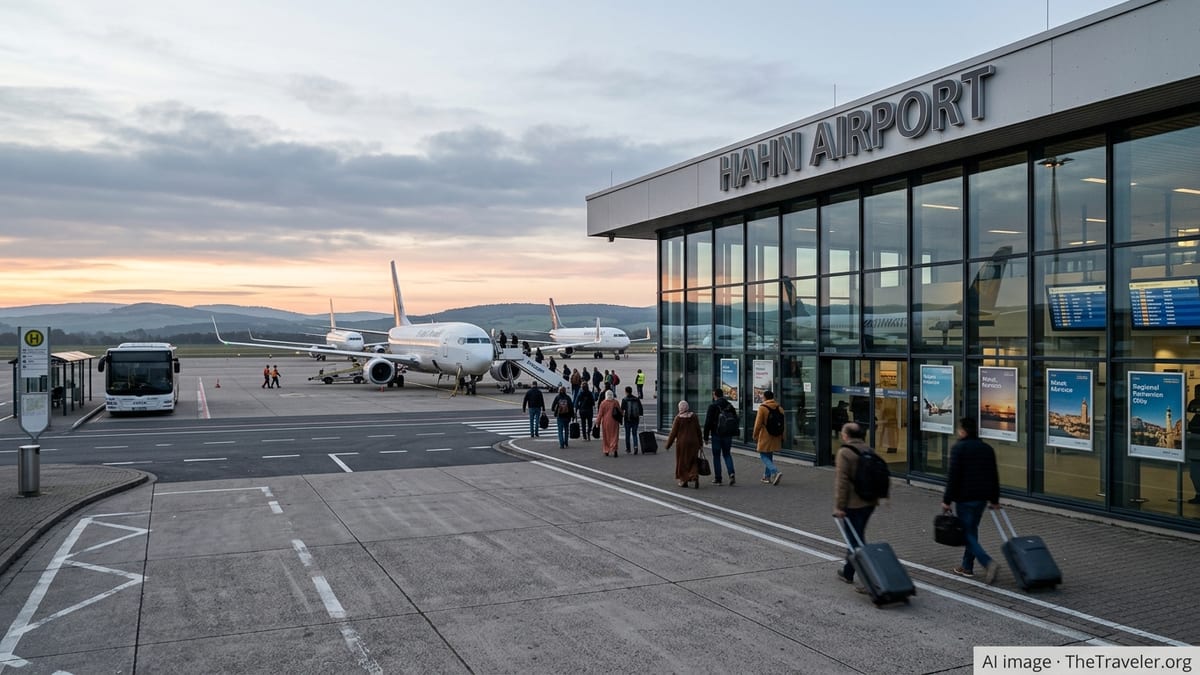
Summer 2026 Schedule Highlights at Frankfurt-Hahn
The summer 2026 timetable at Frankfurt-Hahn is taking shape as airlines finalize network changes across Europe, with Morocco and Romania emerging as key growth markets. Publicly available information shows that the airport, a long-established base for low-cost carriers, is being woven into wider expansion strategies focused on secondary cities and budget-friendly leisure routes.
According to recent coverage of airline planning for the 2026 season, the broader German market is seeing capacity reallocated away from higher-cost hubs toward airports that can support low fares. In this context, Frankfurt-Hahn is positioned as an attractive option, offering lower operating costs and access to holiday and visiting-friends-and-relatives traffic bound for North Africa and Eastern Europe.
While airlines are still refining individual timetables ahead of the season, the framework of the summer schedule runs from late March to late October 2026, in line with the standard aviation summer period. During this window, carriers are expected to prioritize high-demand routes linking Hahn with Moroccan cities and Romanian regional centers, complementing an existing mix of destinations across southern and eastern Europe.
Hahn’s role as a low-cost alternative to Frankfurt Main also remains central. Publicly available commentary highlights that passengers continue to use Hahn as a springboard for affordable city breaks and family visits, accepting longer ground transfers in exchange for lower airfares and direct connections not always available from larger hubs.
New Moroccan Links: Hahn Taps into North African Demand
North Africa is one of the clearest winners in the current reshaping of summer 2026 capacity, and Frankfurt-Hahn is part of that trend. Industry reports on airline scheduling indicate that carriers are shifting a substantial number of seats from saturated Spanish markets toward destinations in Morocco, encouraged by lower airport charges and strong leisure demand.
Morocco’s growing importance is further underlined by plans for an expanded low-cost presence in the country from spring 2026, including new aircraft bases and additional routes into Europe. In this network, Frankfurt-Hahn appears as one of several secondary European airports gaining direct links to Moroccan cities, giving travelers more options beyond major hubs.
For passengers in western Germany, the expanded Morocco offering from Hahn is expected to focus on nighttime and late-evening departures aligned with typical low-cost operating patterns. Such timings allow aircraft to be utilized intensively while still fitting within airport curfews and ground transport connections to and from the wider Rhine-Main region.
These Morocco services are likely to appeal in particular to travelers visiting family and friends, as well as value-driven holidaymakers looking for beach destinations and city stays in places such as Rabat, Nador, Marrakesh or other coastal and inland gateways. Compared with itineraries via larger hubs, direct flights from Hahn can reduce overall travel time while keeping costs down.
Romania Connections Strengthen Eastern Europe Network
Romania is another growth market featured in Frankfurt-Hahn’s summer scheduling. Background information on the airport’s recent seasons shows that routes into Eastern and Southeastern Europe have been a consistent part of its portfolio, reflecting migration patterns and rising tourism to cities and smaller regional centers in Romania.
For summer 2026, the focus on Romania builds on this existing foundation. Publicly available route overviews indicate that low-cost carriers see continued demand for point-to-point services linking Germany with Romanian provincial airports, particularly for workers and families traveling between the two countries. From Hahn’s perspective, this demand supports new or reinforced services that can be operated with relatively high year-round load factors.
Travelers can expect Romanian routes from Hahn to be timed to maximize weekend stays and short trips, with rotations typically scheduled on several days per week rather than daily. This pattern allows airlines to balance aircraft use across multiple leisure and migrant traffic markets, while giving passengers enough flexibility to plan both short breaks and longer home visits.
As with the Morocco flights, these routes extend Hahn’s appeal beyond its immediate catchment area. Residents from neighboring regions, including parts of Rhineland-Palatinate, Saarland and even Luxembourg, routinely travel to Hahn when direct links and lower fares outweigh the added ground travel time.
Low-Cost Strategies and the Role of Frankfurt-Hahn
The recalibration of summer 2026 schedules across Europe provides important context for Hahn’s new links to Morocco and Romania. Reports on airline strategies for the season describe a shift away from some congested and higher-fee airports toward more cost-efficient bases, a move aimed at preserving low fares despite rising fuel and operational expenses.
Within Germany, this trend favors regional airports that can offer competitive charges and flexible operating conditions. Frankfurt-Hahn, which has long served as a budget alternative to Frankfurt Main, fits this profile and continues to feature in low-cost airlines’ base networks. Industry analyses note that such airports are often the beneficiaries when carriers reallocate aircraft from more expensive markets.
For travelers, the effect is mixed but generally positive. While some routes from major hubs may see reduced frequencies, secondary airports like Hahn gain direct services to destinations that might otherwise require connections. In the case of Morocco and Romania, this translates into more non-stop options for both leisure and visiting-friends-and-relatives traffic at price points that remain highly competitive.
At the same time, passengers must weigh the trade-off between airfare savings and the added time and cost of reaching Hahn itself, which lies a considerable distance from central Frankfurt. Public commentary frequently points to the need to plan onward transport carefully, particularly for late-night arrivals and early-morning departures aligned with low-cost carriers’ operating patterns.
What Travelers Should Watch as Summer 2026 Nears
With summer 2026 still months away, the full picture of Frankfurt-Hahn’s Morocco and Romania offering will continue to evolve as airlines fine-tune their schedules. Travelers are likely to see additional adjustments to flight days, frequencies and departure times as carriers respond to early booking trends and operational constraints.
Prospective passengers are encouraged, based on general industry guidance, to monitor airline booking systems and airport schedule overviews closely from spring 2026 onward, when most summer services are typically loaded and finalized. Fare patterns on new Morocco and Romania routes from Hahn may begin with promotional pricing before settling into more stable ranges as demand becomes clearer.
Travel planning should also factor in ground transport to and from Hahn, particularly for travelers who might initially assume that the airport is located in central Frankfurt. Bus and shuttle options can vary by season and may operate on limited timetables, so aligning flight times with available connections will be crucial to keep journeys smooth and affordable.
Overall, the emerging summer 2026 schedule suggests that Frankfurt-Hahn will play an increasingly important role for travelers heading to Morocco and Romania. As airlines lean further into low-cost, point-to-point operations across Europe and North Africa, the airport’s expanded links offer a wider range of choices for those willing to travel a little farther on the ground to save in the air.