

More news on this day
Frankfurt-Hahn Airport’s expanded summer 2025 schedule is set to strengthen tourism flows between Germany and emerging leisure destinations in Morocco, Romania, and Bosnia and Herzegovina, aligning with a broader upswing in international travel across Europe.
Get the latest news straight to your inbox!
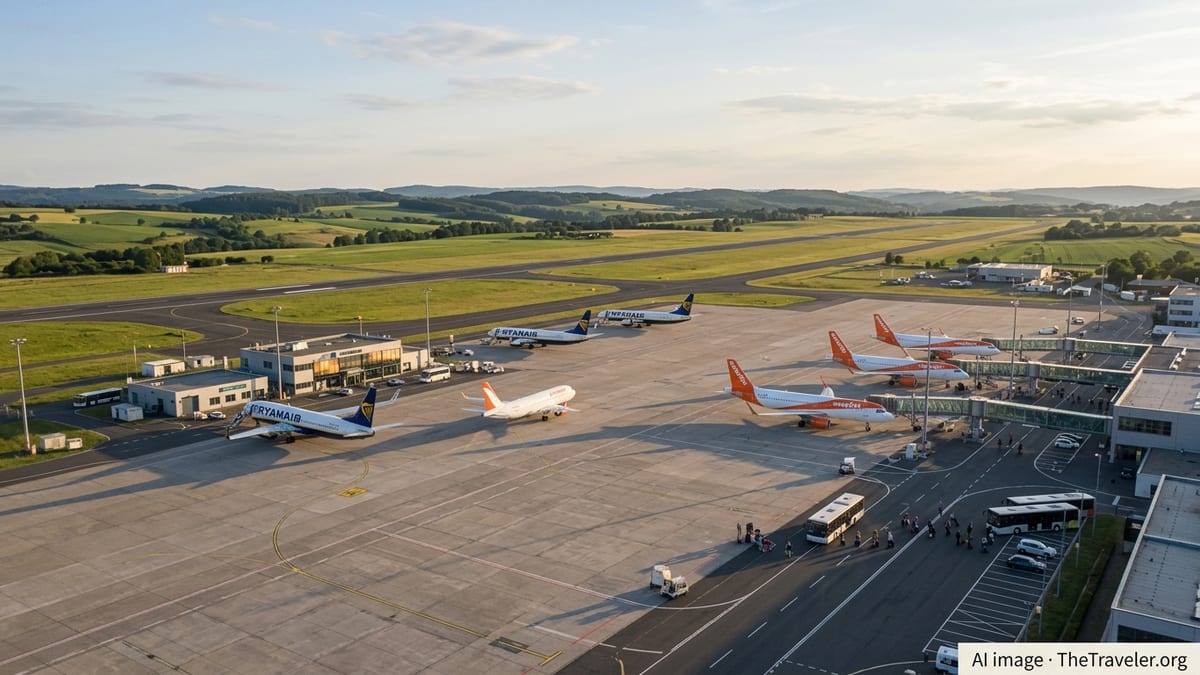
Frankfurt-Hahn Adds New Routes in Summer 2025
The regional hub in Germany’s Hunsrück region is preparing for a busier holiday season in 2025 as its new summer timetable comes into effect. Publicly available information from the airport’s latest schedule overview indicates that the number of destinations will increase to more than 40, reflecting renewed confidence in outbound leisure demand.
According to published coverage summarizing the new plans, five additional destinations are being introduced in the 2025 summer period, including fresh links operated by low cost carriers on routes to Eastern and Southern Europe. These new flights complement existing sunshine and city-break services that have helped position Frankfurt-Hahn as a budget alternative to larger German gateways.
Reports from German aviation media highlight that the airport’s strategy focuses on dense, year-round traffic to established markets, supported by seasonal growth into high-potential tourism destinations. The updated schedule is designed to capture demand from price-sensitive travelers across western Germany, the Benelux region, and neighboring areas who are willing to drive to secondary airports in exchange for lower fares.
The reinforced network comes as air travel across Europe continues to track above pre-pandemic levels, with international arrivals to the region rising steadily through 2024 and 2025. Industry barometer data shows that Western and Southern Europe have both reported solid performance, creating favorable conditions for smaller airports to expand their reach.
Romanian Cities Gain New Access to Western Europe
Romania stands out as a key beneficiary of Frankfurt-Hahn’s latest summer schedule. The airport’s official announcements and subsequent press coverage underscore the role of Wizz Air in opening new point-to-point links between Hahn and Romanian cities, including the Transylvanian hub of Sibiu as well as the capital Bucharest, with several flights per week from August 2025 onward.
These additions align with Romania’s own tourism trajectory. National statistics for late 2024 show increases in both arrivals and overnight stays at licensed accommodation compared with 2023, indicating a gradual strengthening of the sector. The country has been climbing in broader travel and tourism competitiveness rankings, reflecting improvements in infrastructure, value for money, and promotion.
The new links from Hahn are expected to serve a dual purpose: outbound German and Western European holidaymakers heading toward Romania’s cultural cities and mountain landscapes, and inbound visitors from Romania traveling to Germany for city breaks, business, and visiting friends and relatives. Point-to-point low cost routes often stimulate first-time travel between regions that were previously connected only via major hubs.
Analysts following Central and Eastern European aviation trends note that Romania has been one of the region’s faster-growing markets for short-haul capacity. Additional seats into western Germany via airports such as Hahn can therefore reinforce Romania’s profile as a mid-priced European destination for culture, nature, and emerging city tourism.
Bosnia and Herzegovina Rides a Tourism Upswing
Bosnia and Herzegovina is also seeing renewed attention from European travelers, with regional data for 2024 pointing to record-breaking tourism performance. Public data and analytical notes circulating among tourism observers describe double-digit growth in both arrivals and overnight stays, bringing the country to its highest visitor numbers on record.
While Sarajevo and Mostar remain the main magnets, smaller cities and rural regions are increasingly drawing visitors interested in outdoor activities, Ottoman and Austro-Hungarian heritage, and value-oriented city breaks. Within this context, any additional low cost capacity from Germany and neighboring markets is viewed as supportive of continued expansion.
Although Frankfurt-Hahn’s latest public schedule materials emphasize new routes primarily to Romania and Southern Europe, regional aviation documents and airport timetables elsewhere in Germany show growing links from secondary airports to Sarajevo. This broader pattern illustrates how airlines are using low cost and regional bases to feed demand into Bosnia and Herzegovina’s recovering tourism economy.
Industry commentators suggest that sustained growth in arrivals from markets such as Germany, Austria, and the Gulf region is helping Bosnia and Herzegovina transition from a niche destination into a more established stop on multi-country Balkan itineraries. Any incremental connections facilitated through Hahn and similar airports can add to the country’s visibility among independent travelers who increasingly seek less crowded European destinations.
Morocco Strengthens Its Position as a North African Favorite
Morocco has emerged as one of North Africa’s most dynamic tourism markets, with recent figures from the country’s Ministry of Tourism pointing to a record 17.4 million visitors in 2024, around one fifth higher than in 2023. International tourism barometer updates for 2025 indicate that the country continues to post some of the strongest growth rates on the African continent.
This surge is driven by the enduring appeal of cities such as Marrakech, Fez, and Tangier, as well as Atlantic and Mediterranean coastal resorts and expanding desert tourism. Morocco’s well developed accommodation base, competitive pricing, and extensive low cost air connectivity from Europe have made it a favored choice for short and medium haul breaks.
While the most recent Frankfurt-Hahn announcements center primarily on European destinations, the wider German market is seeing additional summer 2025 capacity to Moroccan gateways from regional airports, including services to cities such as Tangier and Agadir. This network effect helps sustain demand by offering German travelers multiple departure options, often with similar flight times and fare levels.
Sector reports anticipate that Morocco’s growing visitor numbers, combined with rising outbound spending from key European markets including Germany, will keep airlines interested in maintaining and gradually expanding seasonal capacity. The presence of competitive North African sun destinations within a few hours’ flight of Hahn strengthens the case for further medium term adjustments to the airport’s schedule in favor of leisure routes.
Germany’s Regional Airports Anchor Wider Tourism Growth
Germany itself remains one of Europe’s leading travel and tourism markets, with international arrival figures and outbound spending both trending upwards as the sector consolidates its post-pandemic recovery. Travel and tourism development indexes place the country among the global top tier for infrastructure, connectivity, and visitor services, underlining its role as both a major source market and a destination.
Regional airports such as Frankfurt-Hahn contribute to this position by dispersing traffic beyond the large hubs. Low cost and charter carriers use these facilities to operate point-to-point routes that respond quickly to shifting demand, particularly toward emerging destinations in Central and Eastern Europe and in North Africa.
Global tourism barometers for 2024 and 2025 report that Europe has continued to register solid growth in international tourist arrivals, with Western Europe and the Southern Mediterranean among the best performing subregions. Within this environment, Germany’s stable economic base and strong consumer demand for travel are providing airlines with confidence to introduce new seasonal routes from secondary airports.
The combination of rising tourism indicators in Romania, Bosnia and Herzegovina, and Morocco, together with Germany’s role as a key origin market, suggests that Frankfurt-Hahn’s latest summer schedule could be the precursor to deeper connectivity. As airlines monitor load factors and booking trends over the 2025 season, the performance of these routes will help determine whether further expansions follow in subsequent years.