

More news on this day
Frankfurt Airport is entering a pivotal expansion phase as work on its €4 billion Terminal 3 nears completion, signaling a major reshaping of German and European air travel connectivity from 2026 onward.
Get the latest news straight to your inbox!
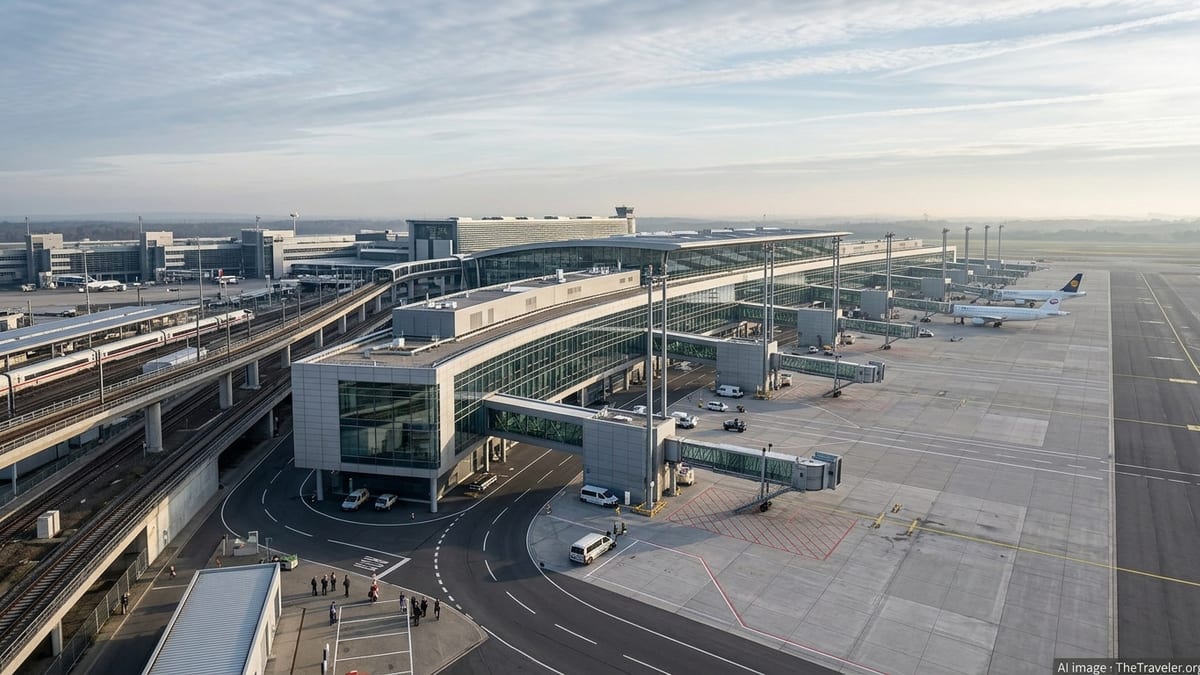
A Mega-Project Reaching the Operational Countdown
Publicly available information shows that Terminal 3 is one of the largest infrastructure projects in German aviation, with total investment of around €4 billion and an initial capacity of up to 19 million passengers a year once all three piers G, H and J are in service. Earlier planning documents outlined a longer ramp-up, but more recent presentations from Fraport indicate that the new terminal is now aligned to open in stages, with full commercial operations beginning in April 2026.
Reports indicate that the first wave of passenger flights is scheduled from 23 April 2026, following a period of large-scale passenger trials running through the first quarter and into mid-April. These trials are designed to stress-test check in, baggage systems, security screening, boarding processes and wayfinding before airlines relocate. The operator has framed this approach as critical to ensuring a stable start-up at one of Europe’s busiest hubs.
According to published coverage, Terminal 3 will initially take over traffic currently handled in older, more capacity-constrained areas of the airport, while also adding net new capacity for Frankfurt. Investor briefings suggest that when the terminal is fully integrated, Frankfurt’s overall capacity will rise significantly, creating headroom for future long haul growth and additional transfer flows.
The phased opening strategy reflects both the complexity of integrating a new facility into a live hub and the rebound in passenger demand since the pandemic. By aligning the debut of Terminal 3 with robust German and European traffic, Fraport aims to capture renewed demand while relieving congestion in existing terminals.
Designing a Next-Generation Passenger Experience
Terminal 3 is being promoted as a step change in passenger experience compared with Frankfurt’s older facilities. Official project material highlights a bright, open terminal layout with high ceilings, extensive glass frontages and clear sightlines to help travelers orient themselves quickly. The design clusters security, retail, and boarding areas to shorten walking distances and smooth passenger flows.
Publicly accessible fact sheets describe wide boarding piers with generous waiting zones and an emphasis on natural light, supported by a mix of traditional seating, work-friendly spaces and designated quiet areas. Retail and food offerings are planned around central plazas near security exits, positioning shops and dining along key paths without forcing long detours.
For connecting passengers, one of Frankfurt’s historic pain points has been the complexity of transfers between concourses and terminals. Terminal 3’s design, coupled with upgraded people-mover links, is intended to simplify these movements by offering more intuitive wayfinding, shorter transfer times to long haul gates and better separation of Schengen and non-Schengen flows.
Operationally, the new terminal is also being built around optimized ground handling layouts. Presentations to investors refer to modernized stand configurations and aerobridge usage that should reduce taxi times and improve on-time performance, a consistent focus for network carriers using Frankfurt as a primary hub.
Sky Line People Mover and the New Connectivity Spine
One of the most transformative elements of the expansion is the extension of Frankfurt’s Sky Line people mover, which will connect Terminal 3 directly with Terminals 1 and 2 as well as the airport’s rail stations. Project documentation describes a new southern station at Terminal 3 and a reconfigured central station between the long distance rail terminal and Terminal 1, creating a clearer interchange point for arriving rail passengers.
The upgraded Sky Line will function as the internal backbone of the expanded hub, carrying passengers between terminals every few minutes on a fully automated system. The alignment runs at ground level alongside the motorway before rising on viaducts near the terminal complexes, giving the trains a mostly segregated right of way and predictable journey times regardless of road traffic.
From a connectivity standpoint, this link is crucial. Frankfurt already hosts both a regional station beneath Terminal 1 and a separate long distance station for national and international high speed services. By tying these more directly to Terminal 3 via the people mover, the airport is positioning itself as an even stronger European rail air interchange, where passengers can step off an ICE train and transfer to long haul flights with a single automated ride.
Travel industry observers note that this model reflects a broader shift toward integrated mobility hubs, in which airports function as multimodal gateways rather than standalone aviation facilities. For Germany, with its dense high speed rail network, the Terminal 3 connectivity spine could reinforce Frankfurt’s role as the country’s primary long haul gateway and a contender to capture flows that might otherwise route through competing hubs.
Sustainability and Digitalization at the Core
Terminal 3 is also being framed as a showcase for more sustainable and data driven airport operations. Fraport has emphasized energy efficient construction, modern building management systems and low consumption lighting and climate control across the new complex. Public communications on the broader airport campus highlight investments in photovoltaic installations along one of Frankfurt’s runways, which are intended to increase the share of power generated from renewable sources.
Inside the terminal, the operator is preparing for a higher degree of process digitalization. Industry reporting on Fraport’s network describes ongoing trials in biometrics, smart queuing and real time passenger flow analysis at its flagship hub. Terminal 3 is expected to provide the physical platform for wider deployment of such tools, from biometric boarding and self service bag drops to dynamically managed security lanes and queuing areas.
The combination of these measures is aimed at increasing throughput per square meter while reducing energy use and improving passenger satisfaction metrics. For airlines, a more predictable and digitally supported operating environment may translate into faster turns and better schedule reliability, factors that are increasingly important in hub competition.
Environmental groups and industry analysts are likely to scrutinize how the terminal’s design and operations interact with broader climate objectives, particularly as Germany and the European Union pursue tighter emissions reduction targets. The focus on energy efficiency and on-site renewables positions Terminal 3 as part of Frankfurt’s response to those pressures, even as overall airport capacity grows.
Implications for Airlines and Passengers Across Europe
The opening of Terminal 3 is set to trigger a reshuffle of airline allocations at Frankfurt. While final details are still being refined, investor briefings suggest that a significant share of traffic will migrate to the new facility, with some older areas to be scaled back or repurposed. This could create a more distinct separation between alliance partners, leisure carriers and point to point operators across the three passenger terminals.
For passengers, the most visible changes will arrive gradually from 2026: new check in halls in the south of the airport, additional security and passport control capacity, and expanded gate options for long haul and intra European travel. The direct people mover link to the rail stations is expected to shorten connection times for travelers starting or ending their journey by train, reinforcing Frankfurt’s reputation as one of Europe’s best connected intermodal hubs.
At a regional level, the terminal’s added capacity strengthens Germany’s position in global aviation networks at a time when other major hubs in Western Europe also are investing in modernization and capacity management. Airlines looking to grow transatlantic, Middle Eastern or Asian services from central Europe are likely to view Terminal 3 as an opportunity to add frequencies or launch new routes once the facility has stabilized.
As the 2026 opening approaches, Frankfurt’s south side construction zone is steadily transforming into a working terminal that will shape how millions of passengers move through Germany each year. The combination of new capacity, integrated rail links and a more digital, energy conscious operating model is poised to redefine what travelers can expect from one of Europe’s most important hub airports.