

More news on this day
Germany is preparing to usher in a new era for its aviation sector as Frankfurt Airport readies the opening of its long-awaited Terminal 3 in April 2026, a multibillion-euro project designed to expand capacity, modernize passenger experience and reinforce the country’s role as a key European air hub.
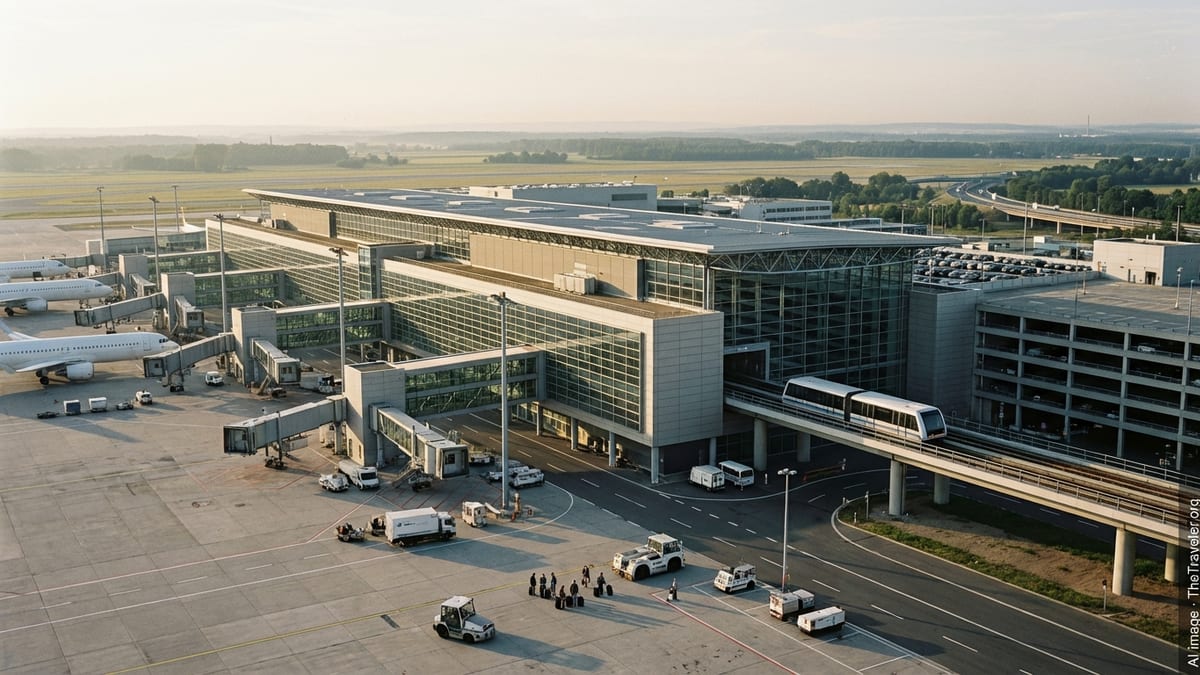
Official Opening Marks a Milestone for German Aviation
Frankfurt Airport’s operator, Fraport, has confirmed that Terminal 3 in the southern part of the airport will formally open in late April 2026, following a decade of construction and an extensive test phase with thousands of volunteer passengers. The new facility, one of Europe’s largest privately financed infrastructure projects, is being hailed by German officials and industry observers as a pivotal investment in the country’s long-term connectivity.
The terminal will initially go into operation with three piers, designated G, H and J, and has been engineered to handle around 19 million passengers annually in its first configuration. This additional capacity is intended to relieve pressure on Frankfurt’s existing terminals and provide room for growth as international air travel continues to recover and expand after the disruptions of recent years.
A ceremonial opening with invited guests and media is scheduled shortly before the start of regular operations, underlining the project’s national significance. The inauguration will cap years of work that carried on through the COVID-19 pandemic and global supply chain challenges, factors that have delayed or downsized similar airport projects elsewhere in Europe.
Design, Capacity and Technology at the New Terminal
Terminal 3 has been conceived as a modern, light-filled complex focused on efficient passenger flows and high operational resilience. At full initial build-out, the terminal’s piers will offer two dozen aircraft positions, including several stands configured for large widebody jets such as the Airbus A380 and Boeing 747. The buildings sit on a vast site in the airport’s southern zone, giving airlines significant room for future development.
Inside, the terminal combines high ceilings, expansive glass façades and clear sightlines intended to simplify orientation for travelers. The check-in hall is equipped with extensive self-service and fast bag-drop facilities, allowing passengers who have checked in online to move quickly through the first stages of their journey. Fraport is also installing 21 security lanes featuring computed tomography scanners, which can reduce the need to remove liquids and electronics from cabin baggage and help speed screening.
Beneath the terminal, an 11-kilometer-long baggage handling system snakes through multiple levels, designed to process luggage quickly and with a high degree of automation. This system, together with advanced building management and airfield operations technology, has been subject to months of trials ahead of the opening, including simulated disruptions such as power failures or baggage jams to fine-tune contingency procedures.
Connectivity Boosted by New Sky Line Rail Link
To integrate the new facility into the broader airport campus, Frankfurt is introducing a fully automated Sky Line people mover that will connect Terminal 3 with the existing Terminals 1 and 2. Running on a 5.6-kilometer route, the new line is designed to carry up to 4,000 passengers per hour in each direction, with trains departing roughly every two minutes.
The journey time from Terminal 1 to Terminal 3 is expected to be around eight to ten minutes, giving both connecting passengers and airport employees a predictable and free transfer option between the terminals. New and upgraded stations at Terminal 1, Terminal 2 and Terminal 3 will provide barrier-free access and direct links to the regional and long-distance rail hubs at the airport.
For travelers arriving by road, a new multi-storey car park adjacent to Terminal 3 will offer thousands of parking spaces, while a dedicated drop-off zone will allow quick passenger set-down in front of the departures area. A bus terminal on the arrivals level will plug the new facility into the wider Rhine-Main public transport network, with services to nearby cities including Frankfurt, Darmstadt and other regional centers.
Airline Moves and Competitive Dynamics
The opening of Terminal 3 will trigger a phased reshaping of airline operations at Frankfurt. In the weeks following the launch, dozens of carriers currently based in Terminal 2 are scheduled to relocate to the new complex in multiple waves, spreading the transition to minimize disruption. The terminal is authorized to handle both Schengen and non-Schengen traffic, giving airlines flexibility in scheduling European and intercontinental services.
Beyond the initial relocations, Terminal 3 is expected to play a growing role in competitive repositioning among carriers at Germany’s busiest airport. Independent leisure airline Condor has already announced plans to shift its Frankfurt operations into the new terminal from summer 2027, a move that underscores its strategic separation from former partner Lufthansa and its focus on point-to-point holiday traffic rather than tight interline connections.
Industry analysts say the new facility could gradually concentrate a mix of leisure, hybrid and non-alliance carriers under one roof, while network airlines with large connecting banks remain anchored in Terminals 1 and 2. That segmentation could influence how passengers choose routings via Frankfurt, especially for long-haul trips combining low-cost or leisure sectors with mainline flights.
Passenger Experience and Economic Impact
For travelers, the opening of Terminal 3 promises a noticeably different pre-flight experience compared with older parts of Frankfurt Airport. The new piers will house a curated mix of shops, bars and restaurants on nearly 3,000 square meters of space, ranging from German bakery outlets and quick-service snack bars to more upscale dining concepts. Seating areas, natural light and acoustic treatments have been prioritized to create a calmer atmosphere in gate zones and central waiting areas.
Art installations, including a large kinetic sculpture in the check-in hall, are intended to give the building a distinctive identity and reinforce Frankfurt’s image as a gateway to Germany’s cultural and economic heartland. Digital wayfinding, generous charging facilities and upgraded lounges are also part of the project’s broader goal of repositioning the airport as a more pleasant transfer point for global travelers.
Economically, Terminal 3 represents a multibillion-euro commitment by Fraport and its partners at a time when many airports are still rebuilding balance sheets after the pandemic. Local officials argue that the expansion is essential to preserve the region’s status as a logistics and business hub, supporting thousands of construction and permanent jobs and anchoring future growth in sectors from tourism to trade.
As the April 2026 opening approaches, the terminal’s systems are undergoing intensive testing with thousands of volunteer “passengers” to validate processes from check-in to boarding. Their feedback, along with the final fine-tuning of the Sky Line and ground transport links, will shape how smoothly Germany’s newest major aviation project slots into daily operation at one of Europe’s most important airports.