

More news on this day
Fraport Greece’s network of 14 regional airports reportedly recorded more than a nine percent increase in passenger traffic in February 2026 compared with a year earlier, reinforcing the upward momentum in Greece’s air travel market and adding fresh support to the country’s tourism-driven economy.
Get the latest news straight to your inbox!
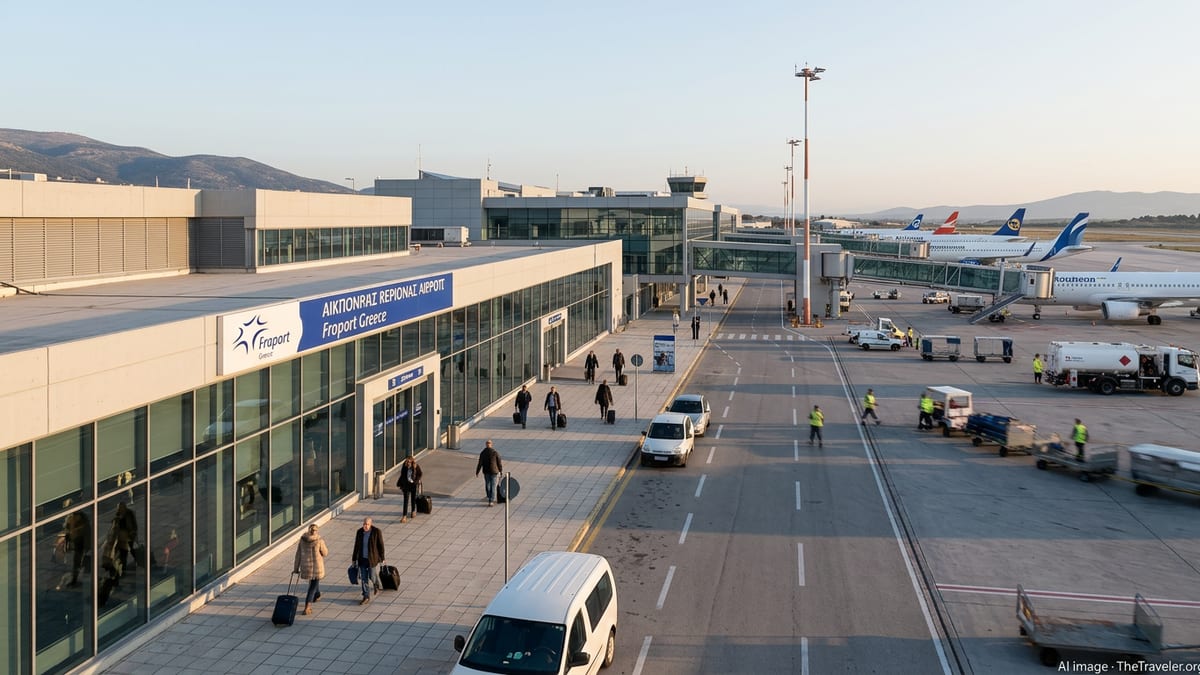
Stronger Winter Traffic Signals Robust Demand
The February rise follows a series of positive monthly results, including an 8.1 percent year on year increase in January 2026 passenger volumes across the Fraport Greece portfolio, according to publicly available figures. Combined, the early 2026 data point to a solid winter performance at airports that traditionally rely on summer tourism, suggesting that demand is broadening beyond the peak holiday period.
Reports indicate that the February 2026 expansion was driven by both domestic and international traffic, with particularly strong flows through key gateways such as Thessaloniki, Rhodes and Corfu. These regional hubs serve major urban centers and popular island destinations, making them important bellwethers for travel sentiment to and within Greece.
The latest numbers build on a record 2025, when Fraport Greece’s 14 airports collectively handled about 37 million passengers, up from roughly 36 million in 2024. Industry coverage notes that traffic at these regional airports has climbed sharply since the start of the concession, reflecting the combined effect of infrastructure upgrades, broader route networks and the sustained appeal of Greek destinations.
Market analysts view the winter traffic gains as particularly significant because they come after several years of recovery and growth. Incremental increases at this stage suggest that demand is not only rebounding from past disruptions but also setting new baselines for future capacity planning and investment.
Airport Upgrades Translate into Operational Gains
Fraport Greece assumed responsibility for the 14 regional airports in 2017 under a long term concession, and has since completed an extensive modernization program that included new terminals, expanded aprons and upgraded airside facilities. Public information from the company indicates that this investment phase has enhanced airport capacity and improved passenger handling, supporting smoother operations during periods of heightened demand.
The more than nine percent increase in February 2026 has been widely interpreted as a sign that these infrastructure improvements are translating into more efficient use of airport assets. Higher throughput with stable service levels suggests that terminals, security checkpoints and boarding facilities are better equipped to manage peaks in traffic without prolonged delays or congestion.
Observers also note that the upgraded airports are now more attractive to airlines planning route expansions across the Eastern Mediterranean. Improved turnaround times, expanded gate availability and modern passenger amenities can strengthen the commercial case for new services, especially from carriers seeking to deploy capacity outside major hubs such as Athens or Heraklion.
In addition, enhanced operational resilience is viewed as crucial following recent episodes of disruption in Greek airspace. While such events can temporarily affect flight schedules, better equipped regional airports are seen as helpful in managing backlogs and restoring regular operations once restrictions are lifted.
Boost for Greece’s Tourism and Regional Economies
Tourism accounts for a significant share of Greece’s economic activity, and recent reports for 2025 highlighted record revenues and arrivals. The continued rise in passenger traffic at Fraport Greece airports in early 2026 is seen as a direct contributor to this trend, signaling that the pipeline of visitors remains strong heading into the main summer season.
Regional airports operated by Fraport Greece serve some of the country’s most visited destinations, including popular islands and secondary cities. Increased traffic in February 2026 suggests that more travelers are accessing these areas earlier in the year, providing an off season boost to hotels, restaurants, transport providers and local service businesses that depend heavily on visitor spending.
According to sector commentary, the spread of growth across both domestic and international segments is also important. Stronger domestic aviation connectivity allows Greek residents to travel more frequently between regions, while consistent inflows from key markets such as the United Kingdom, Germany and other European countries underpin foreign tourism receipts.
Local business associations and tourism bodies are expected to monitor whether the early year gains evolve into sustained higher occupancy rates and longer seasons. If the February surge is followed by similarly strong figures in March and April, many regions could see a more balanced distribution of arrivals throughout the year, rather than a sharp concentration in July and August.
Extended Season Strategy Shows Signs of Success
Greek tourism authorities and industry stakeholders have in recent years focused on extending the traditional season, promoting travel in spring and autumn through targeted campaigns and new aviation partnerships. The reported more than nine percent increase in February 2026 passenger traffic at Fraport Greece airports is being viewed within this broader strategy as an encouraging sign of progress.
Published coverage on previous months’ data suggests that off peak periods such as November and early winter have already started to exhibit steady growth. February’s stronger performance appears to continue that trend, indicating that travelers are increasingly open to visiting Greece outside the hottest summer months for cultural tourism, city breaks and nature oriented experiences.
Airlines have supported this shift by maintaining or adding shoulder season routes, linking regional Greek airports with major European cities. These connections make it easier for travelers to plan short breaks and last minute trips, which are often scheduled in late winter and early spring when fares and accommodation prices can be more competitive.
For destinations served by Fraport Greece, a more evenly distributed season can help alleviate strain on infrastructure and the environment during peak weeks. It can also provide more stable employment in tourism reliant communities, as businesses can keep staff on for longer periods if visitor flows remain consistent over more months of the year.
Outlook: Capacity, Connectivity and Competition
With early 2026 traffic indicators pointing upward, attention is now turning to how Fraport Greece and its partners will manage further growth across the regional airport network. Industry watchers expect continued focus on optimizing capacity through better scheduling, digital passenger services and incremental investments in airside and landside facilities.
The competitive landscape is also evolving as other Mediterranean destinations vie for market share. Greece’s advantage lies in its combination of diverse locations and improving connectivity, and the February 2026 data support the view that regional airports are playing a central role in sustaining that competitive edge.
Observers note that maintaining high service standards will be critical as passenger numbers increase. Efficient check in processes, reliable baggage handling and clear wayfinding are seen as key elements for ensuring positive traveler experiences, which in turn influence repeat visitation and word of mouth recommendations.
As airlines finalize their schedules for the summer 2026 season, the stronger winter performance at Fraport Greece airports is likely to factor into decisions about aircraft deployment and frequency. If the current trajectory holds, Greece’s regional gateways appear poised to handle another busy year, with February’s more than nine percent rise in passenger traffic serving as an early indicator of sustained momentum across the country’s travel and tourism sector.