

More news on this day
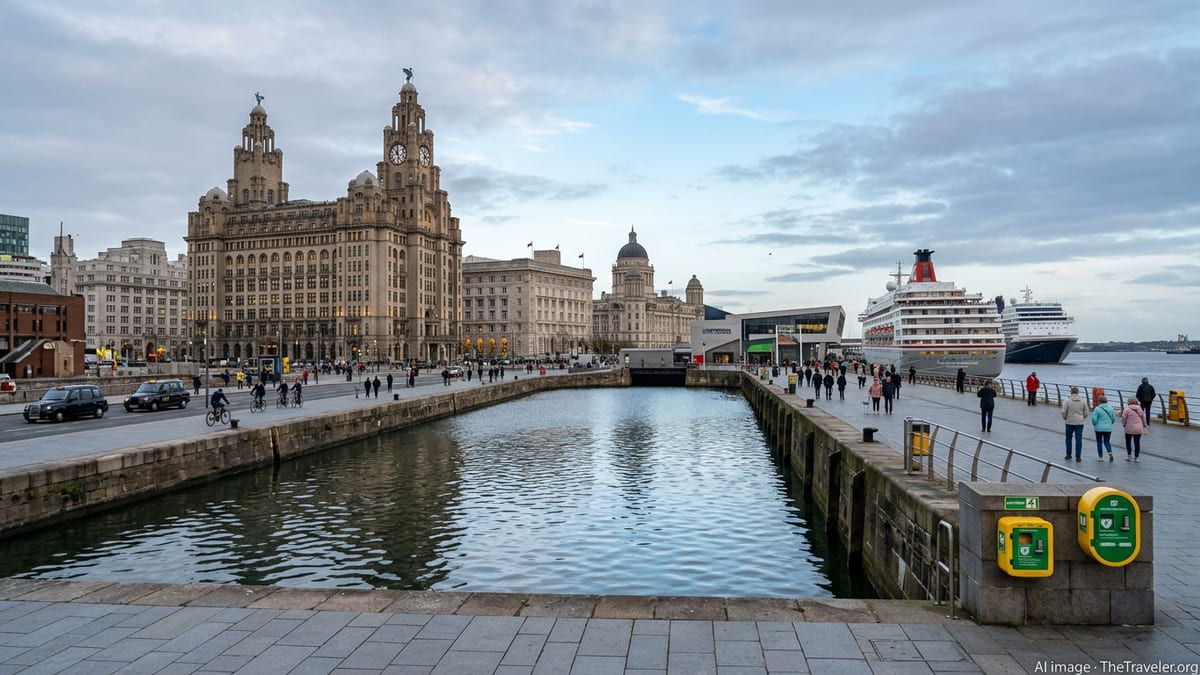
Liverpool’s famous waterfront is poised to become safer for visitors and cruise passengers, as Fred. Olsen Cruise Lines backs new community defibrillator provision as part of a 2026 partnership with Liverpool Cruise Port and local stakeholders.
Get the latest news straight to your inbox!
New Partnership Targets Health and Safety Along the Waterfront
According to recent press material from Fred. Olsen Cruise Lines, the company has entered a 2026 community engagement and sustainability partnership with Liverpool Cruise Port that includes support for community defibrillator provision across the port estate. The initiative is designed to improve access to lifesaving equipment in and around the busy cruise terminal at the Pier Head, where thousands of visitors embark and disembark each season.
The partnership frames the waterfront as both a homeport and destination for the line, underscoring Liverpool’s role in Fred. Olsen’s UK deployment. Publicly available information indicates that activity will be coordinated with Liverpool City Council, port operators and maritime organisations to ensure that new devices are positioned where passenger footfall is highest, including cruise check in areas and adjacent public spaces.
While detailed installation timetables have not yet been published, the community defibrillator element sits alongside a broader focus on health, safety and wellbeing across the port. The move reflects a wider industry trend in which cruise lines are extending their safety remit beyond the ship, responding to growing expectations from passengers and local communities.
For Liverpool, the initiative arrives as the city continues to refine the way its historic waterfront welcomes visitors, with cruise traffic forming a visible part of the tourism mix alongside museums, galleries and major events.
Liverpool Builds on Citywide Defibrillator Rollout
The cruise-led plan dovetails with a wider public health push in Liverpool. In early March 2026, Liverpool City Council reported the completion of a citywide rollout of automated external defibrillators across council-owned buildings, creating a network of 100 devices registered on the British Heart Foundation’s national system. That programme aims to cut response times in out-of-hospital cardiac arrests by making it easier for emergency services and bystanders to locate the nearest equipment.
By focusing specifically on the waterfront and cruise port, Fred. Olsen’s latest initiative effectively layers an additional safety net over one of the city’s most heavily visited districts. The Pier Head and surrounding docks attract a mix of cruise guests, day trippers and local residents, with seasonal spikes during major events and school holidays.
Publicly available information suggests that collaboration between the cruise line, Liverpool Cruise Port and local authorities is intended to avoid duplication and close gaps in coverage. While the council network targets civic buildings and community hubs, port-backed devices are expected to concentrate on passenger flows around terminals, coach drop off points and waterfront promenades.
For international visitors unfamiliar with the city, clearly signed and well maintained defibrillators in high profile locations can provide an added sense of reassurance, particularly for older guests and those travelling with underlying health conditions.
Tourism Growth Drives Focus on Visitor Wellbeing
Recent destination marketing updates from the Liverpool City Region highlight the city’s status as one of the United Kingdom’s leading urban breaks, with strong growth in short stays, cultural tourism and events. Cruise calls form part of that offer, bringing day visitors directly into the heart of the waterfront and feeding footfall into attractions at the Royal Albert Dock, the Museum of Liverpool and the surrounding public realm.
As tourism volumes rise, the pressure on local infrastructure and emergency response systems increases. Industry observers note that health-focused measures such as defibrillator networks are becoming a key component of what cities describe as a “safe, welcoming” visitor experience. The waterfront, in particular, is a focal point for this effort, with public bodies consulting on long term plans for improved public spaces, transport connections and crowd management.
Within this context, Fred. Olsen’s move to explicitly support community defibrillator provision aligns with broader destination goals. It presents the waterfront not only as a scenic backdrop for departure photos, but also as a place where modern safety expectations are taken seriously, from accessible cruise boarding processes to robust emergency preparedness.
For the travel sector, the initiative offers a case study in how cruise lines can participate in destination management beyond marketing campaigns, by contributing directly to physical infrastructure that benefits both guests and local communities.
Cruise Industry Embraces Shore-Side Responsibility
Across the cruise industry, companies are increasingly highlighting environmental, social and governance commitments in their public reporting. Fred. Olsen Cruise Lines, which already promotes a range of environmental and community programmes, is positioning its Liverpool partnership as part of a wider effort to generate positive local impact in ports of call and homeports.
Community defibrillator provision fits within this narrative of shore-side responsibility. While onboard medical facilities remain the primary safety resource for passengers at sea, sudden cardiac events can occur on the quayside, in terminal buildings or in nearby public spaces before and after a voyage. Having easily accessible, publicly registered devices along key pedestrian routes can improve outcomes in those critical early minutes before professional help arrives.
Analysts of cruise destination strategies point out that such initiatives can also support port authorities as they navigate expectations from residents. In cities where cruise tourism has grown rapidly, local debate often focuses on environmental impact, congestion and the balance of costs and benefits. Visible investments in community safety infrastructure may help demonstrate that cruise operations can be aligned with local priorities.
As Liverpool continues to review how its cruise terminal is managed commercially, the emphasis on joint projects that produce tangible public benefits may become an increasingly important part of negotiations between operators, the city and private partners.
What Safer Waterfronts Mean for Future Visitors
For visitors planning a cruise holiday from Liverpool, the immediate impact of the new initiative will be subtle rather than dramatic. Most travellers will simply notice clearer safety signage, more prominent defibrillator cabinets in and around the terminal, and potentially a higher profile for first aid awareness on and off the ship.
Behind the scenes, the combination of a citywide defibrillator network and a cruise-led focus on the waterfront is gradually reshaping Liverpool’s visitor infrastructure. The waterfront plan now encompasses not only new green spaces and improved walking routes, but also quietly embedded health and safety measures that support a growing, more diverse visitor base.
As the 2026 partnership programme unfolds, travel industry watchers will be looking to see how the Liverpool model might be replicated in other UK ports. If the collaboration between a mid sized cruise brand, a city cruise port and local authorities delivers measurable improvements in emergency readiness, it could provide a blueprint for similar lifesaving upgrades in other historic waterfronts.
For now, the message to would be visitors is that Liverpool’s celebrated skyline, cultural attractions and cruise departures are increasingly underpinned by infrastructure designed to keep both tourists and residents safer along the Mersey.