

More news on this day
Fred. Olsen Cruise Lines is helping fund new public defibrillators in Liverpool as part of a wider community engagement push, strengthening emergency response capacity around the city’s busy waterfront and cruise facilities.
Get the latest news straight to your inbox!
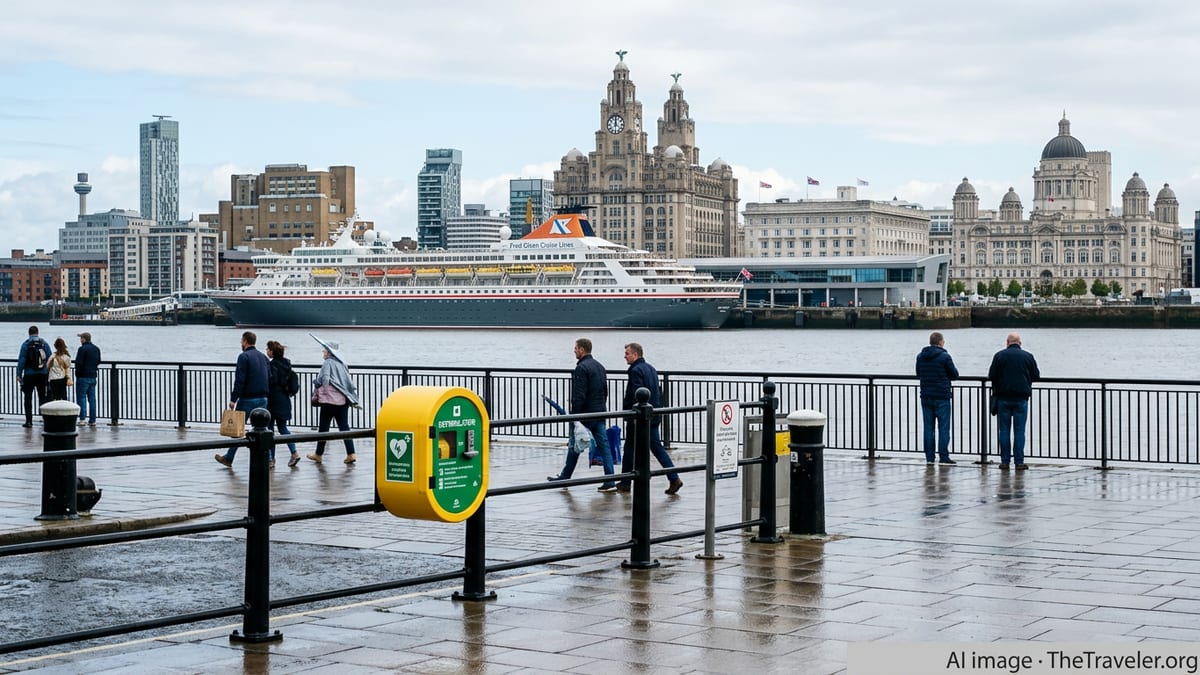
A New Focus on Waterfront Safety
Publicly available information indicates that Fred. Olsen Cruise Lines is expanding its community work in Liverpool beyond cruise operations, with support for new defibrillator installations among the measures intended to enhance safety for residents, visitors and cruise guests. The initiative sits within a broader focus on community wellbeing at one of the United Kingdom’s most active cruise gateways.
Reports on recent partnership plans between Liverpool Cruise Port and Fred. Olsen highlight community defibrillator provision as a specific area of attention. The new devices are expected to be located in and around the port estate and key pedestrian routes, where cruise passengers, port workers and local people mix in large numbers, particularly on busy sailing days from the city’s waterfront terminals.
Although detailed technical specifications and the final list of locations have not been widely released, indications are that the units are intended for public access rather than restricted professional use. That approach reflects a national trend in the UK to equip high footfall transport and tourism areas with defibrillators that can be used quickly by members of the public guided by clear instructions and integrated emergency-call systems.
Why Defibrillators Matter in a Cruise City
Liverpool’s role as a turnaround and transit port for regional and international sailings means that thousands of travellers move through the waterfront area across the cruise season. Cardiac-related medical emergencies can occur without warning, particularly among older travellers, and early access to defibrillation is widely recognised as a key factor in survival rates for sudden cardiac arrest.
In that context, the decision to back additional defibrillators is significant for both the tourism economy and local communities. Cruise passengers arriving to join sailings on ships such as Fred. Olsen’s Bolette, day visitors coming ashore to explore the city, and residents using the public realm around the waterfront all stand to benefit from faster access to life-saving equipment within a short walking distance.
The move also aligns with broader trends in port-city planning that treat cruise terminals as integrated parts of the urban fabric rather than isolated infrastructure. By contributing to emergency readiness in shared public spaces, cruise companies can play a practical role in the health and safety framework of their homeports, complementing the onboard medical facilities that already exist on modern vessels.
Part of a Wider Liverpool Community Partnership
The emphasis on defibrillator provision forms one strand of a broader community engagement and sustainability programme that Liverpool Cruise Port and Fred. Olsen Cruise Lines are preparing for the 2026 season. According to published coverage, the partners intend to link cruise operations with social impact projects that range from support for regional health services to environmental and maritime-focused activities.
Plans referenced in recent announcements include engagement with national and international awareness days related to seafaring, coastal conservation and diversity in maritime careers. Within that package, investment in community defibrillators is grouped with other health and wellbeing actions designed to deliver tangible benefits beyond immediate cruise revenue.
For Liverpool, which has invested heavily in its waterfront renaissance and cruise infrastructure, such initiatives provide another layer of value from visiting and homeported ships. For Fred. Olsen, whose itineraries frequently start or finish in the city, the partnership offers a way to root its operations more deeply in the local community and to highlight a commitment to responsible travel among prospective guests.
What Visitors and Locals Can Expect
Once the new defibrillators are installed, visitors to the Liverpool waterfront can expect to see clearly marked cabinets or units in prominent public locations, typically accompanied by signage explaining how to access and operate the equipment in an emergency. These installations are usually designed so that any bystander can retrieve a device after calling the emergency services, with spoken prompts from the defibrillator guiding the user through each step.
For cruise passengers, the expanded network of devices should complement safety briefings and medical support already available on board. While ships maintain their own clinical facilities and trained staff, cardiac incidents and other medical issues can occur before embarkation, during shore time or in the surrounding port areas, where response times can make a critical difference.
Local residents and workers in the cruise port district also stand to gain from a denser network of life-saving equipment within everyday walking routes. Over time, public familiarity with the presence and purpose of the devices can help normalise rapid bystander intervention in cardiac emergencies, a pattern seen in other UK cities that have adopted extensive public-access defibrillator programmes.
Implications for Responsible Cruise Travel
The decision to sponsor defibrillator installations illustrates how cruise lines can integrate health and safety considerations into their broader sustainability and community strategies. By contributing to medical resilience in a host city, cruise operators demonstrate that their role extends beyond ship-based experiences and port fees to shared responsibility for public spaces used by guests and locals alike.
For travellers choosing a sailing from Liverpool, developments such as these may form part of a wider picture when assessing how a brand approaches social responsibility. Alongside factors like environmental performance, employment practices and local sourcing, visible support for community health infrastructure can influence perceptions of how well cruise tourism fits into the long-term interests of port cities.
As the 2026 programme in Liverpool evolves, further details on the number, placement and management of the sponsored defibrillators are expected to emerge through local authorities, port updates and community partners. For now, the initiative signals a clear intent to match Liverpool’s growing cruise profile with stronger safeguards for everyone who spends time on its revitalised waterfront.