

More news on this day
Freeport on Grand Bahama Island is preparing for a significant upscale shift as MSC Group advances plans for a new MSC Beach Club within the Grand Lucayan resort, positioning the city for a higher-end cruise and resort market.
Get the latest news straight to your inbox!
Grand Lucayan Land Deal Anchors MSC Beach Club Vision
Publicly available information indicates that MSC Group, through its infrastructure arm CTL Maritime, has agreed to acquire a section of the Grand Lucayan resort in Freeport to develop the MSC Beach Club. Reports describe the site as part of the former Reef Village area, a waterfront stretch long viewed as prime but underused real estate within the wider resort complex.
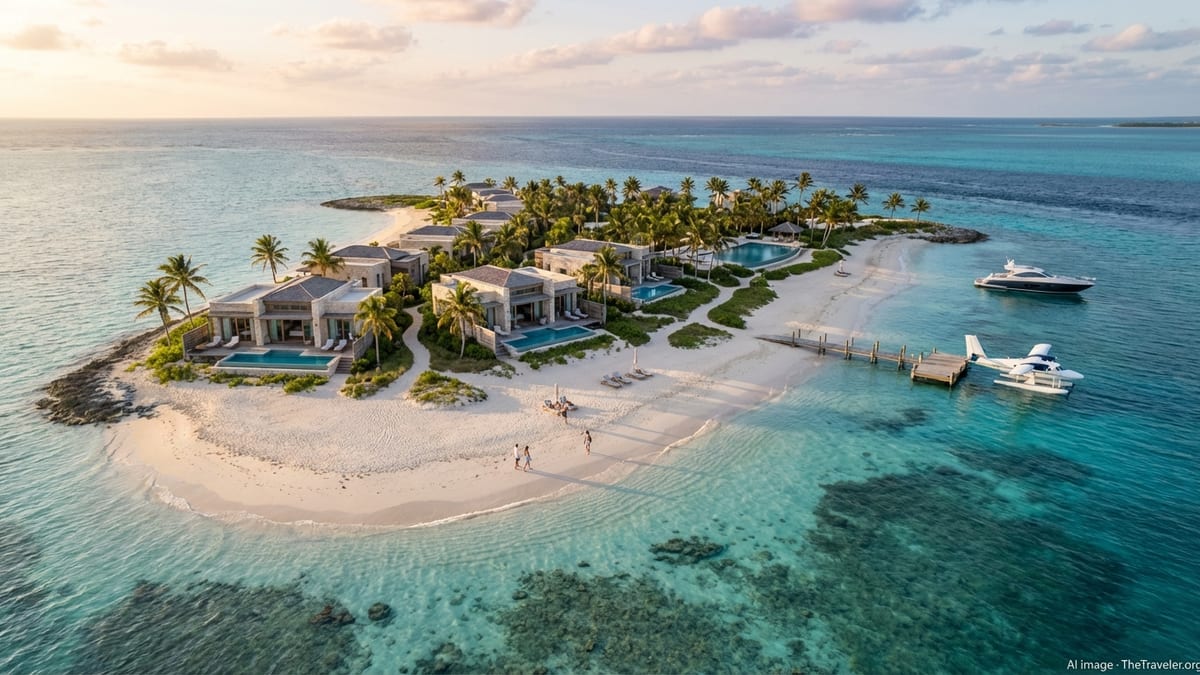
The new MSC Beach Club is expected to function as a dedicated waterfront enclave tailored to cruise guests and resort visitors, with upgraded beach, pool and leisure amenities. Coverage of the agreement highlights that the club is planned as part of a broader repositioning of Grand Lucayan from distressed asset to full-service destination, integrating day visitors from ships with longer-stay clientele on the island.
According to recent local and regional reporting, the beach club will be joined on neighboring parcels by a separate resort project under the Ancient Waters Bahamas banner and a revived Reef golf course slated to carry the Greg Norman brand. Together, these elements are being framed as the core of a new, more premium hospitality district on Freeport’s main tourist beachfront.
While detailed design renderings and timelines have not yet been widely released, statements summarized in business and tourism coverage suggest that planning work is advanced enough for the partners to publicly link the beach club to ambitious visitation targets for Grand Bahama over the coming years.
Part of a Nearly $1.5 Billion Bahamas Investment Push
The MSC Beach Club at Grand Lucayan is emerging as one component of a much wider spending program by MSC in The Bahamas. Cruise industry briefings and business reports note that the company now associates its commitments in the country with a combined value approaching 1.5 billion dollars, spanning island destinations, port infrastructure and resort real estate.
Alongside the Grand Lucayan project, MSC is moving ahead with a major cruise complex at Billy Cay in Freeport. Industry coverage describes that development as a roughly 450 million dollar plan, with about 400 million dollars earmarked for a new pier and terminal capable of handling modern megaships, and an additional tranche reserved for guest-facing features that include a beach-focused experience.
Further south in the archipelago, MSC is also expanding Ocean Cay MSC Marine Reserve, the company’s existing private island destination. Recent corporate updates outline extended pier facilities, new attractions and enhanced guest areas scheduled to roll out over the next several years, underscoring the cruise line’s strategy of building a network of Bahamian beach and nature experiences linked to its Caribbean itineraries.
Taken together, these initiatives are being interpreted by regional observers as a clear signal that MSC intends to compete directly with rival lines that have already established multiple branded beach destinations in The Bahamas. The Freeport beach club is positioned within that strategy as a distinctive urban-adjacent counterpart to the more remote private island model.
Freeport Targets Higher-Spend Cruise and Resort Visitors
Local commentary collected in Bahamian media portrays the MSC Beach Club as a potential catalyst for Freeport’s long-sought tourism revival. For years, the city has welcomed regular cruise calls but struggled to convert day trippers into substantial on-island spending, with many passengers opting to remain on board or confining their activities to limited port-side options.
By situating the beach club and associated resort projects on Grand Lucayan’s prominent shoreline, planners aim to offer a ready-made upscale environment that can appeal to both short-stay and overnight guests. Reports suggest that stakeholders are especially focused on attracting visitors interested in higher-end dining, wellness, golf and water-based recreation, rather than relying solely on low-cost beach breaks.
Economic projections circulating in business coverage indicate that MSC’s combined Bahamian investments, including the Freeport initiatives, could generate more than a thousand jobs across the country once fully operational. Grand Bahama officials and private-sector figures quoted in recent reports have linked the Grand Lucayan redevelopment to aspirations of eventually drawing up to one million visitors annually to the island.
Analysts note that success will depend not only on the quality of the beach club itself but also on the ease with which guests can move between the waterfront enclave, Freeport Harbor, the new Billy Cay facilities and the wider city. The integration of transport, tour offerings and retail experiences is being watched closely as project details are refined.
Rising Competition Among Bahamian Beach Destinations
The MSC Beach Club announcement comes amid an intense wave of investment by global cruise brands into Bahamian beach destinations. Carnival Cruise Line is bringing its Celebration Key destination on Grand Bahama to market, Disney Cruise Line has opened Lookout Cay at Lighthouse Point, and other major players continue to refine their private island offerings across the archipelago.
Industry analysts point out that this competition is reshaping expectations for Freeport, traditionally viewed as a functional but less glamorous port of call. With a purpose-built beach club linked directly to a flagship resort, MSC’s project is seen as an attempt to match or surpass the curated experiences that lines now offer on exclusively controlled cays and peninsulas.
Unlike remote private islands that can feel detached from local communities, the Grand Lucayan setting places the MSC Beach Club within the urban fabric of Freeport. Commentators in regional coverage emphasize that this proximity could allow visitors to move more easily beyond the beach enclave to independent businesses, excursions and cultural sites elsewhere on the island.
At the same time, observers caution that the bar for service, cleanliness and entertainment will be high, given the polished standard now associated with competing destinations in The Bahamas. How successfully Freeport’s new beach club integrates local character with international resort expectations is likely to influence guest satisfaction and itinerary planning for years to come.
Transformative Potential for Grand Bahama’s Tourism Landscape
While many operational details of the MSC Beach Club remain to be finalized, the project’s announcement has injected a note of optimism into discussions about Grand Bahama’s economic future. The island has endured hurricanes, property closures and uneven tourism demand over the past decade, leaving iconic properties such as Grand Lucayan in prolonged limbo.
By tying a rejuvenated resort complex to both a high-profile beach club and a new cruise port development, MSC and its partners are aligning with long-standing government and private-sector plans to reposition Freeport as a gateway for higher-yield tourism. Supporters of the strategy argue that premium beach and resort experiences can help lengthen stays, increase per-visitor spending and justify further upgrades to infrastructure and airlift.
Travel planners are beginning to factor these changes into forward-looking coverage of Bahamian cruise and resort options, noting that itineraries combining Ocean Cay, Freeport and other ports could deliver a more varied mix of beach, city and nature experiences. For Freeport in particular, the MSC Beach Club is emerging as a symbol of a broader attempt to shift perceptions from industrial hub to aspirational island escape.
As construction timelines are clarified and design information becomes public, attention within the travel industry is expected to focus on how quickly the Grand Lucayan shoreline can be transformed into the kind of polished, amenity-rich environment that today’s cruise and resort guests increasingly expect from The Bahamas’ most talked-about new beach destinations.