

More news on this day
Hundreds of British Airways passengers en route from London to Houston were left stranded for nearly two days on a freezing Canadian island without access to their luggage after an emergency diversion, according to multiple recent reports.
Get the latest news straight to your inbox!
Medical Emergency Leads to Remote Island Diversion
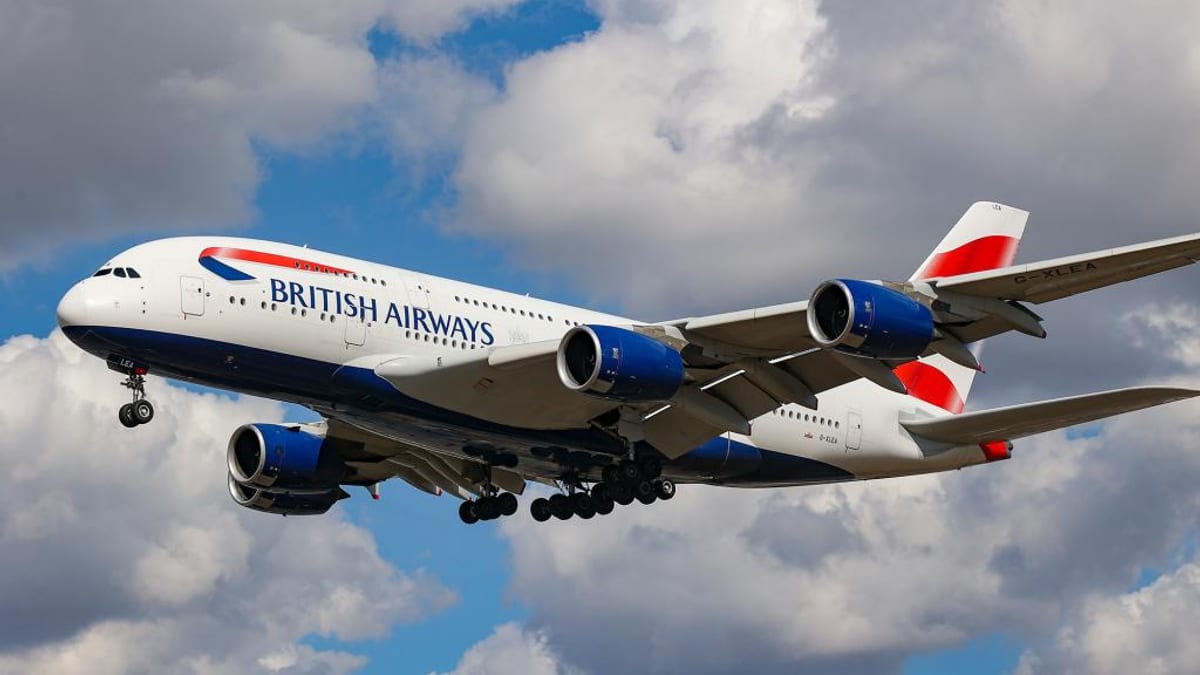
Publicly available flight data and news coverage indicate that British Airways flight BA195 from London Heathrow to Houston was diverted this week to St. John’s, on the island of Newfoundland, following a reported medical emergency on board. The widebody aircraft, carrying roughly 260 passengers, landed safely at the small Atlantic gateway, where the affected traveler was taken for treatment and the aircraft underwent checks.
What began as a routine precaution quickly escalated into a prolonged disruption. Passengers expecting to continue to Texas found themselves unexpectedly marooned on an island thousands of miles from their final destination, as the airline grappled with crew duty limits, aircraft availability and winter weather constraints at the remote airport.
Reports from outlets including travel and local media describe temperatures hovering around or below freezing, with snow and wind common at this time of year. While the airport at St. John’s is accustomed to harsh weather, the sudden influx of a long-haul planeload of international travelers placed pressure on local infrastructure and available hotel rooms.
British Airways has stated in public comments carried by several outlets that safety and the wellbeing of the ill passenger formed the basis of the diversion decision. However, the subsequent handling of stranded travelers has drawn mounting criticism from those affected and from consumer advocates.
Passengers Describe Two Days Stranded Without Luggage
Accounts compiled from published coverage and social media posts outline a chaotic 48 hours in which passengers say they were left without their checked luggage, limited access to basic toiletries, and inconsistent information about when they would be able to leave Newfoundland. Travellers described being shuttled between the airport and hotels, or waiting in terminal areas while crew and operations teams attempted to organize onward travel.
Reports indicate that for security and logistical reasons the airline kept checked bags on board the grounded aircraft for much of the disruption. Several passengers said they were left to buy cold-weather clothing, medication and personal items locally, having packed most essentials in their checked suitcases rather than in carry-on bags, expecting a standard transatlantic trip.
Some travelers also highlighted challenges for families with young children and older passengers coping with jet lag, fatigue and the sudden shift into wintry conditions. While local businesses and the airport community in St. John’s have been credited in coverage and online posts with stepping in to assist, the airline’s own response has been widely portrayed as slow and fragmented.
By the time a replacement aircraft and rested crew were available, the delay had stretched close to two full days. Many passengers missed connections and onward domestic flights in the United States, while others reported lost work days and additional accommodation costs on top of the unplanned stay in Newfoundland.
Airline Response and Compensation Efforts Under Scrutiny
According to reports in international and travel trade media, British Airways has offered affected passengers electronic vouchers valued at several hundred pounds each as a gesture of goodwill following the disruption. The move has been met with mixed reactions, with some travelers welcoming any form of compensation and others arguing that the vouchers do not adequately reflect the expenses incurred or the scale of inconvenience.
Under current regulations, long-haul diversions triggered by medical incidents or other safety-related causes typically fall outside strict compensation frameworks, which focus on controllable delays such as technical issues or crew misallocation. As a result, the level of reimbursement often depends on the carrier’s voluntary policy rather than a clear legal entitlement, especially when the incident occurs outside the European Union or United Kingdom.
Consumer advocates cited in recent coverage say this latest case demonstrates how gaps in global passenger protections can leave travellers bearing the financial and emotional cost of lengthy diversions, even when airlines arrange hotels and meal vouchers. Costs such as missed prepaid accommodation, tours, car rentals and nonrefundable tickets for onward journeys are frequently left to travel insurance, credit card protections or individual negotiation with the carrier.
Passengers are being advised by travel rights organizations and industry commentators to keep detailed records of receipts, correspondence and time lost if they choose to pursue additional reimbursement through formal complaints processes or legal channels. Some also recommend that affected customers request cash alternatives instead of vouchers where possible, to avoid restrictions and expiry dates.
Highlighting Vulnerabilities in Long-Haul Diversion Planning
The Newfoundland diversion has reignited debate about how major airlines plan for emergency stops at remote or weather-prone airports along transatlantic and polar routes. Aviation analysts, quoted in recent reporting, note that carriers often rely on a network of designated diversion airports but may not have local staff, spare aircraft or ground partners in place to handle a full widebody load of passengers for more than a few hours.
In practice, a diversion that extends into one or two days can expose weaknesses in communication chains, hotel sourcing, catering logistics and crew scheduling. This is particularly acute when events occur overnight, in mid-winter or at locations with limited accommodation capacity. Travellers on the affected British Airways flight have pointed to inconsistent messages about departure times and rebooking options as a major source of stress, even after the immediate safety concerns were resolved.
Industry observers say that as airlines continue to optimize long-haul fleets and reduce spare aircraft, there is less buffer in the system when flights divert away from major hubs. In such scenarios, reassigning aircraft and crews can take many hours, if not days, turning what passengers expect to be a brief unscheduled stop into an extended, uncomfortable stay far from home.
The episode is also being viewed in the context of a broader pattern of high-profile disruptions in recent years, from mass weather cancellations to system outages, that have left travellers sleeping in terminals, scrambling for scarce hotel rooms and struggling to access clear information from overstretched customer service teams.
What Travellers Can Learn From the Newfoundland Ordeal
For many readers, the images and accounts emerging from the stranded British Airways passengers serve as a stark reminder of how quickly a routine long-haul journey can unravel. Travel experts writing in consumer outlets suggest several practical lessons for future trips, particularly during winter or when flying routes that cross oceans and sparsely populated regions.
One recurring recommendation is to pack a change of clothes, essential toiletries, medication, chargers and weather-appropriate layers in carry-on baggage, rather than relying solely on checked luggage. In an extended diversion scenario where hold baggage stays sealed on the aircraft, such preparation can make the difference between a manageable inconvenience and a costly scramble.
Another key message concerns documentation and protection. Comprehensive travel insurance that covers missed connections, delays and unexpected accommodation costs can soften the financial impact of a multi-day disruption. In addition, travelers are encouraged to familiarize themselves with both airline policies and applicable passenger rights frameworks before departure, so they know what support they can reasonably request if their flight is diverted.
As scrutiny continues on how British Airways and other major carriers handle diversions to remote or weather-affected airports, the Newfoundland incident is likely to feature prominently in discussions about updating contingency planning and strengthening minimum standards of care. For the passengers who spent two days on a freezing island without their luggage, the experience has become an unwanted case study in the limits of current protections when air travel plans go abruptly off course.