

More news on this day
Vietnam is rapidly emerging as one of the most sought-after Asian destinations among French travelers, as fresh visitor data, easier entry rules and new air links align to position the country for a standout tourism year in 2026.
Get the latest news straight to your inbox!
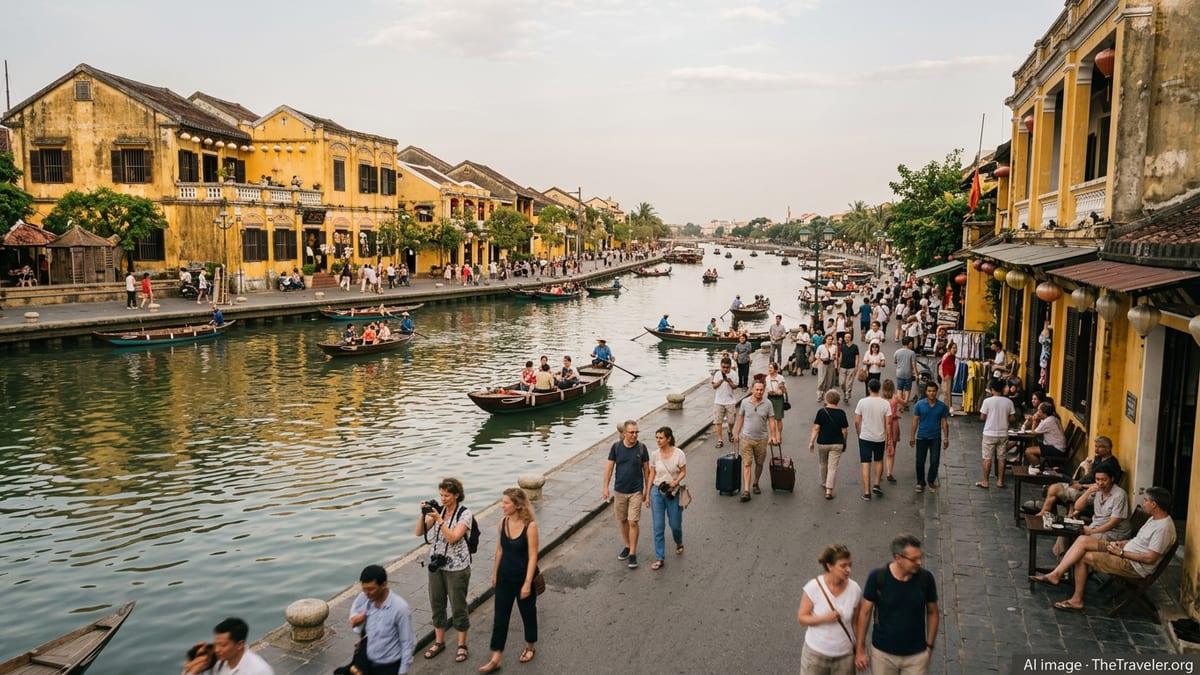
French Arrivals Surge as Vietnam Tourism Hits New Records
Recent visitor statistics indicate that Vietnam’s broader tourism rebound is creating strong momentum in the French market. Vietnam welcomed a record 21.2 million international visitors in 2025, building on 17.6 million arrivals in 2024 and bringing the country close to, and now beyond, its pre-pandemic volumes. Within that surge, European markets have expanded at a double-digit pace, with France consistently ranking among Vietnam’s largest sources of visitors from the continent.
Industry monitoring in early 2025 pointed to a sharp rise in arrivals from France, with year-on-year growth above 30 percent for the first months of the year. Dedicated reporting on French arrivals showed that total visits from France in 2024 neared 280,000, nearly one-third higher than the previous year, underlining a decisive return of long-haul French travelers to Southeast Asia. Travel analysts describe France as one of Vietnam’s “anchor markets” in Europe, contributing significantly to the country’s diversification beyond its core Asian source countries.
By late 2025, official tourism updates reported that Asian travelers still made up the bulk of visitors, but European arrivals, including from France, had surpassed half a million in just the first two months of the year. That performance, combined with forecasts that Vietnam could again set an all-time record for total international arrivals in 2026, is strengthening the country’s status as a leading choice in Asia for French tourists planning next year’s trips.
Visa Easing and Policy Shifts Tilt Long-Haul Choices Toward Vietnam
Vietnam’s liberalized entry policies are a central factor drawing more French travelers. Since August 2023, French citizens have been eligible for visa-free stays of up to 45 days, a significant extension from the previous 15-day limit. Publicly available consular information confirms that this exemption has been renewed for several years, giving French tourists a longer, more flexible window for multi-city itineraries that often span Hanoi, Ha Long Bay, Hue, Hoi An and Ho Chi Minh City.
Alongside the unilateral visa waiver, Vietnam has broadened its electronic visa system and added dozens of new international border checkpoints that accept e-visas. Travel industry observers note that the combination of visa-free entry for France and streamlined e-visa options for mixed-nationality groups has reduced administrative friction for tour operators based in Paris, Lyon and Marseille who are packaging Vietnam with neighboring destinations in Indochina.
The timing of these measures is amplifying Vietnam’s appeal at a moment when other long-haul destinations have become more complex or costly for French tourists. European media coverage in early 2026 has highlighted softer French demand for the United States, citing higher prices and additional travel formalities there. In contrast, Vietnam’s relatively straightforward entry rules, competitive local costs and favorable exchange rates are making it a more accessible alternative for French travelers seeking a long-haul journey in 2026.
Improved Air Connectivity Between France and Vietnam
Stronger air connectivity is further underpinning Vietnam’s rise on the French market. Air France reintroduced next-generation Airbus A350 aircraft on its Paris to Ho Chi Minh City route in 2025, increasing comfort and capacity on one of the key non-stop links between the two countries. Aviation industry updates also show that the French flag carrier has expanded its codeshare partnership with Vietnam Airlines for the Northern Winter 2025 to 2026 season, placing its code on additional domestic routes operated by the Vietnamese airline.
These developments mean French travelers can now connect more seamlessly from Paris to major Vietnamese hubs and onward to secondary destinations such as Da Nang, Nha Trang or Phu Quoc on a single ticket, with coordinated schedules and through-checked baggage. Airline analysts suggest that such network cooperation reduces total travel time and perceived complexity, making Vietnam a more straightforward choice for first-time visitors from France.
Tourism planners expect that, as airlines refine their schedules for the 2025 to 2026 winter and 2026 summer seasons, capacity on France to Vietnam routes will continue to rise. Additional charter operations and seasonal services from French regional airports are also being explored by tour companies, which would further entrench Vietnam’s position as one of the easiest Southeast Asian destinations for French travelers to reach.
Destination Appeal: Culture, Cuisine and Emerging Hotspots
The structural drivers are being matched by renewed interest in Vietnam’s on-the-ground offerings. Recent international travel awards have repeatedly highlighted Vietnam as a leading heritage and nature destination in Asia, with the country receiving regional accolades for its cultural tourism, golf courses and coastal resorts. Major cities such as Hanoi and Ho Chi Minh City have appeared on Asia-Pacific rankings for city breaks, while central coastal cities like Da Nang and heritage centers like Hoi An remain mainstays of French tour itineraries.
French travel media and tour catalogues increasingly emphasize Vietnam’s varied landscapes, from the karst seascapes of Ha Long Bay to the terraced highlands of the northwest and the riverine life of the Mekong Delta. The country’s culinary reputation, long appreciated in France through a shared history and a strong Vietnamese diaspora, is another draw. Street food culture, regional specialties and a growing number of high-end restaurants are being framed as core reasons to choose Vietnam over competing Asian destinations.
Newer hotspots are also attracting attention ahead of 2026. Beach destinations such as Phu Quoc and Nha Trang are being marketed as alternatives to traditional winter-sun mainstays, while smaller cities and rural areas are positioning themselves around community-based tourism and sustainable travel. Vietnam’s successful hosting of large-scale festivals and events, including national tourism year celebrations and cultural festivals in heritage cities, is being used in promotional campaigns aimed at the French and wider European markets.
Outlook: Vietnam Poised to Lead French Travel to Asia in 2026
Forecasts from tourism analysts and financial research houses point to continued strength in Vietnam’s inbound market through 2026, with official targets set above the record arrivals reported in 2025. These projections are underpinned by steady growth from core Asian markets and accelerating demand from Europe. Within Europe, France is identified as one of the fastest-growing markets, supported by demographics that favor long-haul travel, high interest in culture and gastronomy, and rising familiarity with Vietnam as a safe and stable destination.
Travel agencies in France are responding by expanding their Vietnam portfolios, adding themed itineraries focused on food, heritage rail journeys, wellness retreats and soft adventure. Package prices remain competitive compared with trips to North America or parts of Oceania, a factor that is especially relevant as French households continue to navigate cost-of-living pressures in 2026. Industry observers expect that value for money, combined with Vietnam’s depth of experiences, will keep the country near the top of French travelers’ Asian shortlists.
As booking cycles for winter 2026 and early 2027 get underway, Vietnam’s mix of favorable policy, improving access and strong destination branding appears to be shifting French interest firmly toward Southeast Asia. Barring major external shocks, current trends suggest that Vietnam is on track to consolidate its role as one of the leading Asian destinations for French tourists in 2026, reshaping long-haul travel patterns between the two countries.