

More news on this day
Travelers flying in and out of Thailand face mounting disruption as fresh flight cancellations by Gulf Air, Qatar Airways, Jetstar and other major carriers affect links from Bangkok, Phuket and Koh Samui to hubs including Bahrain, Doha, Melbourne and Busan, according to newly published schedules and traveler reports.
Get the latest news straight to your inbox!
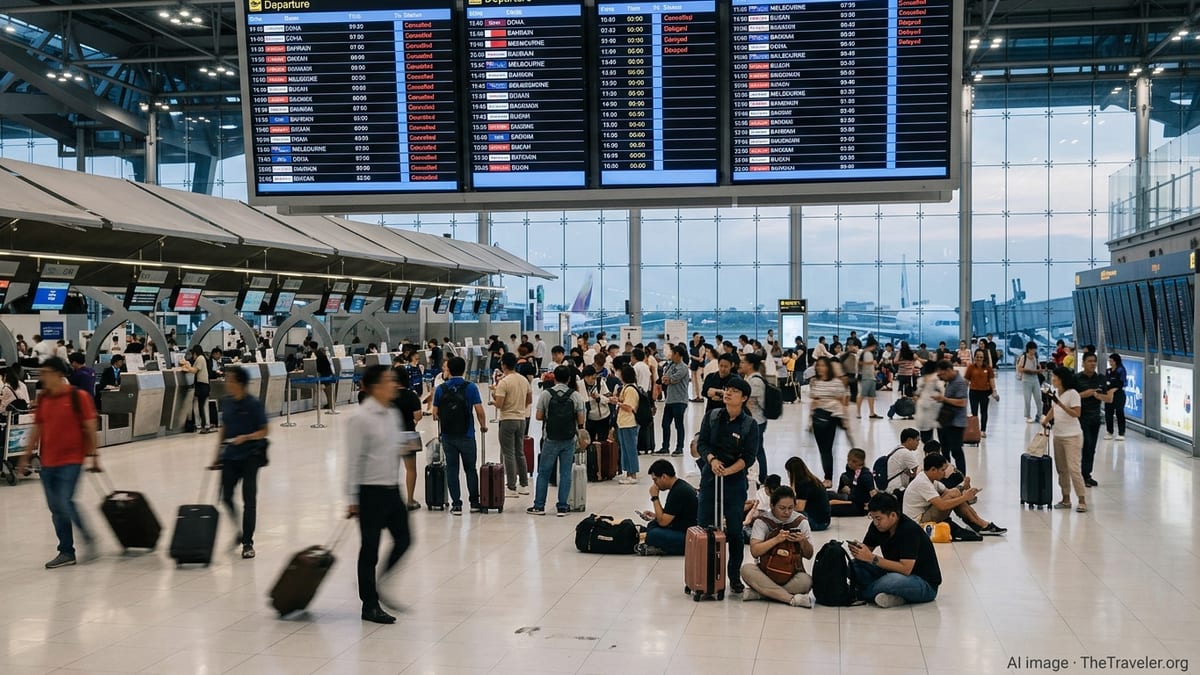
New Wave of Cancellations Hits Key International Routes
Updated schedules and publicly available passenger reports indicate that at least eight additional flights serving Thailand have been pulled in recent days, tightening already constrained global connections. The latest cancellations involve services that typically link Bangkok, Phuket and Koh Samui with major hubs such as Bahrain, Doha, Melbourne and Busan, amplifying knock-on delays and missed onward connections across Asia, the Middle East and Australia.
Gulf Air, Qatar Airways and Jetstar are among the carriers most visibly affected in this new wave, alongside other regional and codeshare operators adjusting their networks around Thailand. While some services are being consolidated into fewer departures with higher load factors, others are being temporarily suspended, leaving passengers to rebook at short notice or seek alternative routings through secondary hubs.
The additional eight cancellations follow weeks of schedule volatility triggered by wider regional instability and airspace constraints, particularly around Doha and Bahrain. Publicly accessible timetables and social media posts from travelers show that flights that had briefly reappeared in booking systems have, in some cases, been removed again or reclassified as “not operating,” adding to confusion among passengers trying to confirm their travel plans.
For Thailand, which relies heavily on long-haul visitors arriving via Gulf and Asia-Pacific hubs, the renewed disruption comes at a sensitive time as the country continues to court high-spend tourists and business travelers. Industry analysts note that unstable connectivity at major transit points can quickly ripple into hotel bookings, tour operations and regional feeder traffic.
Impact on Gulf Connections: Bahrain and Doha Routes Under Pressure
Connections between Thailand and the Gulf region remain among the most heavily disrupted. Gulf Air’s operations through Bahrain have been significantly curtailed since early March, and the latest update shows additional Bangkok and Phuket rotations withdrawn, reducing the number of available seats for travelers heading to and from the Middle East and beyond.
Qatar Airways’ Doha links, traditionally among the busiest and most convenient one-stop options from Thailand to Europe, Africa and the Americas, have also seen continued adjustments. Updated interim schedules show selected Bangkok departures operating under a revised pattern, while other services from Thai gateways are cancelled outright or shifted to different days, limiting flexibility for both outbound and inbound passengers.
Travelers posting their experiences publicly describe repeated cancellations and rebookings on Doha-bound itineraries, with some itineraries disappearing from airline apps before a formal notification arrives. These accounts align with timetable data suggesting that capacity between Thailand and Doha is operating well below normal levels, with limited “special flights” filling only part of the gap.
The pressure on Gulf routes has consequences beyond point-to-point traffic. Many travelers using Thailand as a stop on longer multi-continent journeys now face longer detours through alternative hubs or overnight stays in Bangkok if they cannot secure a same-day connection out of the country.
Australia and Northeast Asia Also Affected: Melbourne and Busan Routes Cut
The latest cancellations reach beyond the Gulf, interrupting popular links between Thailand and key markets in Australia and Northeast Asia. Publicly available airline information and traveler reports point to further disruption on services between Bangkok and Melbourne, where Jetstar and other carriers have already thinned their schedules in recent weeks.
Some passengers holding Melbourne tickets report seeing their flights vanish from mobile apps or booking systems, even while original reservations still appear as “confirmed” through third-party agencies. In several cases, itinerary changes have resulted in significantly extended layovers or forced re-routings, with passengers weighing whether to wait for an official schedule update or to purchase new tickets on alternative airlines.
In Northeast Asia, routes connecting Thailand with cities such as Busan and other Korean and Japanese gateways also show fresh cuts. While a handful of services continue to operate, the removal of selected frequencies from Bangkok and resort destinations like Phuket and Koh Samui is narrowing options for regional travelers and expatriates commuting between homes and workplaces.
Industry observers note that the continuing imbalances across these networks may further complicate demand forecasting, as last-minute cancellations and reinstatements make it harder for airlines to gauge true booking patterns and for passengers to plan ahead with confidence.
Phuket and Koh Samui Feel the Strain as Resort Gateways
Thailand’s island gateways have been particularly exposed to the latest schedule changes. Phuket, historically one of the country’s busiest international tourism hubs, is reporting thinner direct links with Gulf and Australian carriers after the newest round of cancellations. This not only affects long-haul tourists arriving for beach holidays but also regional travelers who rely on Phuket as an alternative to Bangkok’s congested airports.
Koh Samui, served by a mix of regional airlines and seasonal international services, is also seeing continued knock-on disruption. Travelers heading to or from the island increasingly find themselves funneled through Bangkok or other mainland airports, adding extra segments and potential delays to their journeys. Some passengers have shared accounts of having to overnight in Bangkok or change airports between Don Mueang and Suvarnabhumi to make revised connections.
Local tourism businesses in Phuket and Koh Samui are closely watching flight patterns, as sustained capacity reductions can influence room rates, staffing and investment decisions. Smaller operators, such as boutique hotels and dive shops, are particularly sensitive to any drop in higher-spend visitors who typically arrive on long-haul or premium carriers now trimming flights.
Despite the challenges, domestic links operated by Thai carriers and regional airlines continue to provide alternative access to the islands, though these services may not fully offset the lost convenience of nonstop or one-stop long-haul connections from key source markets.
What Travelers Need to Know as the Situation Evolves
With airline schedules in flux, publicly available guidance consistently emphasizes active monitoring of bookings and flight status, especially for trips involving Gulf hubs or long-haul connections from Thailand. Travelers are encouraged to check both airline websites and reservation portals frequently, as some changes may appear in operational systems before formal notifications are sent by email or message.
Passenger experiences shared online suggest that rebooking options can vary widely depending on the ticket type, route and issuing carrier. Some travelers have been offered alternative routings through different hubs or later dates at no additional fare, while others report limited options that require paying fare differences or purchasing new one-way tickets on competing airlines.
Travel insurance with disruption coverage may play a larger role for passengers planning trips in the coming weeks, particularly for complex itineraries that rely on multiple connections. Insurance policies differ in how they treat airspace closures, security incidents and cascading cancellations, so travelers are being advised in public guidance to review policy terms carefully before departure.
For now, Thailand remains open and welcoming visitors, but the evolving pattern of cancellations by Gulf Air, Qatar Airways, Jetstar and other carriers underscores how quickly regional developments can reshape global air links. Travelers with upcoming journeys to or from Bangkok, Phuket or Koh Samui are likely to face an environment of heightened uncertainty and should build extra flexibility into their plans.