

More news on this day
Air travelers across five U.S. states are facing a fresh wave of disruption in April 2026, as spring storms, traffic-management programs and a stretched aviation network combine to trigger rolling delays and cancellations at major hubs.
Get the latest news straight to your inbox!
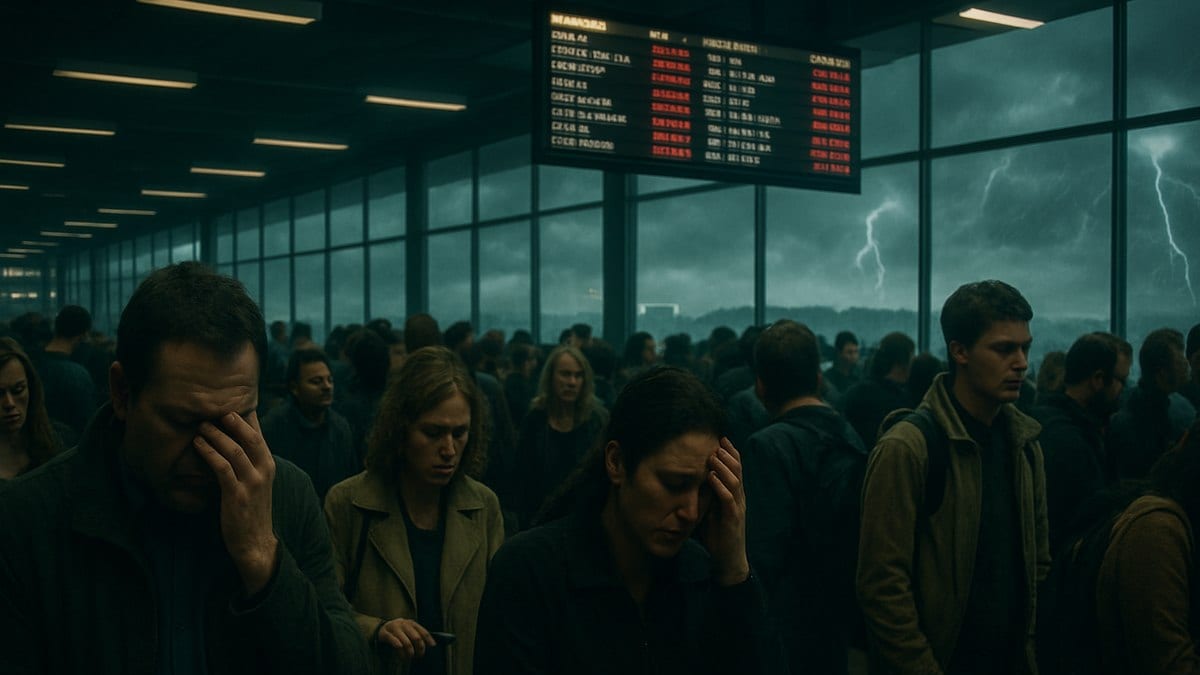
Storm Cells and Ground Stops Converge on Key Hubs
Early April has brought an unstable pattern across the national air system, with clusters of thunderstorms, low cloud and shifting wind patterns reducing capacity at several major airports. Publicly available tracking data and aviation briefings show that on and around the Easter travel period, the Federal Aviation Administration deployed a mix of ground stops and ground delay programs at large coastal and inland hubs, slowing arrivals and departures even when airports technically remained open.
On April 5, nationwide statistics compiled from flight-tracking services indicated that U.S. carriers canceled more than 400 flights and delayed nearly 4,000, with Dallas Fort Worth, Chicago O’Hare and Atlanta among the airports posting some of the heaviest interference. Those single day numbers capped a multi day stretch in which disruption repeatedly spiked during peak travel hours, particularly when storm bands moved across the Eastern Seaboard and the central states.
In the days that followed, further reports pointed to roughly 460 cancellations and about 5,500 delays over a short span, reinforcing assessments that this has been one of the more acute non holiday disruption clusters of 2026 so far. For passengers, the operational constraints have translated into missed connections, aircraft stranded out of position and tight crews bumping up against duty limits, amplifying weather problems into broader schedule instability.
Texas and Illinois Bear the Brunt of Early April Turbulence
Among the hardest hit states in this latest wave are Texas and Illinois, where large hub airports serve as critical junctions in domestic and international networks. In Texas, coverage drawing on FlightAware statistics for April 1 highlighted around 395 delays and a small but disruptive number of cancellations concentrated at Dallas Fort Worth, Houston and San Antonio. Those figures came just as spring storms moved across the region, producing low visibility, wind shifts and intermittent lightning holds.
Illinois has faced its own flashpoint. On April 2, reports from Chicago indicated that O’Hare International Airport operated under a ground stop for hours as storms swept through northern Illinois. During that period, departing flights from selected airports bound for O’Hare were held at origin, while arrivals into the Chicago area were spaced out under a formal ground delay program. The measures limited congestion in the airspace and on the taxiways but also led to cascading late arrivals and missed onward connections across multiple airlines.
The concentration of disruption at sprawling hubs in these two states has had disproportionate ripple effects. When O’Hare slows, knock-on delays often appear at other Midwest airports that rely on Chicago connections. Similarly, constraints at Dallas Fort Worth and Houston can quickly influence operations across the South and Mountain West, where many smaller cities depend on those hubs for access to the broader network.
Mid Atlantic and Northeast States See Renewed Disruption
Further east, early April weather systems moving through the Mid Atlantic and Northeast have produced another cluster of flight headaches for travelers. At Washington Dulles International Airport in Virginia, storms and low ceilings have triggered a mix of arrival and departure delays that affected both domestic routes and long haul services to Europe and the Middle East. Travel focused outlets describe rolling holdups that lengthened connection times and forced some passengers into overnight stays when onward flights departed without them.
New York has also been caught up in the pattern. Coverage of the Easter weekend period notes that LaGuardia entered a ground stop on April 5 as low visibility and unsettled conditions passed over the region. While the stoppage itself was time limited, the timing during a high demand holiday window meant that even a relatively short interruption contributed to an outsized volume of late flights, diversions and aircraft repositioning.
In neighboring New Jersey and other Northeast states, slower arrival rates into New York area airspace fed into longer taxi times and holding patterns. That, in turn, strained airline efforts to keep aircraft and crews aligned with their next planned legs, reinforcing a pattern in which small disruptions at a handful of metro airports grow into nationwide scheduling challenges.
Georgia and Virginia Highlight Systemwide Vulnerabilities
Georgia, home to Hartsfield Jackson Atlanta International Airport, features prominently in nationwide disruption tallies tied to the Easter travel surge and the following work week. Recent overviews of April performance point to Atlanta as one of the hubs with sustained numbers of delays, particularly on April 4 and 5, when more than 5,600 flights were reported delayed nationwide in a single day and about 500 were canceled. As the world’s busiest passenger airport by many measures, Atlanta plays an outsized role in shaping how those numbers translate into traveler experience.
When storms or volume spikes reduce throughput at Atlanta, the effects quickly spread across Georgia and into neighboring states. Regional jets feeding in from smaller cities often become late arriving, which can force reassignments of aircraft, compress turnaround times or prompt airlines to cancel frequencies with lower booking loads to preserve capacity on busier routes. The end result for travelers is a patchwork of rolling delays, gate changes and last minute schedule adjustments that can be difficult to predict.
In Virginia, the situation at Washington Dulles serves as a case study in how modern aviation networks respond to spring weather. Reports indicate that a combination of distant thunderstorms and localized convective cells prompted multiple rounds of delay programs in early April, even when the worst of the weather stayed west of the airport itself. By throttling arrival rates in anticipation of storm impacts, traffic managers aimed to prevent gridlock in the sky and on the ground, but those precautions still translated into longer than usual disruptions for passengers.
Travelers Adjust Plans as Delays Continue Across Five States
For flyers navigating Texas, Illinois, Virginia, Georgia and New York in April 2026, the practical implications of these disruptions are clear. Many travelers are encountering longer security and check in queues as airlines rebook disrupted passengers, as well as busier airport customer service desks and call centers handling schedule changes. Same day standby lists are lengthening on popular routes, and seats on alternative flights can be scarce when weather hits multiple hubs at once.
Travel publications and consumer advocates are emphasizing familiar strategies adapted to the current environment. Recommendations include building in longer connection times when planning itineraries that pass through weather sensitive hubs, opting for earlier departures in the day when possible, traveling with carry on baggage to retain flexibility and monitoring flight status through airline apps and airport displays. Some analysts also point to the value of tracking the specific aircraft operating a flight, since late inbound arrivals often foreshadow downstream delays.
Looking ahead to the rest of April, publicly available forecasts and aviation planning bulletins suggest that additional bouts of unsettled weather are possible across several of the affected states. While there is no indication of a single nationwide meltdown, the recent pattern underscores how quickly localized storms can expose the limits of a complex, high utilization air travel system. For now, travelers moving through these five states are being urged by many travel experts to stay flexible, keep documentation of any added costs and treat connection buffers as an essential part of spring trip planning rather than an optional extra.