

More news on this day
Fresh waves of flight disruptions in early April 2026 are rippling across at least five key U.S. states, as severe weather, tight airline schedules and air traffic control constraints combine to delay and cancel thousands of journeys during one of the busiest spring travel periods.
Get the latest news straight to your inbox!
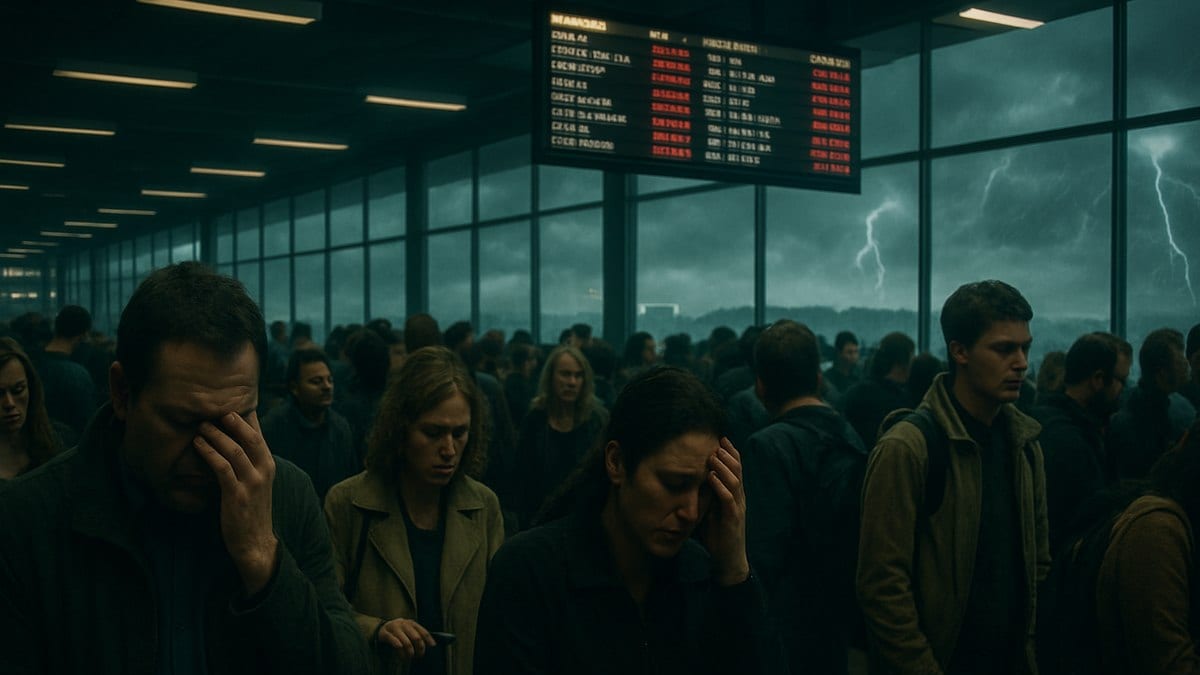
Storm Systems Ignite a Turbulent Start to April
Early April opened with a volatile mix of thunderstorms, low clouds and flooding that disrupted major air corridors across the United States. Publicly available data compiled from flight tracking platforms for March 31 and April 1 shows more than 3,100 delays and over 100 cancellations nationwide, with Chicago O’Hare International Airport absorbing a disproportionate share of the strain as storms moved through the Midwest.
Chicago’s role as a central hub meant that the local disruption radiated far beyond Illinois. Dozens of departures and arrivals at O’Hare were pushed back or scrubbed, and knock-on effects rippled into connecting flights across the country. Reports indicate that passengers traveling through O’Hare on those days encountered a cascade of missed connections and extended holds on airport ramps as airlines waited for storm cells to clear.
Weather agencies have described the period from April 1 to April 7 as part of a broader early April outbreak that brought damaging winds and heavy rain to sections of the South and Midwest. That pattern set the stage for repeated operational challenges for airlines and airports, particularly where traffic flows were already tight heading into the Easter holidays.
Texas Airports Face Ground Stops and Heavy Delays
Texas has emerged as one of the focal points of the April 2026 disruptions. At George Bush Intercontinental Airport in Houston, a formal ground stop on April 4 halted inbound traffic for part of the evening as slow-moving thunderstorms reduced visibility and forced arriving aircraft into holding patterns. Local media coverage described departure boards filling with delays while travelers waited for the Federal Aviation Administration’s programs to ease.
Separate delay tallies for the start of the month show Texas airports grappling with hundreds of late operations and a series of cancellations concentrated at key hubs in Dallas, Houston and San Antonio. Dallas Fort Worth International, a primary connecting point for both domestic and international routes, has seen weather-related slowdowns feed into congestion at gates and on taxiways, extending turnaround times for aircraft and complicating crew scheduling.
Travel industry analysis notes that the combination of severe local storms in Texas and a tight national route network has amplified the impact of each interruption. A thunderstorm burst that grounds flights in Houston or Dallas for even an hour can leave aircraft and crews out of position for the remainder of the day, affecting departures in other states long after the immediate weather threat has passed.
East Coast Hubs in New York and Beyond Struggle After Easter
On the East Coast, a fresh surge of disruption followed the Easter weekend. According to published coverage drawing on flight tracking statistics, April 5 and April 6 together produced more than 700 cancellations and over 8,600 delays in the United States, with major strain at hubs in New York and along the Northeast corridor.
New York’s LaGuardia Airport moved into a ground stop for part of April 5 as low clouds and traffic saturation curtailed arrivals, while nearby airports in the region experienced extended arrival spacing. Travelers connecting through New York on Delta Air Lines, American Airlines and other carriers faced rolling delays as airlines adjusted schedules and rerouted aircraft to manage congestion.
The post-holiday Monday on April 6 proved especially challenging. Publicly available figures cited by travel analysts show 4,722 delays and 307 cancellations across the United States that day, with major carriers again at the center of the disruption. New York, Atlanta, Chicago and Las Vegas all appeared among the hardest-hit hubs, leaving passengers to navigate long security lines, crowded gate areas and overbooked rebooking desks.
West Coast and California Feel the Knock-On Effects
Although the most intense storms targeted the central and eastern United States, California has not been spared from April’s turbulence. Reports summarizing national operations on Easter Sunday note that San Francisco International Airport logged rising arrival delays as adverse weather elsewhere forced the national traffic management system to meter flights into West Coast hubs.
In practical terms, that meant slower arrival rates and extended airborne holding for some flights bound for San Francisco and other California airports, even when local conditions appeared relatively clear. Airlines prioritized flow control across the national network, accepting modest delays at airports like San Francisco to prevent gridlock at more heavily affected eastern hubs.
California’s experience illustrates how tightly interconnected the U.S. aviation system has become. A sequence of storms over Texas or the Great Lakes can eventually slow aircraft rotations on the opposite coast, especially during peak holiday periods when spare aircraft and crew capacity are limited.
Atlanta and the Southeast Underscore Systemic Strain
Atlanta, home to the world’s busiest passenger airport, has served as another pressure point in the April disruption picture. Operational summaries for the start of the month list Hartsfield-Jackson Atlanta International among airports registering dozens of delays as storm systems and delay programs affected traffic flows in and out of the Southeast.
Air traffic management reports indicate that nationwide delay programs implemented over the Easter period touched numerous southeastern routes, constraining the volume of aircraft allowed into congested airspace at any given time. When paired with intermittent thunderstorms around Atlanta, those restrictions contributed to longer taxi queues and reduced flexibility for airlines trying to keep tightly timed banks of connecting flights on schedule.
Industry commentary suggests that these early April disruptions are testing already stretched airline and air traffic control resources. A combination of staffing gaps at certain control facilities, aircraft maintenance backlogs and dense holiday schedules has left less margin for error. As the month progresses, travelers with itineraries touching Texas, New York, California, Illinois or Georgia are being advised by consumer advocates and travel platforms to allow additional connection time, monitor flight status frequently and prepare for continued pockets of disruption as spring weather patterns evolve.