

More news on this day
Fresh rounds of April flight disruptions are rippling through major U.S. airports, with storms, infrastructure bottlenecks and staffing constraints combining to snarl schedules across at least five states.
Get the latest news straight to your inbox!
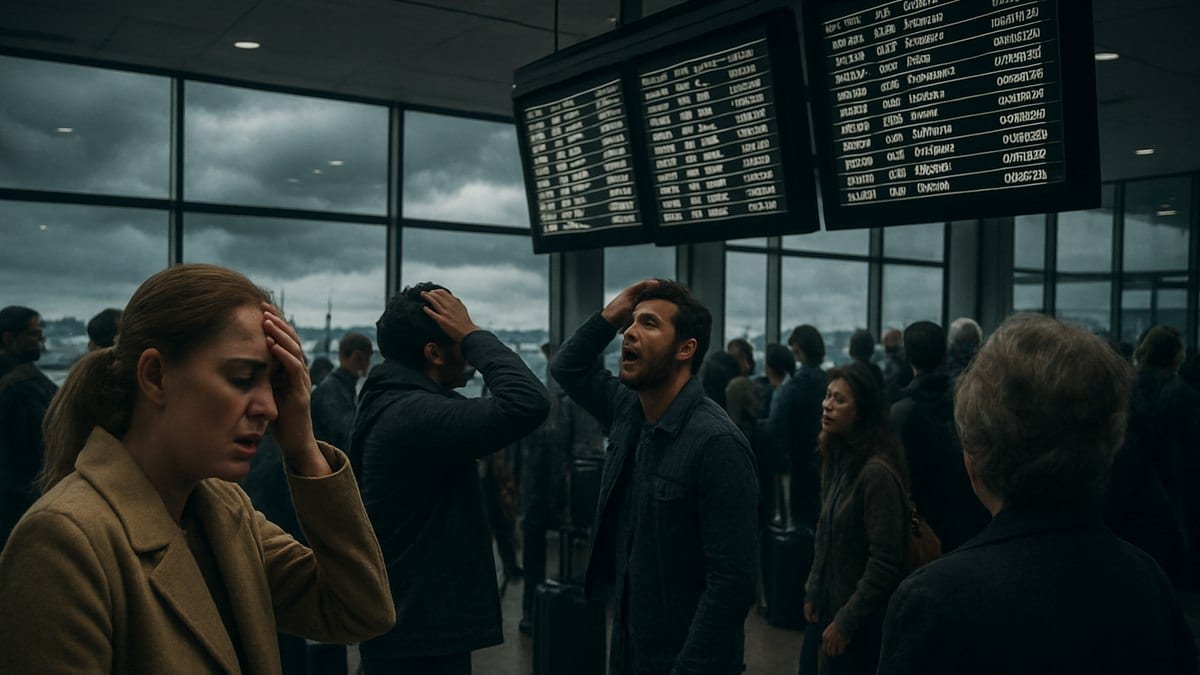
Storm Systems Trigger New Wave of Delays
Early April weather patterns have once again proven disruptive for air travel, with severe thunderstorms and high winds prompting rolling delays and scattered cancellations at airports across the country. Recent storm cells tracking through Texas, Florida and the Midwest led to ground delays, reroutes and longer taxi times as airlines and air traffic managers worked to keep traffic flowing while protecting safety.
In Houston, severe thunderstorms on April 4 prompted a temporary ground stop at George Bush Intercontinental Airport, slowing departures and forcing some aircraft to hold at gates as lightning moved through the area. Local coverage indicated that the halt in operations eased only as the strongest cells passed, leaving a backlog of delayed flights and missed connections for passengers traveling through the region.
Farther east, heavy rain and storms in South Florida on April 7 disrupted operations at Miami International and nearby airports. Reports from that morning described a ground stop for arriving flights into Miami as thunderstorms clustered around the airfield, contributing to dozens of delays and several cancellations as airlines reworked routing and crew plans.
These localized weather events layered on top of a broader early April outbreak of severe storms and flooding across parts of the United States, a pattern that risk consultants and meteorologists have linked to elevated climate volatility. The result for travelers has been an uptick in days where thousands of flights nationwide are either delayed or canceled, even when blue skies appear at departure cities.
Multi-State Network Effects Reach Coast-to-Coast Hubs
Although the most intense storms were concentrated in parts of Texas and Florida, their impact has extended much farther through the interconnected U.S. air network. Aviation data compiled this week shows elevated disruption levels at major hubs in Georgia, Illinois and California, as late-arriving aircraft and tight crew schedules triggered secondary delays.
On April 10, industry coverage highlighted more than two thousand delays and over one hundred cancellations across key hubs including Atlanta, Chicago, Dallas, San Francisco, New York and Miami. Atlanta’s Hartsfield-Jackson, already one of the world’s busiest airports, saw its tightly timed banked schedules strained as thunderstorms up and down the Eastern Seaboard forced minor reroutes and metering programs, which can quickly cascade into missed connections.
In Chicago, spring storms over the central United States combined with existing congestion to slow operations at O’Hare and Midway. Travel desk reports pointed to rolling departure and arrival delays that spread through the evening peaks, affecting flights not only across the Midwest but also to major coastal gateways such as Los Angeles, New York and Seattle.
On the West Coast, San Francisco International has entered April with warnings of added constraints due to runway construction and tighter rules around parallel landings. Industry analysis suggests that these infrastructure limits, when paired with even routine spring marine layers or inland thunderstorms, could magnify delay totals at the California hub and push disruption into connecting markets in Arizona, Nevada and the Pacific Northwest.
Phoenix, New York and Miami Highlight Passenger Impact
New disruption figures from April 11 at Phoenix Sky Harbor International Airport illustrate how quickly localized issues can spread across multiple states. According to published reporting, Phoenix recorded more than 160 delayed flights and a handful of cancellations, affecting carriers that use the airport as a key link between western and central U.S. cities.
Routes between Phoenix and major hubs such as Chicago, New York and Los Angeles experienced knock-on effects as aircraft and crews cycled through the day. Travelers in states including Arizona, Illinois, California and New York encountered extended gate holds, rolling departure times and tight connection windows, even in relatively clear local weather.
In the Northeast, New York area airports have continued to see elevated delay totals when spring storm lines push across the Mid-Atlantic. Recent national overviews point to triple-digit daily disruptions at the region’s busiest fields, including flights bound for or arriving from affected hubs in Georgia and Florida.
Miami, meanwhile, remains a bellwether for how quickly tropical-style storms can ripple through airline schedules. After this week’s thunderstorm-related ground stop, public dashboards showed departures facing average delays of around half an hour, with some longer waits for flights bound for the Midwest and Northeast. Those late departures contributed to evening congestion further north, underlining how a single weather episode in Florida can affect travelers as far away as Michigan or Massachusetts.
Staffing and System Constraints Add to Weather Pressures
While April’s disruptions are being led by severe weather and storms, underlying system constraints continue to magnify their impact. In late March, industry publications highlighted how persistent shortages of air traffic controllers have contributed to ground stops and flow restrictions at major airports such as Chicago O’Hare, where passengers reported extended holds with few precise departure estimates.
Staffing challenges can limit how quickly the network recovers once a storm passes. When controller numbers are tight, facilities may be required to meter arrivals and departures more conservatively, which increases the time it takes to work through backlogs created by even short-lived weather events. Airlines face similar challenges when crew duty limits collide with long delays, forcing last-minute flight cancellations or equipment swaps.
Infrastructure constraints at several busy airports are adding another layer of complexity. Construction projects that temporarily reduce runway capacity, updated safety rules around certain approaches and ongoing modernization efforts in the federal notice and advisory systems have all been flagged by analysts as factors that can slow traffic during already stressed periods.
Taken together, these pressures mean that spring weather no longer operates in isolation as a cause of disruption. Instead, storms act as a trigger that exposes underlying fragilities across a network already running near its limits on peak travel days.
What Travelers Can Expect for the Rest of April
With the month still in its early weeks, forecasters expect additional rounds of strong storms across parts of the South, Midwest and East, raising the risk of further multi-state flight disruptions. Early April climatology often features fast-moving systems capable of producing severe thunderstorms, hail and high winds, all of which can temporarily halt operations at large airports.
Passenger rights groups and travel analysts note that airlines generally classify severe weather and related air traffic control measures as outside their direct control, limiting eligibility for formal compensation in many jurisdictions. However, carriers may still provide rebooking assistance, meal vouchers or hotel support in some circumstances, particularly when disruptions spill into multi-day events.
For now, publicly available delay maps and airline travel waivers suggest that travelers passing through Texas, Florida, Georgia, Illinois and California should be prepared for changing conditions, especially on afternoons and evenings when storms are most likely. Same-day disruptions can quickly propagate into neighboring states as equipment and crews rotate, meaning that even flights in clear skies can be affected by weather hundreds of miles away.
Industry observers expect that April will continue to test the resilience of the U.S. aviation system, offering a preview of how the network might cope with summer’s busier schedules. Travelers watching these early-season disruptions unfold are being reminded, once again, that in a tightly wound system, a single storm line can have coast-to-coast consequences.