

More news on this day
Fresh clusters of flight disruptions in mid April are once again testing the resilience of the U.S. air travel system, with new delays and cancellations flaring at major hubs including Atlanta, Chicago, Dallas Fort Worth, New York area airports and Miami.
Get the latest news straight to your inbox!
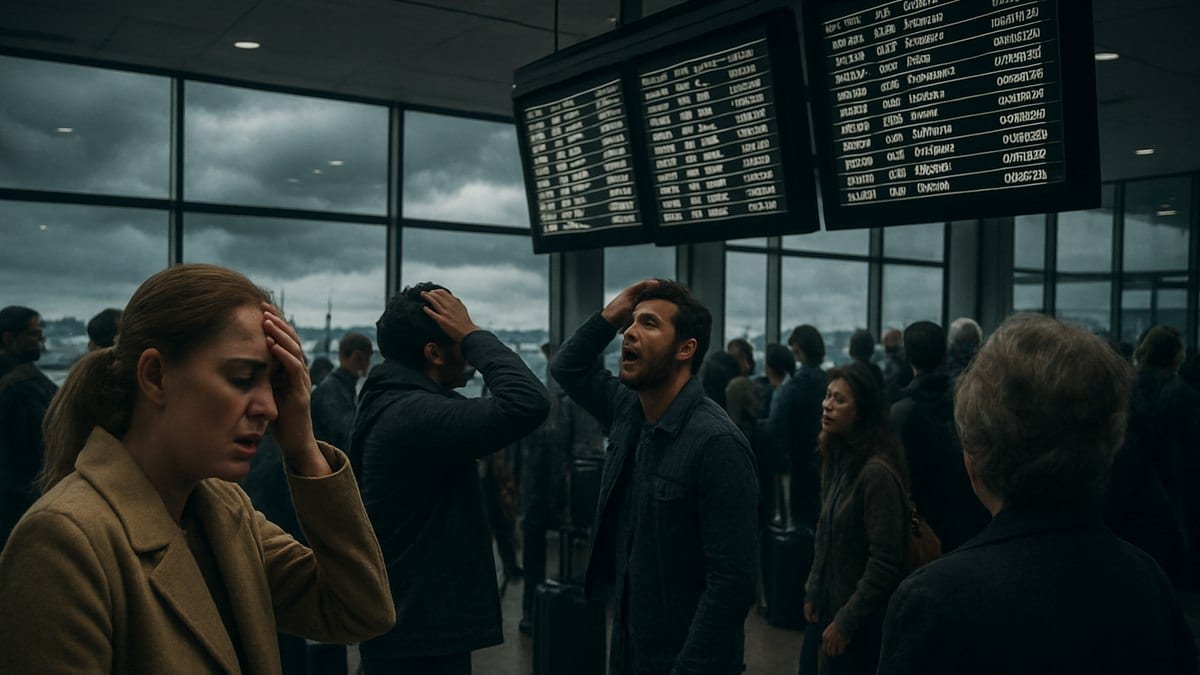
New Disruptions Follow a Turbulent Week for U.S. Aviation
The latest wave of problems comes on the heels of a difficult stretch for airlines and airports nationwide. Data compiled by independent trackers for April 10 indicated more than 2,100 delays and 125 cancellations across the United States, with Atlanta, Chicago, San Francisco, Dallas, New York and Miami among the most heavily affected hubs. Those figures added to thousands of earlier April disruptions tied to unsettled spring weather and tight operational conditions.
Reports indicate that Atlanta’s Hartsfield Jackson, Dallas Fort Worth International, Chicago O’Hare, New York’s major airports and Miami International continue to feature prominently in national disruption tallies. These facilities sit at the center of dense domestic and international networks, so even modest slowdowns can quickly cascade into missed connections and late arrivals in smaller cities.
Publicly available aviation dashboards for the weekend of April 11 point to lingering delays at several of these hubs, even as some of the worst bottlenecks have begun to ease. Airlines are working through earlier backlogs while contending with fresh rounds of thunderstorms and operational constraints common in the spring travel period.
Atlanta and Dallas Fort Worth: High-Volume Connectors Under Strain
Atlanta and Dallas Fort Worth remain two of the most disruption-prone hubs in early April, largely because of the sheer volume of flights funneled through their runways each day. National statistics frequently rank both airports among the country’s leading contributors to total delay minutes, reflecting their role as primary connectors for the Southeast, South Central states and beyond.
Recent reports describe Atlanta handling a significant share of U.S. cancellations during several April disruption days, with a mix of targeted flight cuts and scattered delays. Analysts note that even when weather over the airport itself is manageable, thunderstorms elsewhere in the Southeast can interfere with aircraft rotations and crew positioning, forcing airlines to trim schedules at short notice.
Dallas Fort Worth has faced similar challenges. Early April data show elevated levels of delayed and canceled departures, particularly on hub-to-hub routes that link Dallas with Chicago, New York area airports, Los Angeles and Miami. Because many travelers use these flights as the first leg of longer itineraries, any delay in the Texas hub can ripple across the country and into transatlantic schedules.
Chicago and New York Area Airports Grapple With Knock-On Delays
Chicago O’Hare and the New York area’s major gateways, including Newark Liberty and John F. Kennedy, are also feeling the effects of the latest April instability. Earlier in the month, Newark recorded more than 260 delayed flights and over a dozen cancellations on a single day, placing added pressure on one of the nation’s most congested airfields just as post-holiday travel peaked.
Those problems have since evolved into a pattern of rolling delays and tight turnaround times at O’Hare and New York’s large airports. Flight-tracking services highlight persistent hold-ups on routes connecting these hubs to Atlanta, Dallas, Los Angeles and Miami, with many services departing 30 minutes or more behind schedule. Even short slippages can be enough to break connection windows for onward flights to smaller markets.
Spring weather has been a recurring backdrop. While not every disruption has been directly tied to severe conditions over Chicago or New York, storms moving across the Midwest and along the Eastern Seaboard have reduced air traffic control capacity on key corridors. In response, airlines have occasionally slowed operations into and out of these hubs, helping to manage safety margins but extending the time passengers spend in terminals and on taxiways.
Miami and Other Sun Hubs Feel the Ripple Effects
Miami International, a critical gateway for flights to Latin America, the Caribbean and transatlantic destinations, is experiencing its own April pressures. On April 11, publicly available reporting pointed to well over one hundred delayed flights and a small number of cancellations, with large U.S. and international carriers all affected. Weather and operational challenges in South Florida and connecting regions contributed to the hold-ups.
These issues follow an earlier Easter weekend disruption in Florida, when heavy demand and unstable conditions around Miami led to roughly 175 cancellations and significant delays in a single day. That episode created knock-on effects to and from other major hubs, including New York, Chicago, Dallas and Los Angeles, and highlighted how quickly stress at one sun destination can move through the wider network.
Other busy airports, such as Detroit and Phoenix, have added further strain by logging their own clusters of delays on routes that feed into the five primary hubs. When these secondary connectors struggle, they often send late aircraft and displaced passengers into Atlanta, Chicago, Dallas, New York and Miami, complicating recovery efforts.
Passengers Face Longer Travel Days and Limited Spare Capacity
For travelers, the fresh April disruptions translate into longer days in transit and fewer easy rebooking options. Airlines are still operating close to pre-pandemic capacity on many domestic routes, which means spare seats for same-day reroutes can be scarce once mass delays build. As a result, some passengers are being shifted onto next-day departures or reconnected through less direct routings.
Passenger rights organizations note that the cause of an individual disruption remains crucial in determining what assistance may be available. When delays or cancellations are linked to external factors such as severe weather or air traffic control restrictions, cash compensation is often limited, though carriers may still provide meal vouchers, hotel stays or alternative transport at their discretion. Operational problems originating within the airline, including certain crew or maintenance issues, can sometimes trigger more robust accommodations.
With storms and heavy demand likely to persist through the remainder of April, industry observers expect further bouts of instability across the same five hubs and their feeder airports. Travelers are being encouraged by consumer advocates to monitor flight status closely, allow extra time for connections at major U.S. hubs and remain prepared for last-minute gate or schedule changes as airlines work to stabilize their networks.