

More news on this day
Travelers across parts of the United States are facing fresh flight disruptions in April as a mix of severe weather, airport construction and traffic-management measures ripple across at least five states, affecting schedules at some of the country’s busiest hubs.
Get the latest news straight to your inbox!
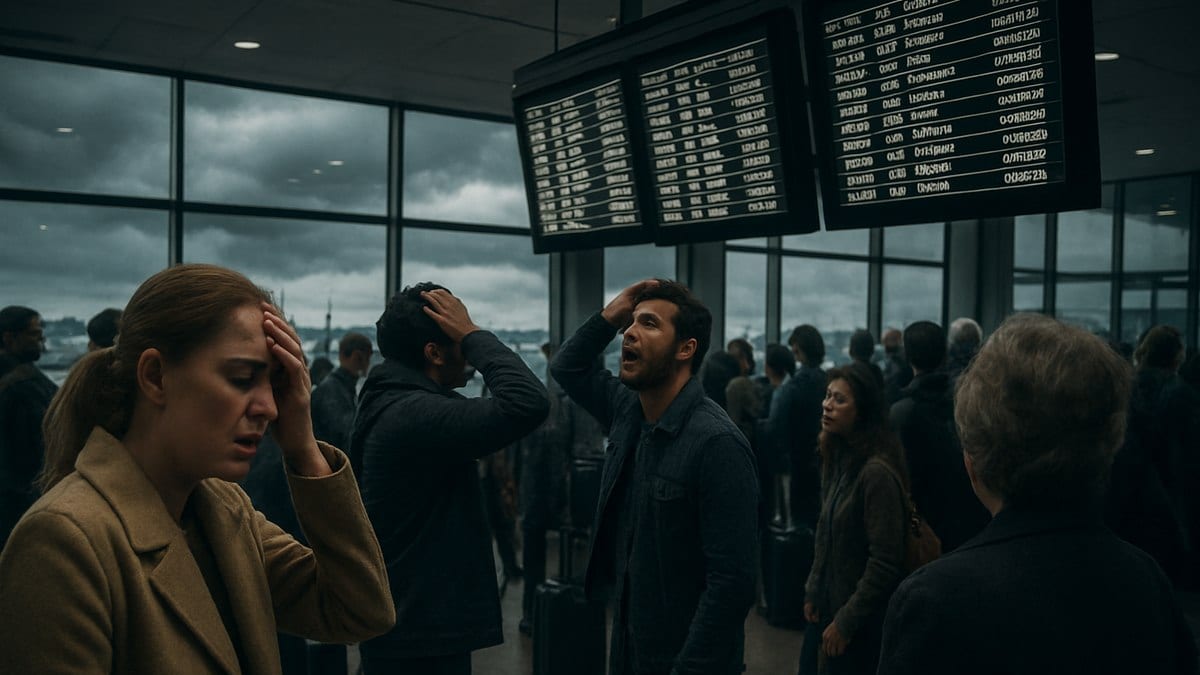
Storm Systems Trigger Cancellations and Delays in the South
April weather is again emerging as a key disruptor for air travel, with storm systems pushing across sections of Texas and the broader Gulf region and prompting rolling delays and cancellations. Publicly available airline advisories in early April pointed to powerful thunderstorms around Houston, where lightning, low visibility and ramp closures have periodically slowed departures and arrivals.
Operational updates from major carriers have highlighted how fast-moving cells can trigger cascading effects. When storm activity temporarily halts ground operations at large hubs, aircraft and crews fall out of position, leading to knock-on delays that extend into the following day. Passengers traveling through Texas this week have been urged in airline notifications to monitor flight status closely and to make use of same-day change options where they are available.
Industry analysts note that these spring disruptions come on the heels of an already volatile winter, leaving airlines with limited slack in both aircraft utilization and staffing. As a result, even relatively localized weather events in states such as Texas can reverberate across national networks, complicating itineraries for travelers bound for destinations far beyond the storm zone.
East Coast Congestion Compounded by Earlier Weather and Tight Schedules
On the East Coast, flight operations in New York and along the corridor from Washington to Boston are still working through residual congestion from recent weather disruptions and heavy traffic periods in late March. Published coverage of earlier thunderstorms and low ceilings around New York area airports described sharp but short-lived spikes in cancellations and extensive arrival metering.
Aviation analysts say that when combined with dense schedules, these disruptions are contributing to a tighter operating environment in April. Even on days with benign local weather, airlines are contending with limited runway capacity during peak hours and a backlog of aircraft repositioning from prior events. That dynamic is particularly visible at high-density airports in New York, where spacing on final approach is already near maximum most of the day.
Travel data providers tracking same-day performance indicate that April’s first half has brought elevated delay levels compared with typical spring patterns, although not on the scale seen during major winter storms. For passengers, the practical impact is a greater likelihood of modest departure holds and longer taxi times, especially on corridors linking the Northeast with Florida and the Midwest.
San Francisco Construction and New Arrival Rules Reshape West Coast Operations
On the West Coast, travelers in California are being advised to build in extra time as San Francisco International Airport continues a significant runway construction program this month. According to publicly available airport communications and subsequent media reports, one of the airport’s parallel runways is being taken out of regular use to accommodate work zones, while federal regulators have directed a reduction in closely spaced side-by-side landings.
The combination of construction and revised operating procedures has effectively lowered San Francisco’s hourly arrival capacity during certain periods. Aviation observers note that this is leading to more frequent use of ground delay programs, in which flights destined for the Bay Area are held at their origin airports to smooth demand and limit in‑air holding above the region.
These measures are primarily affecting travel into and out of California but are rippling into neighboring states such as Nevada and Arizona when aircraft rotations are disrupted. Airlines with large San Francisco operations have cautioned that schedule adjustments and occasional cancellations are likely on busy weekends in April, particularly for short-haul routes linking the Bay Area with cities in the Pacific Northwest and Southwest.
Midwest and Mountain States See Residual Impacts from Earlier Severe Weather
Airports in parts of the Midwest and northern Mountain West, which grappled with a powerful March blizzard and severe weather outbreak, are experiencing a quieter but still uneven start to April. Recent storm coverage described heavy snow, strong winds and ice affecting states from the High Plains into the Upper Midwest, leading to widespread ground transportation issues and pockets of flight disruption.
While conditions have largely improved, airline operations teams are still recalibrating aircraft and crew rotations that were stretched during the late winter systems. This has translated into occasional schedule thinning or substituted equipment on routes touching states such as Colorado, Nebraska and the Dakotas during the early days of April.
Travelers connecting through regional hubs in these states may notice slightly reduced frequencies on select routes or tighter connection windows. Industry commentators suggest that as long as additional early spring storms remain limited, networks should gradually stabilize over the coming weeks, although individual travel days can still be affected by localized weather around mountain passes and open plains.
What April’s Disruptions Mean for U.S. Travelers
Across Texas, New York, California and several central states, April’s mixed pattern of weather, construction and traffic-management restrictions is reinforcing the vulnerability of tightly packed airline schedules. Publicly available delay statistics show that even modest shocks can spread quickly across a multi-hub system, particularly when they strike at airports that serve as critical connection points.
Aviation experts point out that many carriers have tried to build more resilience into their spring schedules after several years of highly disruptive storm seasons and operational snarls. Even so, the convergence of severe weather in the South, residual congestion in the Northeast, arrival-rate limits in California and lingering effects from winter storms in the interior is yielding a noticeably choppy experience for some travelers this April.
Passengers planning trips in the coming days are being encouraged, through airline advisories and airport communications, to keep notifications turned on, allow additional time for connections and stay flexible about routing when possible. With several weeks of the spring travel season still ahead, the pattern emerging in at least five states suggests another month in which planning and patience will be essential for keeping journeys on track.