

More news on this day
Fresh disruption across European air corridors at the start of April is slowing journeys for travelers bound for Denmark, Russia, the UK and other destinations, as operational data points to 367 delayed flights and 18 cancellations concentrated around London Heathrow, Paris Charles de Gaulle and several connected hubs.
Get the latest news straight to your inbox!
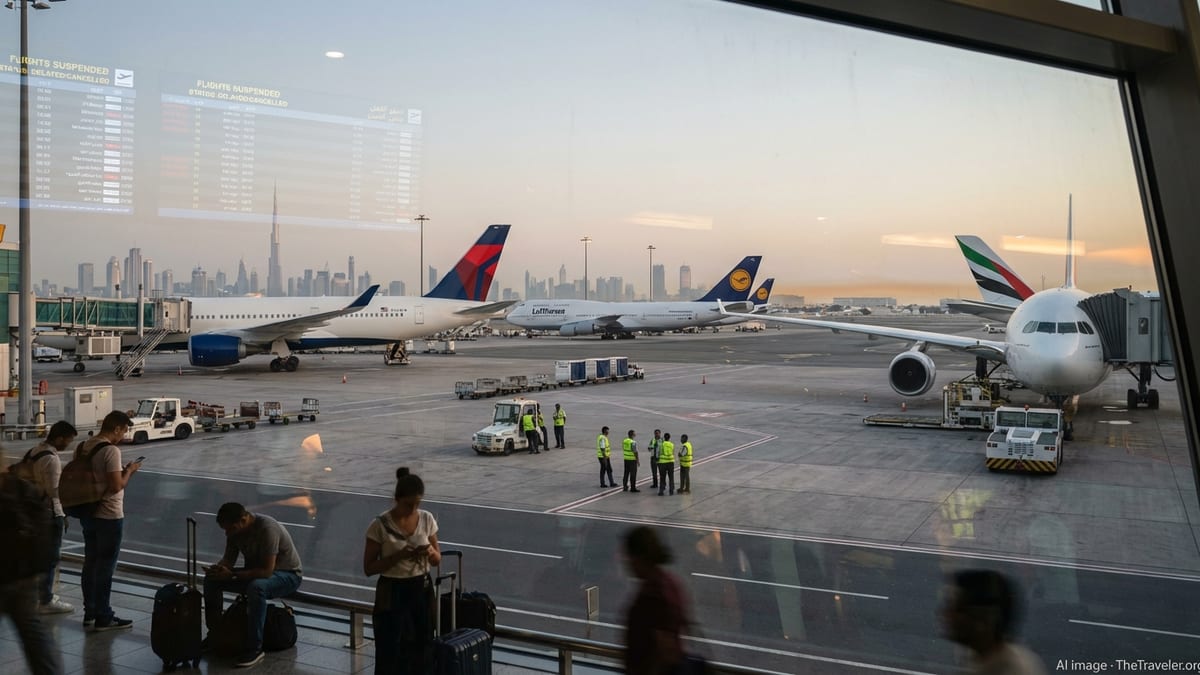
Delays at Heathrow and Charles de Gaulle Ripple Across Networks
Publicly available flight tracking snapshots for late March and early April 2026 indicate that London Heathrow and Paris Charles de Gaulle are again operating under strain, with hundreds of movements running behind schedule. The latest tally of 367 delayed departures and arrivals and 18 cancellations across several major Western European hubs reflects a dense band of disruption centered on these two airports, which rank among Europe’s busiest by traffic and connectivity.
Operational overviews published by European aviation analysts show that Heathrow and Charles de Gaulle have already been recording modest schedule reductions and elevated delay levels in recent weeks, driven by a mix of congestion, weather and knock-on effects from earlier irregular operations. These conditions mean relatively small disturbances can quickly cascade into missed slots and late arrivals, especially during peak morning and evening banks.
Because Heathrow and Charles de Gaulle serve as key transfer points for long haul services, the impact of a few hundred delayed flights extends well beyond the UK and France. Short haul sectors feeding into and out of these hubs are particularly exposed, creating onward disruption for passengers heading into Scandinavia, Eastern Europe and Russia, as well as for those connecting to transatlantic services.
Recent network summaries show that Amsterdam, Frankfurt and other continental hubs are also feeling secondary pressure, as airlines re-time rotations and juggle aircraft to keep core routes running. That wider reshuffling helps explain why a disruption count centered on London and Paris is being felt on itineraries spanning Denmark, Russia and multiple UK regional airports.
KLM, easyJet and Other Carriers See Schedules Strained
The latest wave of delays is being borne by a mix of full service and low cost airlines, with KLM, easyJet and several major flag carriers among the most affected. Historical performance reports for recent seasons underline how quickly delay statistics can escalate for hub carriers when weather or airspace constraints emerge, particularly at congested airports such as Amsterdam Schiphol, Heathrow and Charles de Gaulle.
Earlier in the winter, storm related disruption at Amsterdam led to hundreds of cancellations and more than 600 delays in a single day, hitting KLM and easyJet particularly hard as reduced runway capacity forced operators to trim schedules. Those events highlighted the vulnerability of hub and spoke systems to sudden capacity constraints, and the current figures around London and Paris suggest similar patterns are now reappearing at the start of the spring travel period.
Low cost operators that depend on tight aircraft turnaround times are especially exposed when departure banks start to slip. When an early morning sector departs late from a crowded hub, each subsequent rotation can push further into the day, generating new knock-on delays and heightening the risk of cancellations if crew duty limits are reached.
Legacy network carriers are not immune either. While they may have more flexibility to swap aircraft or reroute passengers via alternative hubs, their reliance on carefully timed connections means even modest schedule changes can break links for travelers bound for cities across Scandinavia, the Baltics or Russia, forcing rebookings and overnight stays.
Routes to Denmark, Russia and the UK Experience Knock-On Effects
Travel data compiled over the past week shows that routes linking London and Paris with key Nordic and Eastern European cities are experiencing elevated disruption, with particular pressure on services into Denmark and on itineraries connecting to Russian gateways. Reports on late March activity pointed to more than 500 delayed flights and several dozen cancellations across northern Europe, especially on services touching London and Copenhagen, and the latest figures suggest these strains have not fully eased.
For Denmark, the impact is twofold. Copenhagen’s role as a connecting hub for Scandinavian and Baltic destinations means delays on inbound flights from London, Paris and Amsterdam can quickly spill over into domestic and regional services. Travelers heading from UK regional airports to smaller Danish cities via these hubs may face extended layovers, tight connections or last minute rerouting.
Connections into Russia are being affected primarily through missed or compressed transfer windows. Many itineraries from North America and Western Europe to Russian cities are routed via major hubs in the UK, France, the Netherlands or the Nordic region. When delays accumulate at the first European arrival point, passengers may arrive too late for their onward sector, leading to missed flights and rebookings later in the day or even the following morning.
Within the UK, disruptions at Heathrow are also having visible effects on domestic and short haul services. Flights linking London with cities such as Manchester, Edinburgh and Inverness are encountering schedule changes, with travelers facing longer queues and boarding delays during peak periods. These patterns match recent reports from punctuality monitors that highlight mounting delay pressure across northern Europe’s busiest airports.
Passenger Rights and Practical Steps for Affected Travelers
For passengers caught up in the latest disruption, publicly available guidance from airlines and passenger rights organizations stresses the importance of checking flight status frequently and understanding entitlement frameworks. Many European carriers, including KLM and easyJet, publish travel alerts outlining options for rebooking or refunds when flights are significantly delayed or cancelled.
Under European air passenger rules, travelers on eligible itineraries whose flights are severely delayed or cancelled may be entitled to assistance such as meals, accommodation and, in some cases, financial compensation. Specialized compensation services operating across the region report continued demand from passengers seeking redress for late or cancelled flights, reflecting the persistent nature of disruption across the continent’s major hubs.
Practical advice emphasized by travel advisories includes arriving at the airport early, especially for departures from busy hubs like Heathrow and Charles de Gaulle, and allowing additional buffer time for connections. With security and border processing at large airports often peaking during morning and evening waves, early arrival can help mitigate the risk of missing a flight that is still operating on or near schedule.
Travelers booked on multi segment journeys into Denmark, Russia or regional UK airports are also being encouraged to monitor connection times closely and, where possible, to opt for itineraries that route through a single alliance hub. Such choices can simplify rebooking if one part of the trip is disrupted, as airlines may have greater flexibility to accommodate passengers on alternative departures within their own networks.
Outlook for the Early Spring Travel Period
Aviation trend reports issued in recent weeks suggest that early spring 2026 will remain a challenging period for European air operations. Traffic is edging higher compared with late winter levels, while weather systems and ongoing airspace constraints in neighboring regions continue to add complexity to route planning and crew scheduling.
For Heathrow, Charles de Gaulle and other leading hubs, the priority is likely to remain preserving core long haul and high demand short haul routes while trimming or retiming selected services when capacity is tight. That strategy can help stabilize operations but may also concentrate disruption on secondary routes, including some of the services linking northern Europe with the UK and Russia.
Travelers planning journeys in the coming days and weeks into or via London, Paris, Amsterdam or Copenhagen are therefore facing an elevated risk of schedule changes. Monitoring airline communications, maintaining flexible plans where possible and building in additional time for connections will be key to managing the ongoing disruption.
Although the current count of 367 delays and 18 cancellations represents only a fraction of total daily movements across Europe, the concentration of these interruptions at major hubs ensures that their impact is widely felt. As the spring and summer travel seasons approach, performance at airports such as Heathrow and Charles de Gaulle will remain a critical bellwether for the reliability of wider European air travel.