

More news on this day
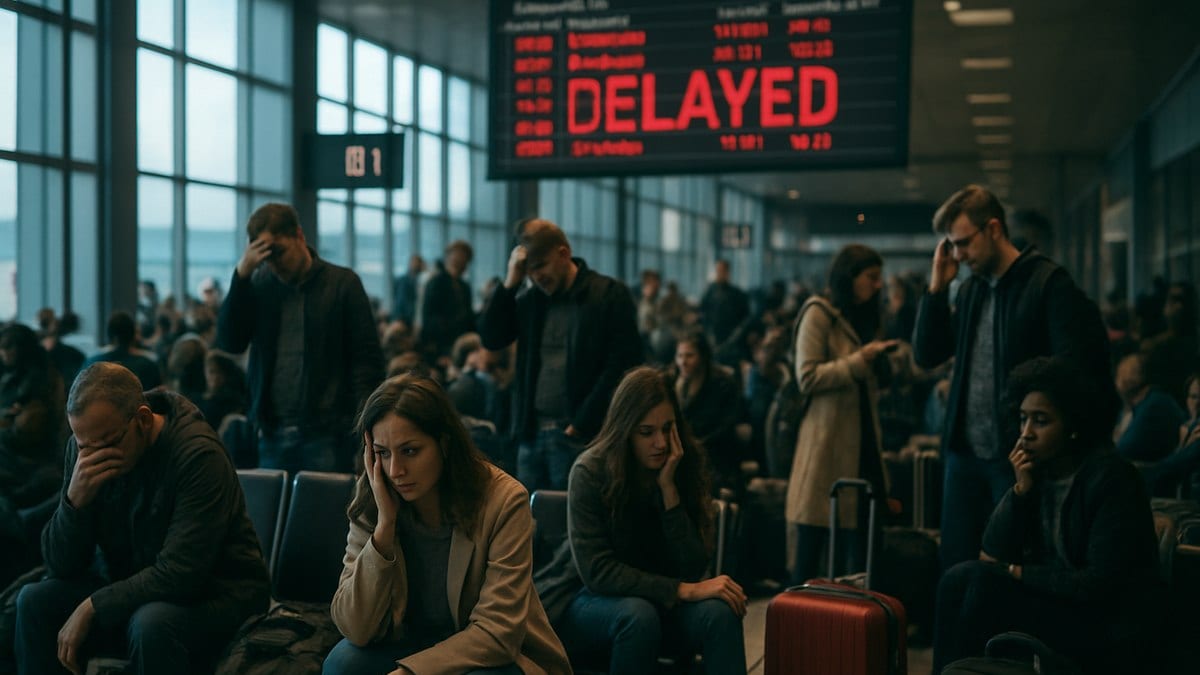
Hundreds of passengers were left sleeping in terminals and scrambling for alternative routes this week as a fresh wave of delays and cancellations rippled through Europe’s already stretched air travel network.
Get the latest news straight to your inbox!
Disruption Spreads Across Key European Hubs
Tracking data and recent coverage indicate that airports in the United Kingdom, Germany, the Netherlands, Italy, Portugal and Turkey have all experienced heavy disruption since the start of April, with delay totals frequently entering four figures in a single day. At several hubs, the combination of late arrivals, missed connections and short-notice cancellations left long queues at service desks and a shortage of available hotel rooms near airports.
London’s Heathrow and Gatwick have been among the hardest hit, with one 24-hour period in early April seeing more than 1,600 delayed flights logged across Europe and several hundred of those clustered around the two London airports. Reports describe departure boards dominated by yellow and red delay indicators, while incoming flights arrived hours behind schedule, creating further backlogs for outbound services.
Elsewhere, coverage from regional outlets highlights severe knock-on disruption at Amsterdam Schiphol, Rome Fiumicino, Athens and Lisbon, where triple-digit delay counts have become increasingly common on peak travel days. Even where outright cancellations remained relatively limited, extended turnaround times meant passengers were frequently left waiting for reassigned aircraft and crew.
In many cases, the number of people stuck in transit grew through the day as missed connections piled up, leading to scenes of passengers bedding down on terminal floors or relying on makeshift overnight transport to secondary airports with available seats.
Strikes, Staffing Gaps and Weather Combine
The latest disruption reflects a convergence of factors rather than a single cause. In Germany, a strike by Lufthansa cabin crew on Friday grounded hundreds of flights, concentrated at Frankfurt and Munich, just as many travelers were returning from Easter holidays. Published schedules indicate that roughly three-quarters of the carrier’s departures from Frankfurt were scrapped, forcing thousands of passengers to rebook or remain in place overnight.
Beyond industrial action, persistent staffing shortfalls in air traffic control and ground handling continue to magnify even minor operational hiccups. Analyses from aviation bodies show that en route air traffic control delays in Europe have more than doubled over the past decade, while traffic volumes have risen more modestly, indicating deep structural constraints in the system.
Adverse weather has also played a role. Earlier in the year, winter storms triggered hundreds of cancellations and delays at major hubs such as Amsterdam and Paris, pushing airlines onto the back foot ahead of the busy spring travel period. With aircraft and crews still working back to normal rotations, additional shocks, such as localized thunderstorms or strong crosswinds, quickly cascaded into widespread schedule disruption this month.
The result for travelers has been an unpredictable patchwork of conditions: some flights operating more or less on time, others delayed by several hours, and still others canceled outright with limited rerouting options, particularly for late-night departures.
Ripple Effects of Global Tensions and Fuel Concerns
Europe’s current wave of air travel disruption is unfolding against a backdrop of broader global instability. Industry data released this week shows a sharp worldwide rise in cancellations in March, linked to the conflict involving Iran and its impact on key air corridors. Europe recorded a notable increase in cancellation rates as airlines rerouted services around affected airspace and adjusted fleets and crews.
At the same time, European airports and airlines are increasingly alert to the risk of jet fuel constraints in the months ahead. Publicly available statements from airport associations and carriers warn that supplies could tighten if shipments through major energy chokepoints remain disrupted, creating the possibility of further schedule cuts just as the summer peak approaches.
For passengers already stranded in April’s disruptions, the wider geopolitical and energy context is largely invisible yet significant. Airline planners are juggling not only day-to-day delays but also questions about medium-term capacity, routing, and fleet deployment, which could influence how quickly stranded travelers are accommodated and whether spare aircraft are available to operate rescue or extra sections.
Travel analysts note that these overlapping pressures are eroding some of the buffer that European carriers traditionally rely on to recover from localized shocks, making the network more vulnerable to extended periods of irregular operations.
Passengers Face Long Waits, Complex Re-Routing
For individual travelers, the fresh wave of disruption has translated into long hours in crowded terminals, unexpected overnight stays and complicated rerouting journeys that sometimes involve multiple connections or even changes of airport and country. Reports from consumer advocacy organizations describe passengers in London, Amsterdam and southern European leisure destinations facing queues stretching across check-in halls as they sought meal vouchers, hotel rooms or new itineraries.
Airlines have attempted to prioritize long-haul services and high-density routes, a strategy that can minimize total numbers of stranded passengers but often leaves regional and secondary-city routes more exposed to cancellations. Travelers booked on short-haul links to smaller airports have reported being rebooked onto flights the following day or even later, particularly when services operate only a few times per week.
Some passengers have turned to rail or long-distance bus networks to bridge gaps in their journeys, especially within mainland Europe, where cross-border services remain relatively frequent. However, limited capacity and higher last-minute prices mean not everyone can find or afford surface alternatives, leaving many to wait at the airport for the next available flight.
The cumulative effect is a growing sense of fragility around European air travel, with travelers expressing concern that even routine trips now carry a higher risk of major disruption, especially during holiday peaks or in the event of renewed strikes.
Know Your Rights and How to Minimize Risk
Consumer groups and legal guides are highlighting the importance of understanding passenger protections during this latest bout of disruption. Under European Union rules and equivalent UK regulations, travelers on eligible flights may be entitled to assistance such as meals, refreshments, hotel accommodation and, in some circumstances, financial compensation when flights are significantly delayed or canceled for reasons within an airline’s control.
However, not all disruption qualifies for compensation. Delays attributed to severe weather, air traffic control restrictions or broader geopolitical events are often treated as extraordinary circumstances, limiting the scope for monetary claims. This has left some stranded passengers frustrated as they navigate complex rules while trying to secure basic care and onward travel.
Travel experts recommend that passengers facing delays document their experience carefully, keep receipts for any out-of-pocket expenses and use official airline channels and recognized claim platforms when seeking redress. Flexible tickets, travel insurance with disruption coverage and early-morning departures are also being suggested as ways to reduce risk in a period of heightened volatility.
With the busy summer season approaching and structural pressures on Europe’s aviation system still unresolved, observers warn that the current wave of delays and stranded travelers may be a preview of wider challenges ahead for the continent’s air passengers.