

More news on this day
Thousands of air travelers across Europe have faced fresh disruption as a new wave of flight cancellations and delays swept through major hubs in France, the United Kingdom, Germany, Sweden and Spain, with at least 82 flights reportedly cancelled and a further 1,532 delayed in a single day, affecting services operated by British Airways, easyJet, Air France, Lufthansa, KLM, Qatar Airways and other carriers at airports including Paris, London, Frankfurt, Stockholm and Madrid.
Get the latest news straight to your inbox!
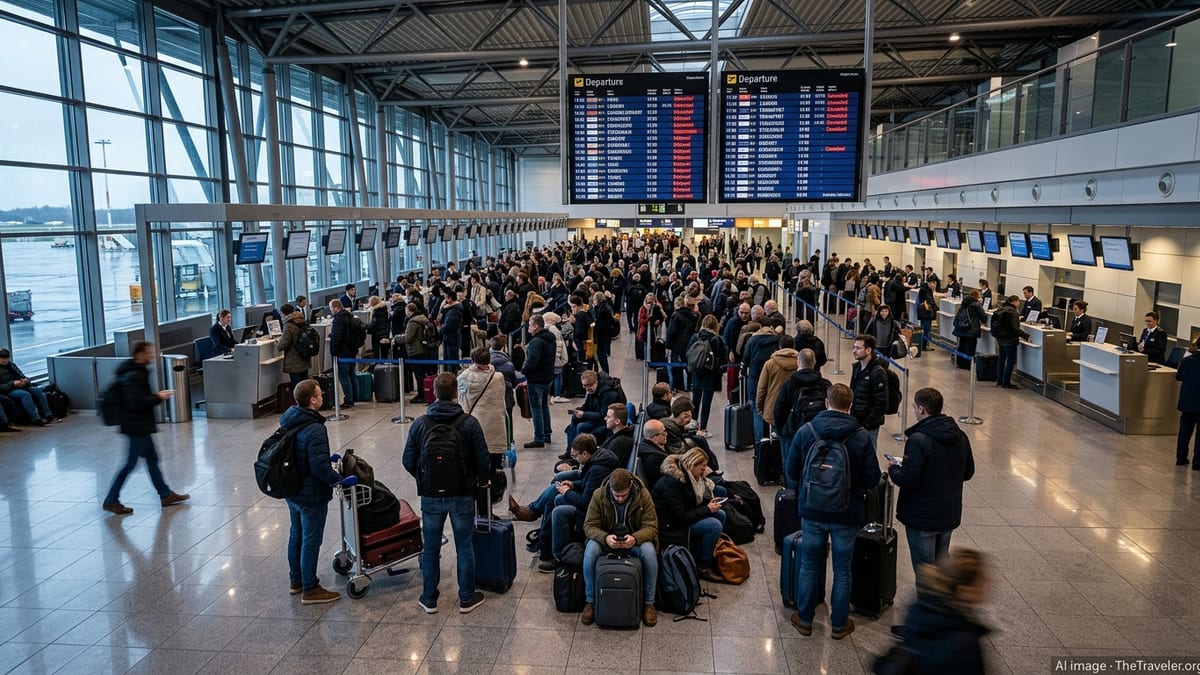
Major Hubs Struggle With Another Day of Disruption
The latest operational turmoil has hit some of Europe’s busiest airports, compounding a turbulent start to the year for the region’s aviation sector. Publicly available data and media monitoring indicate that knock-on effects from weather, airspace constraints and reactionary delays once again converged on key hubs, leaving departure boards dominated by red and amber warnings.
Paris Charles de Gaulle and Orly, London’s Heathrow and Gatwick, Frankfurt, Stockholm Arlanda and Madrid Barajas were among the airports reporting clusters of cancellations and extended delays. Services operated or marketed by British Airways, easyJet, Air France, Lufthansa, KLM and Qatar Airways featured prominently in the disruption, alongside several European low-cost and regional carriers.
While 82 outright cancellations represent a relatively small fraction of the thousands of daily movements across Europe, the scale of delay – more than 1,500 affected flights – created long queues at check-in, transfer and customer service desks. Passengers reported missed connections, forced overnight stays and widespread schedule changes as airlines worked to re-route travelers through alternative hubs.
Operational reporting from European aviation bodies in recent months has highlighted how even limited cancellations can cascade quickly, with aircraft and crews falling out of position and subsequent rotations running late. The latest figures fit that pattern, with a modest number of cancelled departures but a disproportionate wave of delayed services across the network.
Airlines Under Pressure as Reactionary Delays Mount
The carriers most visible in the current disruption include many of Europe’s largest network and low-cost airlines, which rely heavily on tight turnarounds and dense banked schedules at their hubs. British Airways and easyJet in the United Kingdom, Air France and KLM in France and the Netherlands, Lufthansa in Germany and Qatar Airways on long haul connections all appear within the day’s tally of affected operations.
Operational performance reports for recent seasons show that reactionary delays, where an incoming aircraft’s late arrival pushes subsequent flights behind schedule, have become a growing challenge for major European airlines. These delays often originate in factors outside a single airline’s control, such as weather events or air traffic flow management restrictions, but then ripple across their networks as aircraft cycle through multiple airports in a single day.
Industry analyses published over the past year point to congestion in European airspace, periodic strike activity and a series of intense winter storms as recurring triggers for disruption. Recent storms have already led to large-scale cancellations and delays at airports such as Amsterdam Schiphol and Paris Charles de Gaulle, and current patterns suggest that airlines are still working through the residual effects of earlier schedule upheavals and repositioning challenges.
For long haul operators like Qatar Airways, which connect Europe to Asia and the Middle East through a single hub, any airspace restrictions or operational changes along key corridors can quickly translate into revised timetables, extended routings and short-notice schedule adjustments, adding further stress to already stretched airport operations in Europe.
Passenger Impact: Missed Connections and Overnight Stays
For travelers, the numbers translate into practical headaches: missed onward flights, long lines at service counters and difficulties securing accommodation on short notice. Social media posts and traveler forums on similar disruption days this season have described passengers queuing for hours in London, Paris and Frankfurt to obtain rebooking or hotel vouchers after their flights were cancelled or severely delayed.
Families and business travelers alike have reported losing entire days of itineraries when arrival times slipped by five hours or more, making it impossible to catch rail connections or regional flights onward to smaller European cities. In hub airports such as Madrid and Stockholm, where many passengers connect between European and intercontinental services, even modest schedule changes can break carefully timed itineraries.
Published guidance from consumer organizations across Europe emphasizes that passengers facing cancellations or long delays should document all communications, keep receipts for meals and accommodation and monitor their booking status online as well as on departure boards. Travel experts frequently advise checking both the airline’s own channels and airport operational feeds, since changes to gate assignments or estimated departure times can appear at different speeds across systems.
For those already in transit, the latest day of disruption serves as a reminder of how vulnerable modern hub-and-spoke air networks can be to even localized problems, particularly in the peak of winter and early spring travel when weather volatility and high load factors coincide.
What Travelers Can Expect Under EU and UK Rules
The wave of cancellations and delays also throws renewed attention on passenger rights in Europe. Under the EU’s Air Passenger Rights Regulation and corresponding UK legislation, travelers departing from airports in the European Union, the European Economic Area or the United Kingdom, or flying to these regions on qualifying carriers, may be entitled to assistance, rerouting and in some cases financial compensation when their flights are cancelled or heavily delayed.
The rules apply regardless of nationality and cover airlines such as British Airways, easyJet, Air France, Lufthansa and KLM when operating eligible routes. In many situations, passengers experiencing long delays are entitled to meals, refreshments and, if an overnight stay becomes unavoidable, hotel accommodation and transfers. The level of compensation, where applicable, depends on flight distance and the length of the delay on arrival.
However, the regulations also provide exemptions for so-called extraordinary circumstances, which can include severe weather, airspace closures and certain types of security or air traffic control restrictions. In those cases, airlines may still need to provide care and assistance but are not required to pay additional cash compensation, a distinction that often becomes a point of contention when widespread operational issues affect multiple carriers at once.
Consumer advocates regularly encourage passengers to submit formal claims directly to airlines, and if necessary escalate complaints to national enforcement bodies when they believe the rules have not been correctly applied. In recent years, the volume of claims related to delays and cancellations in Europe has prompted debates over updating and clarifying the regulation to reflect today’s increasingly congested skies.
Planning Ahead: Strategies for Navigating Ongoing Volatility
With another day of large-scale disruption added to an already challenging winter and early spring for aviation, regular travelers are increasingly building contingency into their plans. Analysts following European aviation trends note a rise in passengers opting for longer connection windows at major hubs such as London, Frankfurt and Paris, even when shorter options are available, in an effort to reduce the risk of missed onward flights.
Travel planning advice from industry observers often highlights the benefits of early-morning departures, which tend to be less affected by knock-on delays from earlier disruptions, and of tracking aircraft inbound status when possible to anticipate potential problems before they appear at the gate. Travelers with critical time-sensitive commitments are also advised to consider arriving a day early or choosing direct flights where feasible, particularly during periods flagged for adverse weather or industrial action.
The latest figures from this Europe-wide disruption underline that even in a market that has largely recovered in volume since the pandemic, resilience remains a central concern. As airlines and airports work to balance growing demand with infrastructure and staffing constraints, passengers passing through hubs from Paris and London to Frankfurt, Stockholm and Madrid are likely to face intermittent bouts of turbulence on the ground as well as in the air.
For now, the combination of 82 new cancellations and more than 1,500 delayed flights across multiple countries serves as a stark snapshot of how vulnerable interconnected air networks remain. With the busy spring and summer travel seasons approaching, attention is already turning to whether systemic improvements in scheduling, staffing and airspace management can keep similar disruption from becoming a recurring theme.