

More news on this day
Hundreds of air travellers across Canada are facing long hours in terminals and, in some cases, isolation in remote communities as a fresh wave of delays and cancellations hits major carriers including Air Canada, WestJet, Inuit, PAL and several regional airlines. As of Monday, at least 172 new delays and 37 flight cancellations were reported across key hubs such as Calgary, Vancouver, Toronto, Ottawa, Montreal and Quebec City, further straining an already fragile winter air travel season.
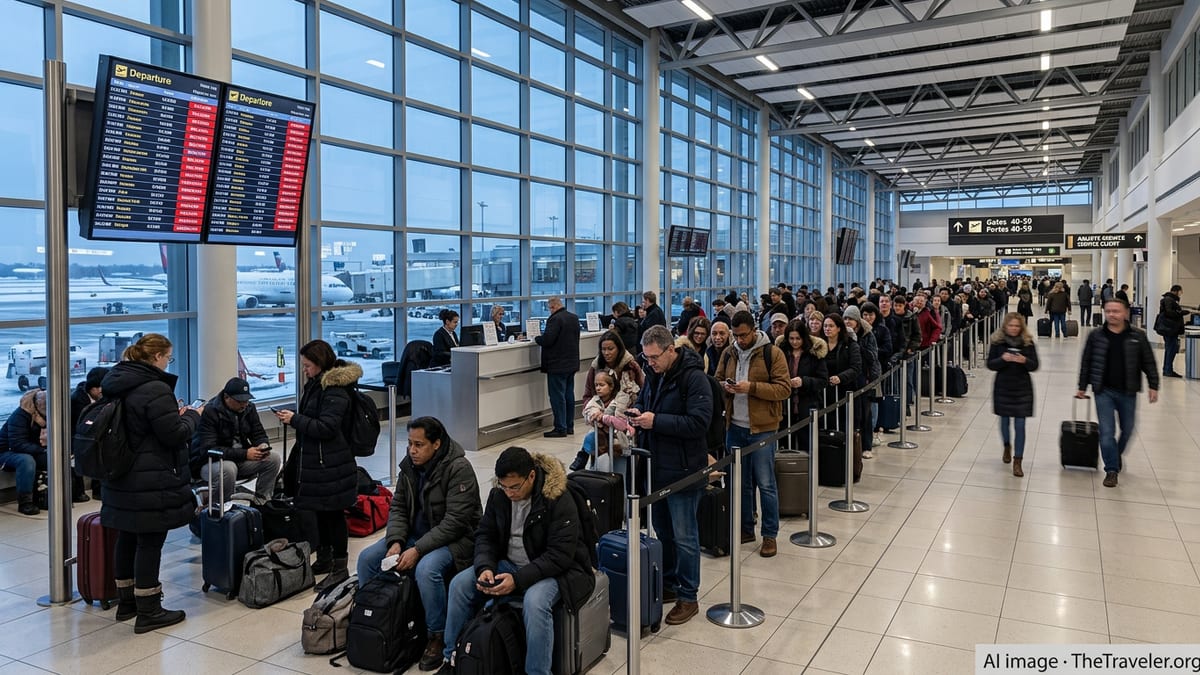
Major Hubs From Vancouver to Montreal Experience Fresh Turmoil
The latest disruption has rippled through Canada’s busiest corridors, with tracking data and airport operations reports indicating that major hubs are once again bearing the brunt of schedule chaos. Toronto Pearson, Vancouver International, Calgary International and Montreal–Trudeau all reported elevated levels of late and cancelled services, affecting both domestic and transborder routes.
Operational tallies shared by industry sources show that the 37 newly cancelled flights are spread across the country but heavily concentrated on high-traffic routes linking Toronto, Montreal, Calgary and Vancouver. The 172 delays, many of them stretching beyond two hours, have forced aircraft and crew out of position, creating knock-on effects for later departures.
Regional airports in Quebec and Atlantic Canada have also been hit, with Quebec City serving as a chokepoint for flights to and from northern communities. While overall numbers at smaller airports are lower than at the big hubs, the impact is often more severe because there are fewer alternative departures and limited ground transport options.
At Vancouver and Calgary, passengers reported packed departure halls and snaking lines at airline service desks as carriers worked to rebook travellers onto later services. Some flights managed to depart after long ground holds for deicing or crew-related checks, but others were ultimately scrubbed from schedules, contributing to the growing tally of cancellations.
Passengers Describe Isolation in Remote and Urban Terminals
One of the most acute consequences of the current round of disruptions has been the isolation experienced by travellers left in limbo, especially on routes connecting northern and Indigenous communities to major southern hubs. Inuit-operated and other regional flights serving Quebec’s Nunavik region and parts of northern Labrador and Newfoundland have faced cascading delays, leaving residents and essential workers unable to reach medical appointments, work rotations or family gatherings.
In some communities, passengers who arrived at small airstrips expecting same-day connections to Montreal or Quebec City found themselves stranded overnight as weather and downstream congestion in the south forced carriers to suspend operations. With few hotels and limited road access, travellers have had to rely on local contacts and community facilities for temporary shelter while they await news of replacement flights.
In Canada’s big-city airports, the sense of isolation has taken a different form. Travellers in Calgary, Toronto and Montreal have reported spending up to 12 hours inside terminals, cycling between departure boards, gate podiums and customer service counters as departure times repeatedly slip. Some described being kept on aircraft while crews waited for improved conditions or updated air traffic control slots, only to be returned to the terminal after duty-time limits were reached.
For families travelling with children and elderly passengers connecting through multiple hubs, the uncertainty has been particularly stressful. With so many flights pushed into later time slots, airport services including restaurants and retail outlets have struggled to keep pace with demand, and available hotel rooms near the busiest airports have become scarce during peak evening hours.
Weather, Crew Limits and Congested Networks Combine
The latest round of disruption comes as meteorologists warn of another unstable week of winter weather across parts of Ontario, Quebec and Atlantic Canada. Environment and Climate Change Canada has flagged the risk of freezing rain and mixed precipitation for several regions, conditions that are notoriously challenging for airline operations because of the need for prolonged deicing and tighter safety margins on runways.
Airlines are also still working to recover from a series of storms and cold snaps earlier in the season that left aircraft and crews out of position, stretching networks built around tight turnaround times. Aviation experts note that when operations are already fragile, even moderate weather or a small number of technical issues can trigger a chain reaction of delays and cancellations throughout the day.
Crew-duty regulations are another pressure point, particularly for carriers operating complex networks across multiple time zones. When an aircraft arrives late due to weather or air traffic control restrictions, cabin and flight crews may reach their legal duty-time limits before the next scheduled departure, forcing airlines to cancel or significantly delay flights until replacement staff can be found.
Industry analysts say regional operators serving northern and coastal communities are especially vulnerable. With smaller fleets and fewer spare aircraft or standby crews, a single grounded plane can wipe out an entire day’s schedule to a remote destination, leaving passengers with no immediate alternative other than to wait for the carrier to reset its operations.
Airlines Under Pressure as Passenger Rights Scrutinised
The renewed disruptions are piling pressure on Canada’s leading airlines, which are already facing heightened scrutiny from regulators and passenger advocates over their handling of delays and cancellations. Air Canada, WestJet, Inuit carriers and PAL Airlines have all stressed that safety remains their top priority, pointing to weather, airspace restrictions and crew safety rules as primary drivers of the current wave of schedule changes.
However, travellers at Canadian airports have voiced frustration over limited information, inconsistent offers of hotel accommodation and meal vouchers, and difficulty rebooking when flights are cancelled at short notice. Many have taken to social media to detail lengthy queues at customer service counters and difficulties reaching call centres, particularly during evening peaks when multiple flights are being retimed simultaneously.
Canada’s Air Passenger Protection Regulations set out compensation and care standards when flights are delayed or cancelled, but the level of support owed to travellers depends on whether the disruption is within the airline’s control, within its control but required for safety, or completely outside its control such as severe weather. Carriers have frequently cited weather and safety concerns in recent weeks, arguing that many delays fall into the latter categories where compensation obligations are lower.
Advocacy groups are urging passengers to document their experiences and keep receipts for out-of-pocket expenses such as hotels and meals, noting that some travellers have successfully secured reimbursements or vouchers after filing formal complaints. The Canadian Transportation Agency continues to receive a steady stream of grievance filings related to operational meltdowns seen over the past two winters.
What Travellers Can Expect in the Coming Days
With another system of messy winter weather forecast for portions of central and eastern Canada, airlines and airports are warning that operations are likely to remain fragile through the middle of the week. Carriers have begun issuing travel alerts for affected routes, allowing some passengers to rebook without change fees in an effort to thin loads on the busiest days and avoid further bottlenecks.
Travel planners advise that anyone scheduled to fly through Calgary, Vancouver, Toronto, Ottawa, Montreal or Quebec City should monitor their flight status closely, consider travelling with carry-on luggage only where possible, and build extra connection time into multi-leg itineraries. Early morning departures remain marginally more reliable than late-evening flights, which tend to reflect the cumulative impact of the day’s disruptions.
For travellers to and from remote northern and coastal communities, patience and contingency planning will be essential. Experts recommend staying in close contact with local agents or airline representatives on the ground, as schedules can shift quickly once aircraft and crews are back in position. Some carriers may also operate unscheduled recovery flights to clear backlogs when conditions allow.
As Canada’s winter travel season enters its final weeks, both airlines and passengers are looking toward spring with the hope of more stable skies. For now, though, the reality at many of the country’s busiest terminals is one of crowded departure halls, overworked staff and travellers bracing for another long wait to get where they are going.