

More news on this day
Hotels are increasingly shifting from one-off stays to ongoing membership relationships, experimenting with club-style programs, branded residences, and subscription-like offers that aim to turn transient guests into long-term members.
Get the latest news straight to your inbox!
Hotel Brands Pivot Toward Relationship-Based Revenue
Large hospitality groups are placing new emphasis on membership-style engagement, seeking to stabilize revenue and deepen loyalty in a market where travelers are more selective and booking channels more fragmented. Publicly available information from major chains indicates that a growing share of room nights and ancillary spending now comes from loyalty members rather than casual guests, prompting companies to treat membership as a core business line rather than a marketing add-on.
Annual filings and investor materials from global hotel groups describe loyalty platforms as both distribution engines and high-margin revenue streams, fueled by co-branded credit cards, partnerships, and targeted offers. In parallel, hotel operators are experimenting with more immersive models that replicate aspects of private clubs, residential communities, and vacation ownership, all underpinned by formal membership structures.
This strategic shift reflects a wider move in travel toward subscription and club concepts, as consumers accustomed to streaming services and paid tiers in retail become more comfortable paying for ongoing benefits rather than single stays. For hotels, the objective is to move beyond episodic transactions and secure a predictable base of frequent users who see themselves as members first and guests second.
Branded Residences Blur the Line Between Home and Hotel
One of the clearest expressions of the membership trend is the rapid expansion of hotel-branded residences, where owners buy or hold long leases in properties managed by luxury and upper-upscale flags. Brands linked to major groups including Marriott International, Hilton, Accor, and independent luxury operators promote these residences as a hybrid between private home and full-service hotel, often with dedicated owner privileges layered on top of standard guest offerings.
Marketing materials for these projects emphasize access to concierge services, resort-style amenities, and preferred treatment at sister properties worldwide. Owners are frequently enrolled in elite tiers of the parent company’s loyalty program, with enhanced recognition, priority reservations, and exclusive experiences framed as part of the ownership “club.” Specialist advisory platforms that track the sector note that membership in these programs has become a differentiating factor in sales pitches for branded residences, especially in resort and gateway-city markets.
Developers and hotel companies describe branded residences as a way to monetize brand equity beyond nightly rates, while cultivating a core group of highly engaged brand ambassadors. For buyers, the appeal lies in both the lifestyle proposition and the perceived value of being part of an extended hospitality network, where membership confers identity, status, and practical travel benefits.
Private Clubs and Members-Only Spaces Inside Hotels
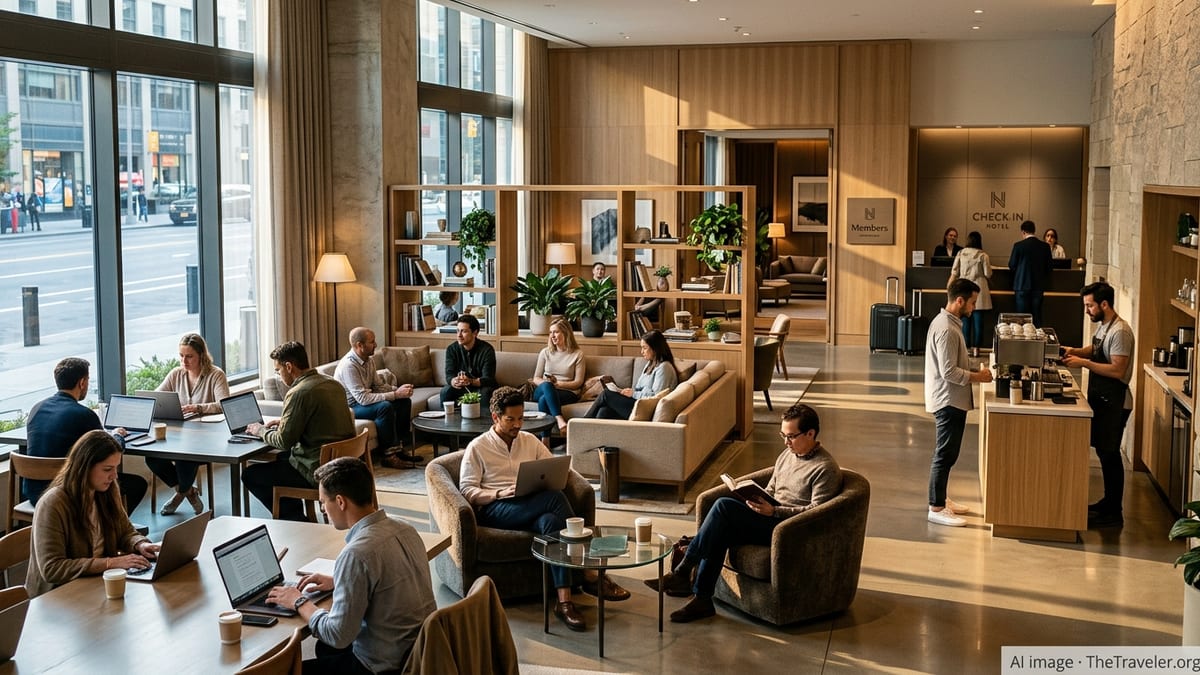
Alongside residential projects, hotels are increasingly pairing public-facing rooms with members-only clubs that generate recurring dues and local demand. Industry coverage highlights new properties that open with dedicated club floors, lounges, or annexes, where membership can include access to social programming, wellness facilities, and curated cultural events unavailable to standard guests.
In markets such as Los Angeles, London, and major Asian capitals, hospitality groups and independent operators have launched hybrid hotel-club concepts that seek to attract both travelers and residents of the surrounding neighborhood. Members may receive preferred rates on rooms and dining alongside club privileges, turning the hotel into a social anchor rather than a purely transient space. Reports indicate that such models saw renewed interest after the pandemic as travelers and locals alike sought spaces that offer community and continuity.
These club components are typically structured as formal memberships with application processes, annual fees, and tiered access levels. While overnight guests can still book as usual, the hotel’s most loyal users are effectively treated as members of a private community, with communication, benefits, and programming designed to reinforce that sense of belonging.
Loyalty Programs Evolve Toward Membership Ecosystems
Traditional hotel loyalty programs built around points and status tiers are also taking on more overt membership characteristics. Terms and benefits pages for major schemes describe an expanding ecosystem that now includes vacation ownership brands, long-stay apartments, branded homes, and even third-party partners that can be accessed under a shared membership umbrella.
Recent updates to loyalty program documentation highlight integrations with subscription-style offerings and cross-enrollment arrangements. In one example, a lifestyle hotel brand’s paid subscription has been linked directly to an international loyalty platform, with subscribers automatically granted mid-tier elite status as long as their subscription remains active. Similar structures are emerging around partnerships with ownership clubs and branded residences, where owners receive elevated recognition within the broader program.
Industry analyses suggest that these developments are gradually transforming loyalty programs into membership ecosystems that span multiple asset types and stay patterns. Members may engage with the brand through a city apartment, a vacation club resort, a co-branded credit card, or a neighborhood hotel, but all touchpoints are framed within a single, persistent identity rather than disconnected transactions.
Opportunities and Risks in the Shift From Stays to Memberships
The move from short-term stays to membership-style relationships offers clear financial incentives for hotel owners and operators. Recurring dues from clubs, predictable maintenance fees from ownership products, and long-term engagement from loyalty members can moderate the cyclical nature of transient demand. Analysts and consultants covering the sector also point to higher ancillary spending from members, who tend to dine, spa, and meet more frequently at properties where they feel a sense of belonging.
However, the model introduces new risks and operational demands. Turning guests into members requires consistent service delivery across properties and over long periods of time, raising the stakes for brand standards and training. Membership structures also concentrate expectations among the most invested customers, who may be more vocal if benefits are diluted or facilities become crowded.
There are broader questions around access and perception as well. As hotels add private clubs, gated amenities, and residence-only areas, some critics argue that properties risk feeling less inclusive to non-members and casual guests. Hospitality groups are experimenting with tiered access, day passes, and local partnerships to balance exclusivity with openness, but the optimal mix remains in flux.
For now, publicly available data and marketing trends indicate that membership-style models will continue to expand across the hotel landscape. From urban members’ clubs integrated into boutique hotels to large-scale branded residence communities connected to global loyalty platforms, the hospitality industry appears intent on redefining itself as a network of memberships rather than a collection of isolated room nights.