

More news on this day
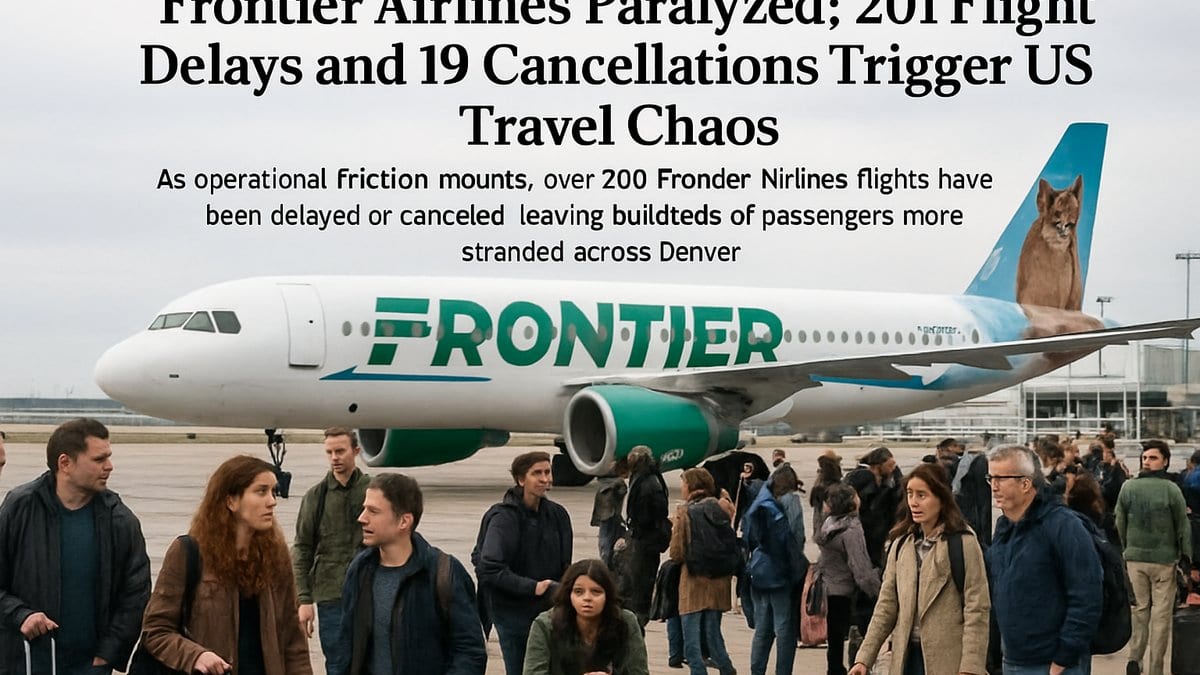
Frontier Airlines operations were severely disrupted as 201 flight delays and 19 cancellations rippled across the United States, stranding passengers at key hubs and intensifying wider concerns about the carrier’s reliability during a volatile spring travel period.
Get the latest news straight to your inbox!
Nationwide Disruptions Hit Peak Spring Travel
Publicly available tracking data and media coverage indicate that Frontier’s latest operational breakdown unfolded during an already strained period for US aviation, when spring storms and congested hubs have led to frequent schedule disruptions across multiple airlines. The spike to 201 delays and 19 cancellations in a single operating window placed Frontier among the most heavily impacted carriers, with its point to point network structure amplifying the knock on effects as aircraft and crews fell out of position.
Travel monitoring platforms showed clusters of delayed Frontier departures concentrated at major airports such as Denver, Las Vegas, Orlando and Atlanta, where the airline operates dense schedules and tight aircraft rotations. When multiple flights at one hub slip behind schedule, later departures on the same aircraft can be pushed back by hours, worsening recovery prospects throughout the day and into the evening.
Reports suggest that passengers faced long queues at check in counters and customer service desks as they sought rebooking options, meal assistance or overnight accommodation. Social media and forum posts described confused gate information and rolling delay estimates, creating uncertainty for travelers trying to make connections or adjust plans at short notice.
The disruption arrived as US airlines in general grapple with a combination of weather volatility, air traffic flow constraints and crew scheduling pressures. Industry analyses have repeatedly ranked Frontier among the country’s lower cost carriers with elevated delay rates, which means a spike of this magnitude can quickly cascade into a wider network challenge.
Airports and Routes Most Affected
Initial breakdowns of the 201 Frontier delays and 19 cancellations show a heavy concentration on domestic leisure routes linking major bases to popular tourism and visiting friends and relatives destinations. Flights between Denver and cities across the Midwest and East Coast, as well as routes from Orlando and Las Vegas to secondary airports, featured prominently in disruption tallies.
At Denver International Airport, Frontier’s primary hub, even a modest number of cancellations can generate significant turbulence on the concourses because of the carrier’s high share of local traffic. Observers reported aircraft waiting for gates, aircraft swaps, and departure boards filling with yellow and red status indicators as the day progressed. Smaller spoke airports, meanwhile, saw single cancellations or long delays that could wipe out the last flight of the day, leaving passengers with no same day alternatives.
In several markets, delays of more than two hours were recorded on consecutive departures, suggesting that once the airline’s schedule fell behind, recovery proved difficult. With low cost carriers typically operating lean spare capacity, there are fewer backup aircraft and crews available when irregular operations spike, making it harder to isolate and resolve problems before they spread.
International feed to and from US gateways appeared less affected, but travel planners pointed out that missed domestic connections can still disrupt long haul journeys booked on separate itineraries. Travelers relying on Frontier to reach larger hubs for onward flights on other carriers faced the prospect of rebooking at their own expense when minimum connection times evaporated.
Passengers Confront Long Waits and Limited Options
Accounts shared on public forums in the wake of the disruption describe passengers waiting in line for hours to speak with airline representatives, only to learn that alternative same day flights were sold out or operated only on later dates. Budget airlines like Frontier generally operate fewer daily frequencies on individual routes, so a canceled or heavily delayed flight may eliminate all viable options for that day.
Some travelers reported difficulty obtaining clear, timely information on revised departure times, gate changes, or rerouting possibilities. While airline apps and airport display systems provide real time updates, several accounts noted mismatches between different information channels, contributing to confusion at boarding areas and making it harder for passengers to judge whether to remain near the gate or seek food and lodging.
Consumer advocates often advise passengers to document all communications, save boarding passes and delay notifications, and track out of pocket expenses when confronted with disruptions of this scale. That guidance is particularly relevant in the case of a large operational event affecting hundreds of flights, where any subsequent compensation or refund requests may hinge on detailed records of the disruption and the airline’s response.
The incident also renewed debate over the trade offs associated with ultra low cost carriers. While travelers may save on base fares, they can face higher relative costs when a major disruption strikes, particularly if additional nights of accommodation, ground transportation or last minute tickets on other airlines become necessary to salvage itineraries.
Operational and Industry Context Behind the Meltdown
The latest wave of Frontier delays occurred against a backdrop of heightened scrutiny of airline performance metrics in the United States. Recent analyses of federal on time performance data and independent studies have frequently placed Frontier near the bottom of major carriers in terms of punctuality, citing a higher proportion of late arrivals compared with full service competitors.
Industry observers often point to structural factors in the low cost model that can magnify operational shocks. Tight turn times, aggressive aircraft utilization and limited spare capacity can drive down costs but leave little margin when weather, air traffic control programs or technical issues intervene. When irregular operations converge with peak travel periods, recovery can require schedule thinning or rolling cancellations, which further inconvenience passengers.
The timing of the 201 delays and 19 cancellations also intersects with a wider period of turbulence across US aviation, including recent storms and ground delay programs that have produced elevated cancellation and delay counts at major hubs. Although the immediate triggers for Frontier’s latest meltdown varied by route, the broader environment has been characterized by fragile day to day operations and thin buffers for disruptions.
Financial pressures add another layer of complexity. Frontier’s parent company has recently drawn attention from analysts for margin challenges and share price volatility, reflecting investor concerns about the balance between cost cutting, capacity growth and operational resilience. When performance stumbles, both passengers and markets react quickly, reinforcing the stakes for improving reliability.
What Travelers Can Do During Widespread Frontier Disruptions
Travel experts recommend that passengers booked on Frontier, particularly during peak travel weeks or when storms are forecast, adopt a more proactive stance in monitoring flight status and planning contingencies. Checking flight tracking services in addition to airline channels can provide early signals of potential delays, such as an inbound aircraft arriving late or an airport entering a ground delay program.
When large disruption events like the 201 delays and 19 cancellations emerge, travelers may benefit from immediately exploring alternative routings, including nearby airports or earlier departures, rather than waiting for final confirmation of a cancellation. Seats on remaining flights across all airlines can disappear quickly once disruption headlines spread, and acting early can expand options.
Passengers are also encouraged to review their rights and potential remedies under US Department of Transportation rules and airline specific customer commitment policies. While US regulations do not mandate compensation for most weather related disruptions, they do require prompt refunds when flights are canceled or significantly changed and the traveler chooses not to fly. Knowing the difference between a schedule change, a delay, and a cancellation can be important when requesting refunds instead of travel credits.
For future bookings, some travelers may opt to build in longer connection times, avoid the last flight of the day on critical legs, or purchase travel insurance that includes disruption and delay benefits. Others may decide that the lower base fares of ultra low cost carriers remain worthwhile, but only when backed by flexible itineraries and backup plans in case of another large scale operational breakdown.