

More news on this day
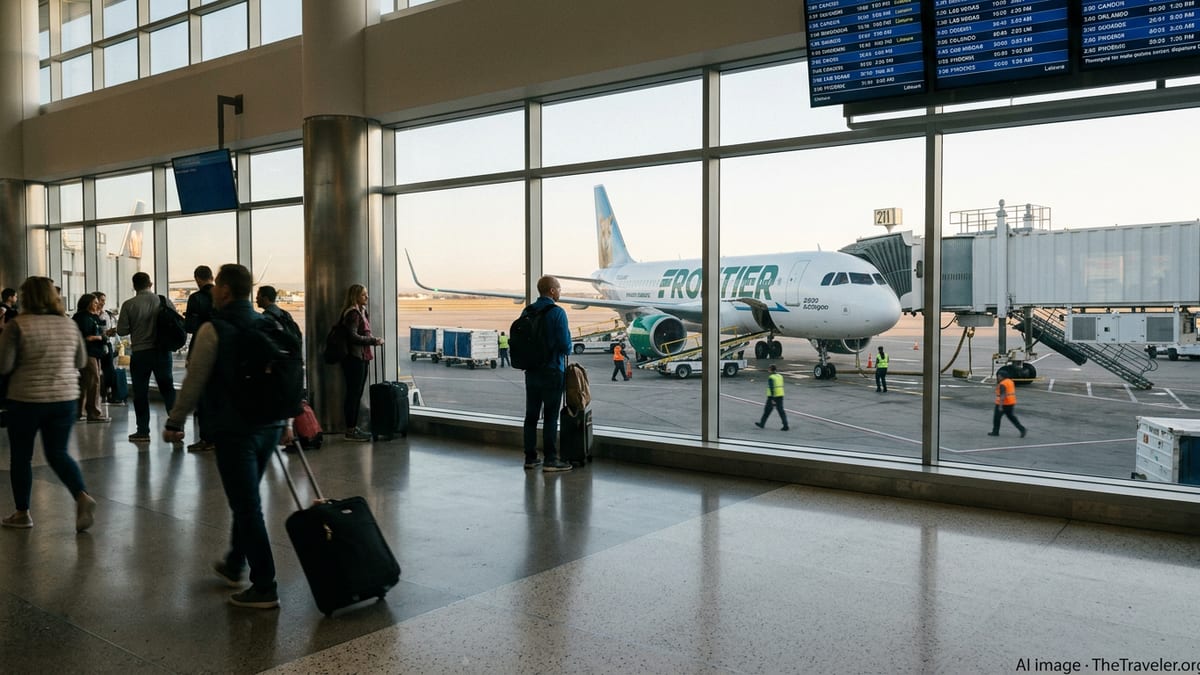
Frontier Airlines is set to use its appearance at the JP Morgan 2026 Industrials Conference to sharpen its focus on tourism, highlighting leisure demand, route strategy, and product changes as it seeks to convince investors that a leaner ultra-low-cost model can still power growth.
Get the latest news straight to your inbox!
Investor Platform to Showcase Tourism-Led Strategy
The Denver-based carrier confirmed that president and CEO Jimmy Dempsey will participate in a moderated discussion at the JP Morgan 2026 Industrials Conference on March 17, positioning the event as a key stage to communicate how tourism and leisure travel underpin Frontier’s next phase of growth.
The appearance comes at a pivotal time for the airline, which has been rebalancing its network around price-sensitive leisure travelers while tempering earlier fleet expansion ambitions. Executives are expected to emphasize that tourism flows to sun and leisure destinations remain a central demand driver, even as competitive pressure intensifies among low-cost carriers.
Frontier has recently framed itself as “America’s high-value airline,” a message that dovetails with its push to attract budget-conscious tourists who nonetheless want reliable operations and clearer pricing. At JP Morgan, management is likely to underline how this positioning can help the airline defend margins while continuing to stimulate discretionary travel.
Industry analysts will be listening for more detail on how Frontier intends to translate broad tourism demand into sustainable yield, particularly as rivals also crowd popular vacation markets and customers grow more selective about schedule reliability and ancillary fees.
Tourism Demand Shapes Network and Capacity Choices
Frontier’s participation at the conference follows a series of moves to recalibrate capacity and profitability, including decisions to return aircraft to lessors and defer some Airbus deliveries in coming years. Those steps are designed to slow overall growth, but the airline still plans to lift capacity in 2026, largely by squeezing more flying from its existing fleet.
Within that tighter framework, management has signaled that tourism-heavy routes will receive priority. The carrier has leaned into high-density, point-to-point flying that connects secondary cities with beach, entertainment, and outdoor destinations, betting that travelers will trade some frills for low base fares if the timing and routing match their vacation plans.
At JP Morgan, Frontier is expected to outline how it is using data and demand forecasting to refine that network. That includes pulling back from underperforming competitive hubs while reinforcing seasonal and year-round leisure routes where the airline sees stronger pricing power and higher load factors.
The strategy reflects a broader industry pivot in the United States, where airlines are tailoring capacity growth to the resilience of leisure travel. For Frontier, whose business model is deeply tied to discretionary tourism, the ability to pick the right markets at the right time is increasingly central to its investor narrative.
Product, Loyalty and Ancillaries Target Leisure Travelers
In addition to network adjustments, Frontier has been reshaping its onboard product and ancillary revenue approach to better align with tourism-driven demand. The airline has highlighted a growing focus on non-fare revenue, from seat selection and baggage to vacation packages and co-branded credit card partnerships.
Executives are expected to use the JP Morgan stage to argue that these higher-margin revenue streams can help smooth volatility in base fares, particularly in intensely competitive leisure markets. For cost-conscious tourists, the promise is that they can still access very low entry fares, while paying only for extras that matter on a given trip.
Frontier’s relatively young, fuel-efficient A320neo-family fleet is another element of the story it will likely stress to investors. Lower unit costs and reduced fuel burn can support low headline fares that appeal to price-sensitive vacationers, while also supporting environmental messaging that resonates with a segment of leisure travelers.
The carrier’s expanding loyalty program is also being positioned as a bridge between pure price shoppers and repeat tourists. By offering perks oriented around family and leisure travel rather than premium corporate benefits, Frontier aims to deepen engagement with travelers who might otherwise treat ultra-low-cost carriers as one-off choices.
Balancing Profitability Pressures With Tourism Growth
Frontier heads into the JP Morgan 2026 Industrials Conference after a period marked by financial losses and a more cautious outlook for growth. Slowing the pace of fleet expansion and focusing on utilization reflects a recognition that aggressive capacity additions in a crowded market have weighed on returns.
At the same time, the airline will seek to reassure investors that this newfound discipline does not mean stepping back from tourism opportunities. Instead, executives are likely to frame the shift as a transition from “growth at all costs” to targeted, high-return opportunities in leisure corridors where Frontier’s ultra-low-cost model can still stimulate new travel.
Analysts will be watching for updated commentary on unit revenue trends in key leisure markets, as well as any signals on how pricing is holding up in the face of both legacy and low-cost competition. With peers also touting tourism growth at major investor gatherings, Frontier’s challenge is to prove that it can carve out differentiated, profitable demand rather than simply chase volume.
The JP Morgan setting gives the carrier a chance to link its tourism ambitions to a clearer profitability roadmap, including cost discipline, capacity restraint, and a sharper focus on routes and products that resonate most with vacation travelers.
Frontier’s Tourism Bet Within a Competitive ULCC Landscape
Frontier’s tourism-focused pitch at JP Morgan comes as the ultra-low-cost carrier segment faces a period of consolidation and financial strain. While some rivals have issued warnings about their ability to navigate current market pressures, Frontier has publicly argued that disciplined execution could leave it in a stronger relative position by 2026.
Leisure travelers have more options than ever, from legacy basic-economy products to hybrid low-cost carriers offering extra services. Frontier’s strategy hinges on staying firmly at the low end of the cost curve while refining the experience enough to keep tourists returning, even when base fares creep higher.
The message at JP Morgan is expected to stress that the carrier’s tourism focus is not a defensive move, but a core growth thesis built around connecting more Americans to vacation destinations at accessible prices. By aligning aircraft deployment, ancillaries, loyalty, and marketing with that mission, Frontier hopes to convince investors that tourism can be a durable engine for both demand and returns.
How convincingly executives make that case on March 17 will shape perceptions of Frontier’s trajectory as the airline and its peers navigate a more demanding era for ultra-low-cost, tourism-driven air travel.