

More news on this day
Frontier Airlines is dialing back its once‑aggressive expansion, opting to return aircraft, defer new jet deliveries and squeeze more flying out of its existing fleet as the ultra-low-cost carrier charts a slower, more disciplined path toward sustained profitability in 2026.
Fleet Rightsizing Recasts Frontier’s Growth Story
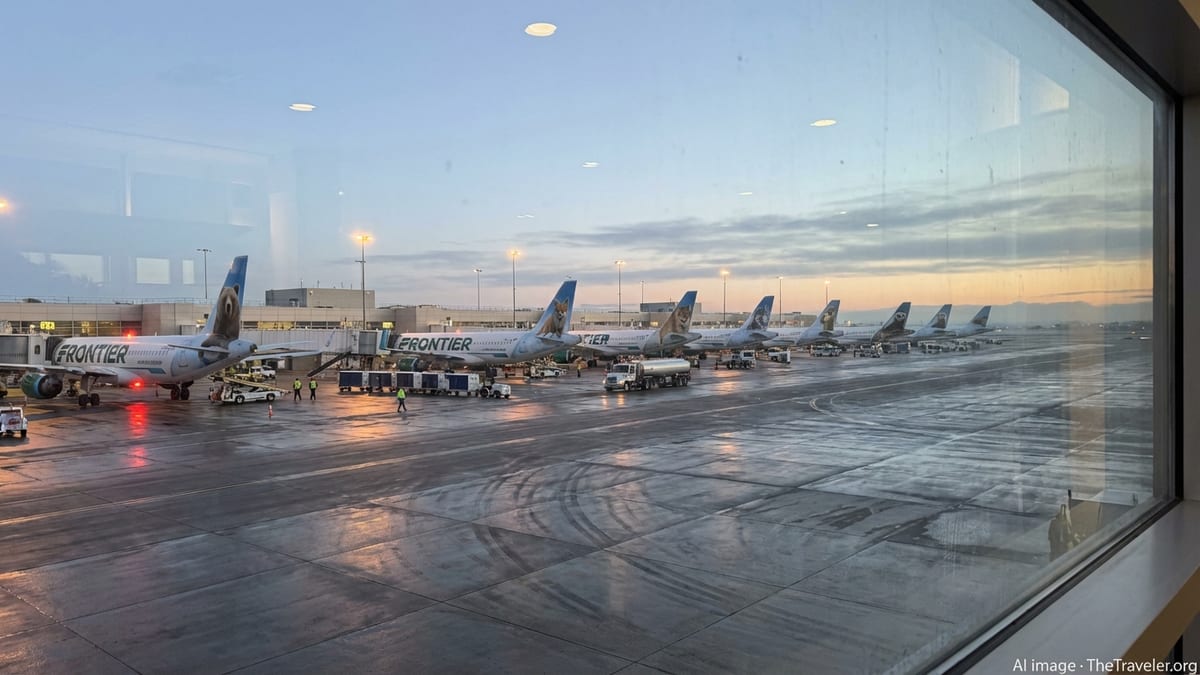
Frontier, which ended 2025 with a net loss of 137 million dollars, is reshaping its growth strategy around a leaner, more productive fleet rather than rapid capacity expansion. The Denver based carrier plans to return 24 Airbus A320neo family aircraft to lessor AerCap in the second quarter of 2026, several years ahead of their scheduled lease expirations. At the same time, the airline has reached a framework agreement with Airbus to push back deliveries of 69 single aisle jets that were due between 2027 and 2030, moving them into the early 2030s.
The moves will keep Frontier’s fleet roughly flat at about 176 aircraft through at least the end of 2026, despite 24 new deliveries slated for this year. Management has framed the shift as a deliberate turn away from the double digit capacity growth once common among ultra low cost carriers. Instead, Frontier is targeting a long term growth rate near 10 percent annually, with the emphasis on higher aircraft utilization and better revenue performance rather than simply flying more seats into the market.
Executives say the fleet reset is expected to generate about 90 million dollars in annual rent savings and help drive a broader target of roughly 200 million dollars in recurring cost reductions by 2027. Those savings, coupled with lower pre delivery payments on deferred aircraft, are meant to strengthen the balance sheet after several challenging post pandemic years for discount airlines.
While the early returns of leased jets will trigger one time termination costs and some operational complexity in 2026, Frontier argues that locking in a flatter, more efficient fleet profile now will reduce volatility later in the decade and better align capacity with demand.
Slower Capacity Growth, Higher Utilization at the Core
The heart of Frontier’s pivot is a sharp change in how it plans to grow. For 2026, the carrier is guiding to about 10 percent capacity growth compared with 2025, but it expects nearly all of that increase to come from flying its remaining aircraft more intensively rather than adding net new jets. After utilization slipped to around nine block hours per day in 2025, management is aiming to push that figure toward 11.5 hours by mid decade.
Improved utilization is a cornerstone of the airline’s effort to re establish its ultra low cost credentials. With an all Airbus narrow body fleet and a high proportion of fuel efficient A320neo family aircraft, Frontier already enjoys a structural fuel efficiency advantage versus many U.S. rivals. Executives contend that flying each aircraft more hours per day, across a tighter and better performing schedule, will spread fixed costs over more seats and help reduce unit costs.
The company also expects to rebalance its network as part of the reset, combining new market launches with deeper flying in existing strongholds. Analysts note that about half of Frontier’s planned 2026 growth is likely to come from new routes, a strategy that can offer upside but also introduces execution risk if markets take longer to mature. The airline has continued to add domestic leisure routes in Florida and the Midwest even as it pares back its fleet, underscoring its commitment to chasing demand pockets rather than simply preserving older patterns of flying.
Frontier has cautioned investors that 2026 will be a transition year, with guidance for full year earnings per share ranging from a modest loss to a small profit on an adjusted basis. Management is positioning the year as a bridge toward a more stable, consistently profitable model later in the decade.
Financial Targets and Investor Reaction
The fleet and growth reset has been pitched squarely at Wall Street as a disciplined response to a tough revenue environment and rising capital costs. By returning 24 aircraft and deferring dozens more, Frontier expects to reduce annual lease expenses, free up cash tied in pre delivery deposits and lower its overall capital intensity. The airline ended 2025 with roughly 874 million dollars in liquidity, including cash and an undrawn revolving credit facility, and says the fleet actions will help preserve and gradually build that cushion.
Forward guidance underscores both the ambition and the uncertainty embedded in the new plan. Frontier is targeting double digit year over year gains in revenue per available seat mile in early 2026, helped by tighter industry capacity and its own revenue initiatives. At the same time, management acknowledges that achieving the midpoint of its 2026 profit range will require strong, sustained revenue execution and continued cost discipline, particularly as many of the projected savings from the fleet reset will not fully materialize until 2027.
Initial investor reaction has been cautiously optimistic. Shares in parent company Frontier Group have rallied on the back of the turnaround narrative and better than expected fourth quarter 2025 results, when the airline returned to quarterly profitability. Still, analysts warn that the airline must demonstrate tangible improvements in on time performance, completion rates and customer satisfaction to fully convince the market that its model is on firmer footing.
Management insists that slower growth and rightsizing do not represent a retreat from the ultra low cost model, but rather a recalibration designed to make that model more resilient. The challenge will be to convert fleet discipline into consistent margin expansion while avoiding the operational missteps that have, in the past, eroded the benefits of a low cost base.
Competitive Pressures and Market Opportunities
Frontier’s pivot is unfolding against a rapidly shifting competitive backdrop in the U.S. domestic market. Full service network carriers have increasingly focused on premium cabins and high yield corporate travelers, leaving ultra low cost carriers to vie for the most price sensitive passengers. At the same time, one of Frontier’s closest rivals, Spirit Airlines, is retrenching following financial distress and capacity cuts that are reshaping supply in key leisure markets.
Frontier sees opportunity in that disruption. Executives have suggested that a meaningful share of the airline’s early 2026 revenue momentum is tied to competitors pulling back, particularly in parts of the western United States and on certain East Coast leisure routes. By keeping its fleet flat but flying it harder, Frontier aims to capture displaced demand without flooding the market with fresh capacity that could depress fares.
The airline is also doubling down on ancillary revenue and loyalty initiatives as it pursues profitability in a more balanced growth environment. Frontier has simplified some product offerings, continued to refine seat assignment and bag fee structures, and leaned into branded products such as extra legroom seating and bundled options. Loyalty revenue has grown at a double digit pace, and the carrier is working to convert more occasional bargain hunters into repeat customers.
Industry observers note that the new strategy will be tested by fuel price volatility, economic uncertainty and potential competitive responses as other carriers adjust their own capacity plans. For now, however, Frontier’s decision to pivot from breakneck expansion to disciplined, slower growth places it among a growing cohort of airlines betting that measured capacity and higher productivity will be the surest route back to sustainable profits.
What It Means for Travelers in 2026
For passengers, Frontier’s fleet and growth reset is likely to bring a mix of changes in 2026. The airline has already begun pruning its route map, exiting a handful of underperforming cities while adding capacity in markets where it sees stronger demand and better pricing power. Travelers in some smaller or highly seasonal destinations may see fewer nonstop options on Frontier as the carrier concentrates its aircraft in more profitable corridors.
At the same time, the focus on better utilization and operational reliability could translate into a more predictable experience for customers who do fly the airline. Management has emphasized reducing cancellations, improving on time performance and tightening schedules as it retools its fleet. If successful, the effort could alleviate some of the pain points that have historically accompanied rock bottom fares, such as irregular operations and long recovery times after disruptions.
Fares themselves are unlikely to move sharply higher solely because of the fleet reset, though localized price shifts are possible where Frontier pulls out or steps up capacity. With the airline holding its fleet size steady but flying more hours, the overall number of seats in core leisure markets should remain robust, keeping pressure on competitors and preserving low base fares for budget conscious travelers. Frontier’s extensive use of optional fees for bags, seat assignments and other extras will remain central to its model.
While the changes may be less visible than a new aircraft livery or cabin refresh, Frontier’s slower growth and rightsized fleet signal a deeper strategic turn. For travelers and investors alike, 2026 is shaping up as a proving ground for whether a more measured, utilization focused approach can deliver the profits that rapid expansion could not.