

More news on this day
Travelers at Phoenix Sky Harbor International Airport faced mounting disruption today as Frontier Airlines and Delta Air Lines suspended six flights and imposed further delays on services linking the Arizona hub with Salt Lake City, Las Vegas, Cleveland, Albuquerque, Atlanta and other major cities.
Get the latest news straight to your inbox!
Targeted Suspensions Hit Key Domestic Routes
Publicly available flight-status data and airline schedule updates for April 9 indicate that a cluster of cancellations at Phoenix Sky Harbor involved both Frontier and Delta services, with six flights scrubbed across the day. The hardest-hit routes connected Phoenix with busy domestic markets, including Salt Lake City, Las Vegas, Cleveland, Albuquerque and Atlanta, where travelers reported abrupt changes to departure boards and rebooking lines growing longer through the afternoon.
While Phoenix did not record the highest number of cancellations nationwide, industry trackers show the airport caught in a wider web of United States disruption after several days of weather-related and air traffic control constraints across multiple regions. Those knock-on effects appeared to ripple into Phoenix operations, where airlines trimmed frequencies and combined lightly booked flights in response to tight aircraft and crew availability.
Frontier’s point-to-point network from Phoenix has recently focused on value-oriented links to Las Vegas and Cleveland, while Delta concentrates on its hub-and-spoke connections to Salt Lake City and Atlanta. The loss of even a handful of daily departures on these corridors can significantly narrow options for budget-conscious passengers and those relying on same-day connections to the Midwest and East Coast.
Travel data platforms show that Thursday’s cancellations at Phoenix came on top of dozens of delays logged over the previous 24 hours at major hubs such as Atlanta and Las Vegas. With aircraft and crews arriving late into Arizona, operational windows tightened, leaving airlines with limited flexibility to recover disrupted rotations without scrubbing select flights from the schedule.
Knock-On Delays Extend Well Beyond Phoenix
The impact of the Phoenix cancellations was felt far beyond Arizona as travelers scheduled to connect onward through Salt Lake City, Las Vegas and Atlanta encountered missed links and overnight stays. According to aggregated tracking services, those three airports have seen repeated waves of delays this week amid unstable spring weather and capacity constraints, compounding the effect of a single cancellation or late arrival at the start of the day.
Passengers routed through Salt Lake City reported extended holding times for rebooking onto later Delta flights, particularly on connections to smaller regional destinations in the Mountain West. With Salt Lake City performing as a major Delta hub, a disrupted Phoenix feeder flight can quickly cascade into lost seats on already busy departures toward cities such as Boise, Spokane or Billings.
In Las Vegas, a mix of leisure and convention traffic has kept loads strong, with low-cost carriers like Frontier playing an important role in linking the city with secondary markets. When an outbound Phoenix to Las Vegas service is removed, many travelers find themselves competing for limited spare capacity on remaining flights that are already close to full, sometimes forcing last-minute changes to travel dates or routing through Denver, Dallas or Los Angeles.
Atlanta, one of the busiest hubs in the country, has also experienced elevated delay levels this week, according to operational data published by airline-performance analytics firms. As a result, Phoenix-based travelers bound for the Southeast have encountered both the immediate shock of a local cancellation and the prospect of additional waits once they reach connecting airports, forcing some to abandon same-day plans.
Operational Pressures on Frontier and Delta
Analysts who track airline performance note that both Frontier and Delta are operating under tight schedules as they head into the busy spring and early summer travel periods. Frontier has been rebalancing its network over recent months, trimming some flights in traditional leisure markets while testing higher-yield opportunities in competitive hubs such as Atlanta and Las Vegas. That strategy can leave relatively few daily frequencies on certain routes from Phoenix, meaning that a single cancellation removes a large share of the day’s available seats.
Delta, by contrast, typically posts among the strongest on-time performance metrics at major U.S. hubs, including Salt Lake City and Atlanta, according to recent airport and airline punctuality reports. However, those same reports show that even highly reliable carriers are vulnerable when storms and air traffic control programs simultaneously hit multiple hubs, stretching spare aircraft and crew resources thin. In such conditions, carriers may prioritize preserving connectivity across their largest hubs while selectively suspending thinner routes such as specific Phoenix departures.
Historical statistics from airport advisory documents indicate that Phoenix already trails some rival hubs on on-time arrivals and departures, adding to the challenge. Frontier’s past punctuality at Western airports has fluctuated more than legacy peers, while Delta’s strong record still cannot fully shield passengers from the compounding effect of inbound delays, tight turnaround times and congested airspace over several interconnected regions.
Public timetables and recent Reddit and consumer-forum discussions also suggest that Frontier has been reducing or restructuring some Phoenix services over the past year, including cuts to certain Las Vegas and Pacific Northwest links. In this context, any new wave of same-day suspensions reinforces concerns among frequent flyers that options at Sky Harbor remain subject to rapid change as airlines fine-tune their post-pandemic networks.
What Travelers Experienced on the Ground
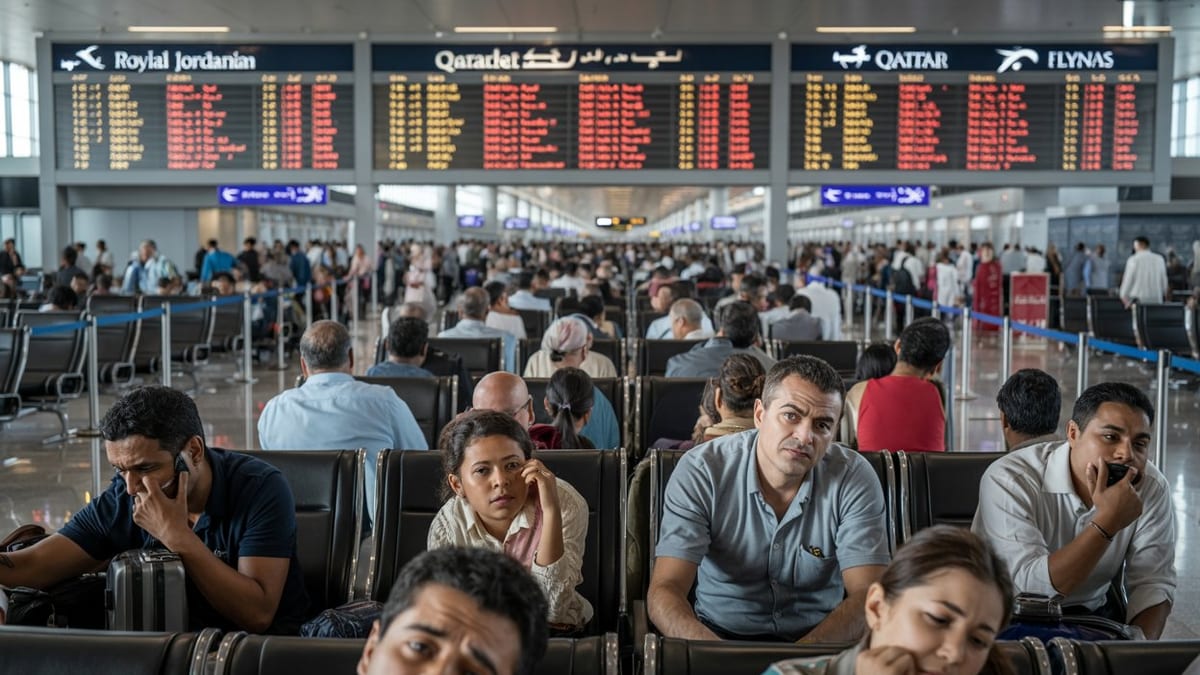
Reports from passengers at Phoenix Sky Harbor on April 9 describe familiar scenes of crowded check-in counters and long lines at airline customer-service desks as cancellations began appearing on terminal displays. Travelers bound for business meetings and family events in Cleveland and Albuquerque found themselves weighing whether to accept multi-stop reroutes through distant hubs or to postpone trips entirely when same-day alternatives proved scarce.
In-terminal screens and mobile apps showed rolling departure-time changes, particularly on afternoon and evening flights, reflecting the difficulty airlines face when early-morning delays compound throughout the day. Some travelers sought to reroute through secondary airports or mix carriers, pairing a rebooked Frontier segment with a separate ticket on a legacy airline, though such patchwork solutions can carry the risk of forfeiting protection in the event of further disruption.
Social media posts from affected passengers highlighted frustration with limited proactive communication about the causes of the suspensions. While some customers received app notifications or emails advising of new departure times, others reported learning of cancellations only upon arriving at the gate. These differing experiences underscore the importance of regularly checking flight status, especially during periods of widespread operational strain across the national network.
At the same time, consumer advocates point out that not all delays and cancellations qualify for formal compensation, particularly when weather or air traffic control restrictions play a role. Instead, airlines often rely on goodwill policies, providing meal vouchers, hotel stays or same-day standby options at their discretion, leaving outcomes highly variable from one traveler to the next.
Guidance for Upcoming Phoenix Departures
With Phoenix Sky Harbor positioned near the center of several weather-prone corridors and served by a mix of full-service and ultra-low-cost carriers, industry observers expect intermittent disruption to continue as spring storm systems move across the country. Travelers scheduled to fly on Frontier or Delta in the coming days are being advised by consumer publications to monitor their flights closely, use airline apps for real-time updates and consider arriving at the airport earlier than usual when connecting through known congestion points such as Atlanta or Las Vegas.
Frequent-flyer blogs suggest that passengers with tight connections in Salt Lake City, Cleveland or Albuquerque consider building in longer layovers where possible, or choosing routes that offer multiple daily frequencies so that a single cancellation does not eliminate all same-day options. For those on nonrefundable tickets, checking the fine print on same-day change policies and “irregular operations” waivers can help avoid surprise fees if rebooking becomes necessary.
Travel planners also note that Phoenix-origin passengers may find more resilience by routing through larger hubs when schedules allow, even if that means a modest increase in travel time or fare. In some cases, selecting a slightly earlier departure from Phoenix can provide a buffer against systemwide disruptions that tend to intensify later in the day as delays accumulate.
While today’s suspensions at Phoenix Sky Harbor involved a relatively small number of flights in absolute terms, the concentration on Frontier and Delta services to major connecting hubs illustrates how quickly a handful of cancellations can reverberate across the domestic network. For travelers, staying flexible, informed and prepared to adjust plans on short notice remains essential as airlines navigate another volatile travel season.