

More news on this day
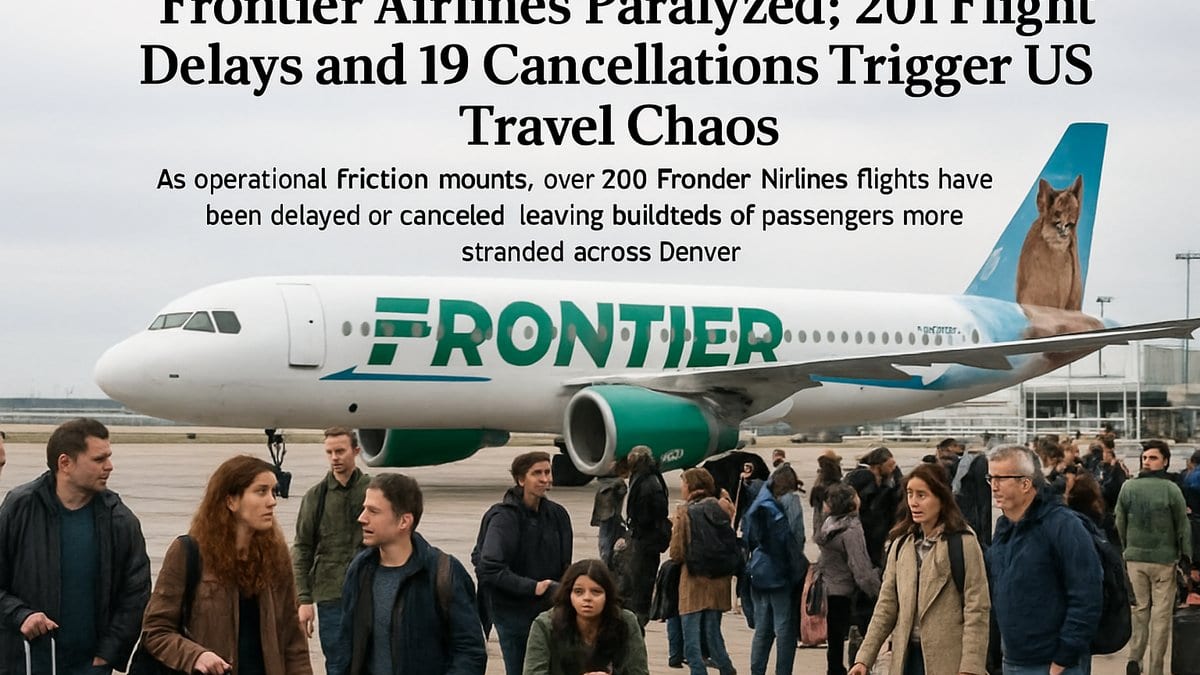
Frontier Airlines passengers across the United States faced a cascade of disruption as at least 201 flights were delayed and 19 canceled in one day, creating long lines, missed connections, and mounting frustration at airports nationwide.
Get the latest news straight to your inbox!
Systemwide Disruptions Ripple Across Frontier’s Network
Publicly available tracking data showed Frontier listing 201 delayed flights and 19 cancellations across its U.S. network over the course of the day, a level of disruption that placed the ultra-low-cost carrier among the most affected domestic airlines. The operational strain appeared across major hubs and leisure routes alike, affecting travelers on early-morning departures and late-night returns.
Reports from airport boards and third-party flight monitoring platforms indicated that Denver, Orlando, Las Vegas, and several East Coast airports saw some of the heaviest Frontier disruptions. Crowded departure halls, rolling delay extensions, and last‑minute cancellations were common themes, with many passengers forced to queue repeatedly at customer service desks or attempt rebooking online.
The pattern mirrored broader volatility in U.S. air travel during early 2026, when winter storms and tight airline staffing levels combined to create frequent schedule upheavals. Industry data has consistently shown Frontier among the U.S. carriers with higher rates of delays, an issue that becomes especially visible on days when the network is already under weather or congestion pressure.
Travel commentary and passenger accounts suggested that some journeys were extended by many hours as travelers were rerouted through alternative airports or shifted to flights the following day. Those on point‑to‑point routes with limited daily frequencies often had the fewest options, amplifying the impact of each individual cancellation.
Weather, Tight Schedules and a Fragile Low-Cost Model
The spike in Frontier disruptions coincided with a period of unsettled weather across multiple U.S. regions, following recent winter storms that had already triggered thousands of cancellations nationwide. Meteorological coverage in January and February documented large systems that disrupted operations from the Southern Plains to the Northeast, underscoring how quickly a storm can hobble air travel.
Analysts frequently point to the structural vulnerability of ultra-low-cost carriers during such events. Frontier operates a lean fleet and tight aircraft utilization model, which helps keep fares low but can limit flexibility when irregular operations occur. When a single flight is significantly delayed or canceled, it can have a knock‑on effect on subsequent legs operated by the same aircraft.
Research on U.S. airline performance for recent years has repeatedly identified Frontier as one of the carriers with elevated delay rates compared with some full-service rivals. Those figures are influenced by factors ranging from route choices and hub congestion to maintenance scheduling and crew availability, but they mean the airline may have less margin for error on already busy travel days.
Travel industry observers note that when a day begins with widespread delays, even minor additional disruptions can push schedules past the breaking point. As aircraft and crews fall out of position, airlines may resort to preemptive cancellations to reset operations, a tactic that was widely used across the industry during major storms this winter.
Passengers Confront Long Waits and Limited Options
For Frontier passengers, the operational realities translated into long hours on the ground and difficult choices about whether to wait, reroute, or abandon trips altogether. Social media posts and online travel forums on recent disruption days described travelers sleeping on terminal floors, watching departure times repeatedly slide, or learning that a flight had been canceled after boarding.
Unlike carriers with extensive hub‑and‑spoke networks and multiple daily frequencies on popular routes, Frontier’s point‑to‑point model can leave travelers with few same‑day alternatives when a flight is scrubbed. In some cases, publicly available trip reports indicate that customers were rebooked on flights departing the next day or routed through airports far from their original plan.
Budget airlines typically encourage passengers to manage disruptions via mobile apps, kiosks, and websites rather than at staffed counters. While these tools can speed rebooking when systems are working smoothly, they can be overwhelmed when hundreds of flights change status within hours. Reports from recent U.S. disruption events show that some passengers struggled with app errors or long phone wait times while trying to secure replacement seats.
The knock‑on effects also reached connecting travelers. Even a relatively short delay on a first leg could cause passengers to miss onward flights, particularly when itineraries involved self‑connections or separately booked segments, which are common among price‑sensitive travelers using low-cost carriers.
Regulatory Context and Passenger Rights in Play
The latest Frontier disruptions unfolded against a backdrop of ongoing scrutiny of U.S. airline reliability and consumer protections. Federal guidance and airline customer service commitments require carriers to provide refunds for canceled flights that passengers choose not to take, even when tickets are officially nonrefundable. That principle has been reiterated frequently in public consumer advisories during recent storms.
Policy trackers and travel law resources explain that passengers affected by long delays or cancellations may be entitled to additional support such as meal vouchers or hotel accommodations when disruptions are within an airline’s control. However, coverage and obligations vary by carrier and by the cause of the interruption, and there is no comprehensive U.S. equivalent to the European Union’s standardized compensation rules.
In response to recurring travel chaos across multiple airlines, federal transportation officials have published comparison dashboards outlining which U.S. carriers provide amenities such as complimentary rebooking, lodging, or ground transportation during controllable disruptions. Publicly available summaries of those commitments show that many airlines, including Frontier, pledge to rebook passengers at no additional fare charge in certain circumstances.
Consumer advocates argue that the frequent waves of cancellations and mass delays point to deeper structural issues, from staffing constraints to aggressive scheduling. With travel demand remaining strong and extreme weather events becoming more frequent, calls have intensified for clearer, enforceable minimum standards on care and compensation when passengers are stranded.
How Frontier Travelers Can Navigate Future Disruptions
Travel experts recommend a series of practical steps for Frontier passengers facing similar episodes of disruption. Monitoring flight status through both third‑party trackers and the airline’s own channels can provide early warning that a schedule is deteriorating. When a pattern of rolling delays appears, some trip planners suggest proactively seeking alternative flights before options disappear.
Public guidance from consumer agencies emphasizes that travelers should keep documentation of delays, cancellations, and out‑of‑pocket expenses such as food, lodging, and ground transport. This information can support later refund or reimbursement requests, especially if the disruption is linked to operational rather than severe weather causes.
Many travel advisors encourage Frontier customers to build extra buffer time into itineraries, particularly when planning same‑day connections to cruises, international departures, or major events. Booking earlier flights, avoiding the last departure of the day, and considering travel insurance or refundable backup options are among the tactics often highlighted in recent coverage of U.S. airline disruptions.
As Frontier works to restore regular operations after the latest wave of delays and cancellations, passengers and analysts alike are watching to see whether schedule adjustments, staffing changes, or new customer service policies emerge. With more peak travel periods ahead in 2026, the airline’s ability to manage irregular operations without triggering nationwide travel chaos will remain under close public scrutiny.