

More news on this day
After a month of sharp fuel price spikes linked to the Iran war and disruptions in the Strait of Hormuz, drivers in Florida and several other large U.S. states are beginning to see early signs of relief at the pump, even as national averages remain near two-year highs.
Get the latest news straight to your inbox!
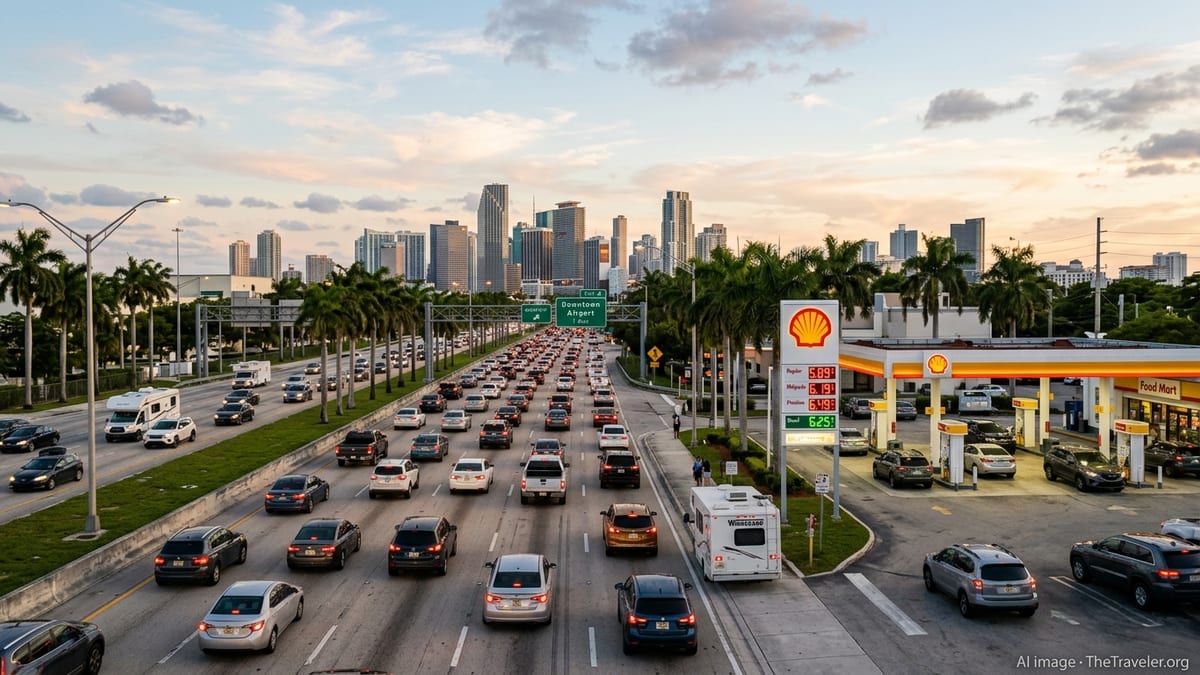
How the Middle East Crisis Drove a Sudden Fuel Price Shock
The conflict involving Iran and Israel, combined with attacks on critical oil and gas infrastructure and disruptions around the Strait of Hormuz, has rapidly tightened global crude supplies in March 2026. International benchmarks, including Brent crude, have climbed back above 100 dollars a barrel for the first time since 2022, lifting fuel costs worldwide.
Publicly available data from national fuel trackers indicate that the average U.S. price for a gallon of regular gasoline has jumped from just under three dollars in late February to the high three-dollar range by the third week of March. In percentage terms, many regions have experienced increases of 30 to 40 percent in only a few weeks, an abrupt reversal after months of relatively stable prices.
The speed of the spike has been driven in part by the structure of the U.S. fuel market. Retail pump prices typically respond quickly to jumps in crude oil and wholesale gasoline costs, especially when traders expect prolonged supply risks. Refinery margins, distribution bottlenecks and state-level taxes can all magnify those increases, which explains why some coastal and high-tax states saw prices breach five dollars a gallon while others were still in the mid-threes.
For travelers planning spring trips, that volatility has translated into rapidly changing fuel budgets. Road trip costs that were calculated in early February are already out of date in many parts of the country, particularly on long interstate drives that cross multiple high-cost states.
Florida and Other Big States See a Brief Breather
Amid the national surge, new data from price-tracking services show that Florida has joined California, Michigan, Illinois, Pennsylvania, Georgia and Washington in experiencing a short but noticeable pause in day-to-day fuel price increases. In these states, the sharp climbs of early March have given way to flatter moves, with some metro areas even recording a few cents of pullback at midweek.
In Florida, average regular gasoline prices moved rapidly toward the four-dollar mark in the first half of March, with reports of individual stations crossing that threshold in several counties. Over the most recent days, however, statewide averages have begun to stabilize just below that level. Similar patterns are emerging in parts of California and Washington, where prices spiked above five dollars but have since stopped climbing as quickly.
Midwestern states such as Michigan and Illinois, along with Pennsylvania in the Northeast, have followed a comparable trajectory: steep increases in late February and early March, followed by a plateau as wholesale markets caught their breath. Georgia, which has moved to temporarily ease its fuel tax burden, has seen a slightly faster cooling in day-to-day increases than many peers, according to regional tracking.
Analysts cited in recent financial and energy coverage suggest that traders may be reassessing the risk of deeper supply cuts, at least in the very near term. That shift in expectations, combined with the initial shock already being priced in, has allowed some state averages to stop rising, even if they remain far above levels seen only weeks ago.
Why Price Relief Is Uneven Across the Country
Travelers should not assume that a pause in Florida or California will look the same across the map. Structural differences in state fuel taxes, environmental regulations and local supply chains mean that even when crude prices and national wholesale benchmarks ease, retail pump prices can move at different speeds.
States such as California, Illinois, Pennsylvania and Washington layer some of the country’s highest fuel taxes and fees on top of already elevated wholesale prices. These costs tend to keep pump prices higher in normal times and can make any relief feel modest after a shock. By contrast, states with lower fuel taxes and closer access to refining and pipeline infrastructure can see faster pullbacks when markets calm.
Local competition also plays a role. In major metro areas with many stations clustered together, retailers might trim prices quickly to avoid losing drivers to nearby rivals. In more rural or tourist-heavy corridors with limited options, stations may adjust more slowly, leaving motorists with fewer opportunities to shop around even when regional averages begin to soften.
Currency movements and regional demand patterns can influence pricing as well. As spring travel ramps up and more drivers hit the road, localized demand spikes near beaches, national parks and theme parks may support higher prices in specific destinations, even if state or national averages level off.
What Road-Trippers and Commuters Should Expect Next
Energy-market reporting and economic forecasts suggest that volatility is likely to remain a feature of fuel pricing so long as the Iran conflict and shipping risks in the Gulf persist. While the latest data show a break in the most acute week-to-week increases in several large states, there is little indication yet of a broad, sustained decline back toward pre-crisis levels.
Travel and budget planners should therefore treat the current pause more as a plateau than a turning point. If crude prices climb again on further supply disruptions, U.S. pump prices could resume their upward trend, especially in high-tax states and along coastal corridors that rely heavily on imported crude and refined products.
At the same time, a number of factors could cap prices or produce intermittent dips. These include strategic releases from government oil reserves, shifts in refinery output to maximize gasoline production ahead of peak driving season, and potential diplomatic steps aimed at de-escalating regional tensions. Any sustained decline in crude benchmarks would likely take several days to show up consistently at the pump.
For daily commuters, the practical takeaway is that costs are likely to stay elevated through at least the near term, even if the most dramatic overnight jumps ease. For long-distance travelers, it will be important to build wider fuel-cost ranges into trip budgets and to stay flexible about routing and timing.
Practical Tips for Managing Fuel Costs on the Road
With prices still significantly higher than a month ago in most of the country, many travelers are focusing on strategies to blunt the impact. Publicly available guidance from travel and motoring organizations emphasizes a few familiar but newly urgent steps for keeping costs down on upcoming trips.
Maintaining steady speeds, avoiding aggressive acceleration, and keeping tires properly inflated can improve fuel economy noticeably over long distances. Packing lighter and reducing unnecessary rooftop cargo can also help, particularly for compact vehicles that are more sensitive to added drag and weight.
Drivers are also increasingly turning to widely used price-comparison tools and fuel apps that compile real-time station data. These services can help identify cheaper pumps near interstate exits or slightly off main tourist routes, which can add up to substantial savings over a multi-state road trip, especially across high-cost states such as California, Illinois or Washington.
Finally, travelers planning spring and early summer itineraries may want to factor in the possibility of continued price swings in regions directly affected by refinery outages or shipping disruptions. Building a modest cushion into fuel budgets, choosing routes with more competition among stations, and considering shorter driving legs in the most expensive states can all help soften the impact of a still-unfolding global energy shock on U.S. journeys.