

More news on this day
Thailand’s crucial Songkran holiday period is approaching under an unusually dark cloud, as resurgent fuel costs and worsening geopolitical tensions push up travel prices, unsettle regional flight routes, and threaten to undermine one of the country’s most important tourism and economic lifelines.
Get the latest news straight to your inbox!
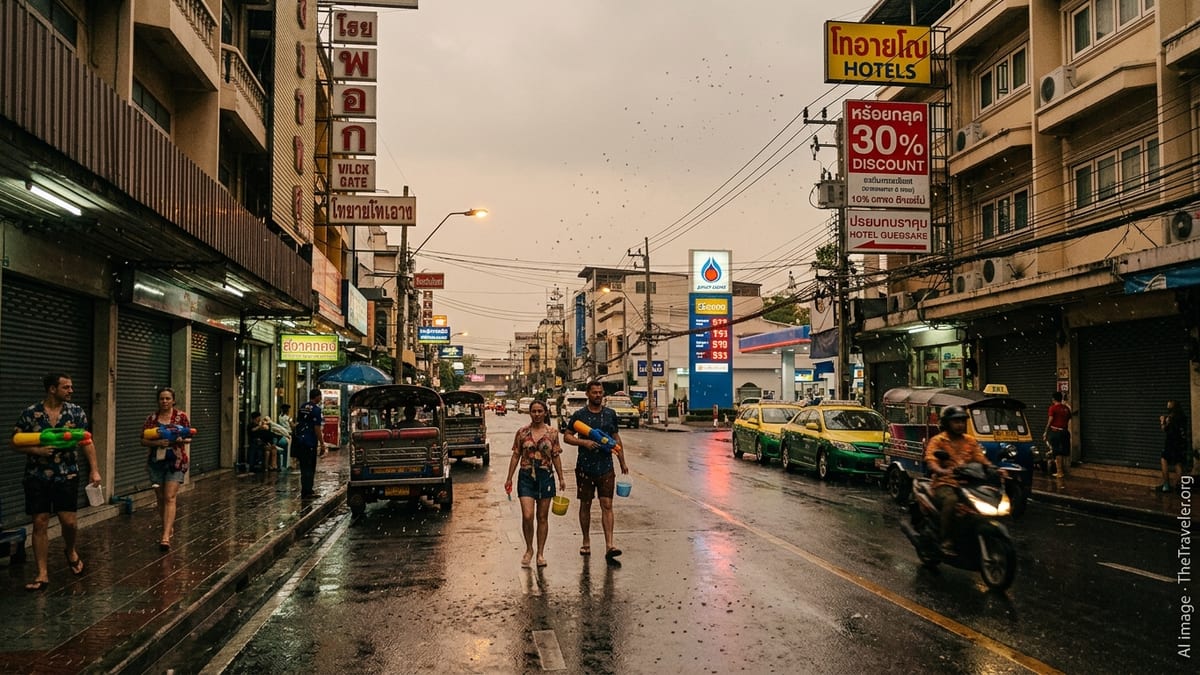
Songkran Under Pressure as Costs Climb and Bookings Soften
Songkran, Thailand’s mid-April New Year water festival, is typically a bellwether for the country’s tourism health and household spending. In recent years it has helped lift quarterly growth, with publicly available government data indicating that the 2025 Songkran season supported tens of billions of baht in visitor spending and more than 10 million international arrivals in the first four months of the year. That rebound helped push total foreign visitors above 30 million in 2025, even as the pace of recovery remained uneven.
In 2026, early booking patterns look more fragile. Industry commentary and regional travel platforms point to softer demand from short-haul markets such as China and parts of Southeast Asia, where price-sensitive travelers are facing higher airfares and weaker currencies. Tourism-focused analysis in Bangkok describes a decline in mass-market arrivals from nearby countries even as long-haul visitor numbers from Europe and North America grow, reshaping the mix of tourists just as Songkran approaches.
Domestic mobility, another traditional pillar of Songkran activity, is also at risk. Higher pump prices and uncertainty around air and bus ticket costs are prompting many Thai households to reassess non-essential travel, undercutting expectations for packed highways, full trains, and sold-out flights that usually characterize the festival week.
Exploding Fuel Costs Ripple Through Airfares and Transport
The sharpest immediate pressure on Songkran travel comes from fuel. Global news outlets and aviation analysts report that the 2026 Iran war and the effective closure of the Strait of Hormuz have driven a steep spike in crude and refined product prices, with jet fuel singled out as particularly exposed to shipping disruptions and risk premiums in the Gulf.
Specialist airline and energy coverage indicates that jet fuel benchmarks have climbed well into triple digits per barrel in recent weeks, reversing the declines seen through much of 2025 and pushing fuel back toward a third of typical airline operating costs. European and Middle Eastern carriers are signaling fresh surcharges on long-haul routes, while some industry forecasts anticipate average ticket increases of close to 10 percent on affected networks.
For Thailand, which depends heavily on airlift during Songkran, the impact is twofold. International travelers eyeing Bangkok, Phuket, or Chiang Mai face higher base fares and fuel surcharges from their origin markets, particularly on routes that usually overfly or refuel near the Gulf region. At the same time, regional low-cost carriers serving Thailand’s secondary cities operate on tight margins and are especially vulnerable to fuel shocks, raising the risk of trimmed capacity, schedule changes, or last-minute price hikes during the holiday peak.
On the ground, elevated oil prices are feeding through to diesel and gasoline, raising operating costs for interprovincial buses, ride-hailing services, and private car travel. Even modest increases in transport expenses can materially affect Songkran participation, especially for domestic travelers in lower income brackets who are a key driver of hotel and retail spending in provincial destinations.
Geopolitical Flashpoints Disrupt Routes and Confidence
The surge in energy costs is tightly intertwined with a broader deterioration in the global security environment. Publicly available information on the 2026 Iran war and renewed threats to Gulf shipping corridors describes blocked or heavily constrained passages, heightened insurance costs, and complex rerouting of both cargo and passenger traffic around the Arabian Peninsula and through alternative hubs.
These disruptions come on top of lingering instability in the Red Sea and Gulf of Aden, where attacks on commercial vessels in 2024 and 2025 had already prompted many shipping and some aviation operators to avoid traditional corridors. Research on maritime geopolitics released in early 2026 highlights that diversions around Africa add thousands of nautical miles to key Asia–Europe routes, substantially increasing fuel burn and logistics costs that ultimately filter through to airline balance sheets and ticket prices.
For Thailand’s tourism sector, the symbolism of multiple overlapping crises is almost as damaging as the direct cost impact. Potential Songkran visitors reading about missile strikes, maritime incidents, and closed airspace may postpone long-haul trips to the region altogether, or opt for destinations perceived as less exposed to Middle Eastern flashpoints. Travel analysts note that even short-lived geopolitical shocks can cause weeks of booking volatility, compressing demand into last-minute windows that make it harder for Thai hotels and airlines to plan capacity and pricing.
Investor and consumer sentiment is also at stake. Thai economic outlook reports for 2025 and 2026 already flagged external risks, including protectionist trade policies and slower global growth. The latest fuel and security shocks intensify those concerns, potentially weighing on the baht, raising imported inflation, and constraining the government’s room to roll out additional tourism incentives just as Songkran spending is needed most.
Tourism Slowdown Threatens Broader Economic Recovery
Thailand’s post-pandemic recovery has been built in significant part on tourism. Business groups and economic institutes routinely point out that travel and hospitality, together with related retail and services, account for a substantial share of national output and employment. Official and industry data show that foreign arrivals recovered from barely 11 million in 2022 to well above 30 million in 2025, yet still remained below pre-pandemic peaks, leaving authorities keen to protect every major travel season.
Songkran is especially important because it combines domestic and international spending. Hotels, airlines, restaurants, nightlife venues, and transport operators all rely on the April surge to offset weaker shoulder months. If fuel-driven price increases and geopolitical jitters curb Songkran travel in 2026, analysts warn that the drag could extend well beyond the holiday period, slowing job creation in service sectors and dampening value-added tax receipts at a time when public finances are already stretched.
Macroeconomic projections issued by Thai and international research houses had envisioned modestly faster growth in 2026, assuming steady tourism gains and relatively benign energy markets. The new external shocks complicate that baseline. Higher import bills for fuel and elevated travel costs could squeeze household purchasing power and corporate margins simultaneously, risking a scenario in which tourism underperforms just as other export-oriented industries face global headwinds.
Local business associations in key destinations such as Chiang Mai, Pattaya, and Phuket are already preparing for more cautious spending patterns. Many hotels are increasing promotions for nearer-source markets and domestic travelers, while retailers tailor Songkran campaigns to emphasize value rather than luxury experiences. These adjustments may soften the blow but are unlikely to fully offset the income lost if long-haul arrivals and big-spending regional visitors scale back trips.
Policy Responses and Industry Adaptation Ahead of the Holiday
Thai policymakers and industry leaders are closely watching the run-up to the April festival for signs of further deterioration or stabilization. Public coverage of recent cabinet decisions shows a continued reliance on tourism stimulus, such as extended visa waivers for select markets and promotional campaigns branding 2025 and 2026 as marquee tourism years. However, the fuel shock and the shifting geopolitical landscape limit how far such measures can go without more targeted interventions.
Energy management tools are one obvious lever. Authorities have in the past used fuel fund mechanisms and temporary tax adjustments to cushion domestic consumers from global oil volatility. Analysts suggest that similar steps in 2026, calibrated carefully to fiscal realities, could help keep bus and domestic airfares from rising too sharply around Songkran, preserving some of the traditional mobility that underpins regional tourism.
On the aviation side, airlines serving Thailand are reassessing route structures, hedging strategies, and fleet deployment. Publicly available industry commentary notes a tilt toward more fuel-efficient aircraft on long-haul routes and selective trimming of marginal services that are most exposed to higher fuel and insurance costs. Low-cost carriers, in particular, are experimenting with dynamic pricing and capacity consolidation over the Songkran window to protect load factors without fully pricing out budget-conscious travelers.
Tourism planners are also pushing diversification in both markets and products. With short-haul arrivals from some neighboring countries under pressure, marketing efforts are intensifying in secondary long-haul markets and among higher-spending segments such as wellness, sports, and cultural tourism. If these strategies succeed, they may help Thailand weather a difficult Songkran season and keep the broader recovery on track, even as exploding fuel costs and geopolitical tensions reshape the travel landscape in unpredictable ways.