

More news on this day
A sharp spike in aviation fuel prices is rippling through Southeast Asia’s tourism sector, with higher long haul airfares on carriers such as Cathay Pacific and Singapore Airlines coinciding with signs of softer demand and patchy occupancy at luxury hotels in Thailand, Malaysia, Singapore, Vietnam and Cambodia.
Get the latest news straight to your inbox!
Fuel Crisis Pushes Premium Fares Higher
Published data on jet fuel markets shows aviation fuel prices in early March 2026 almost doubling from January levels, driving significant cost pressures for Asia Pacific airlines. Industry trackers indicate that carriers including Singapore Airlines and Cathay Pacific have responded with steep fare increases on long haul routes, particularly between Europe and key Southeast Asian hubs.
One recent analysis of Asia Europe services highlighted one way economy fares on certain Singapore Airlines flights from London to Singapore reaching several times typical levels on peak March dates, as rerouting around closed Middle East airspace added distance and fuel burn. Reports from Hong Kong aviation watchers also point to Cathay Pacific implementing a second fuel surcharge rise in late March, with hikes of more than 30 percent in just a few weeks.
These developments follow fuel surcharge revisions that Cathay Pacific had already scheduled from mid 2025, and come on top of environmental levies planned at Changi Airport to support the roll out of sustainable aviation fuel. For long haul travelers heading to Southeast Asia, the combined impact is a noticeable jump in ticket prices at the same time that many destinations had been counting on stronger long distance markets to offset a cooling regional economy.
For budget conscious visitors, higher airfares can translate into shorter stays or decisions to postpone travel altogether. For premium and corporate travelers, the spike in business and premium economy fares may prompt a shift toward regional alternatives or virtual meetings, taking some of the highest spending guests out of the equation for luxury hotels.
Thailand’s Tourism Momentum Falters
Thailand, which had been banking on another year of near record arrivals, is now confronting more mixed indicators. Government statements in mid 2025 pointed to more than 15 million international visitors by early June and ambitions for close to 40 million arrivals for the full year. More recent commentary by economic research groups, however, suggests that full year targets are proving difficult to meet as global growth slows and regional competition intensifies.
Hotel industry assessments for Bangkok and major resort destinations through 2025 describe a more fragile landscape than headline arrival figures imply. A mid 2025 review by a global property consultancy reported a drop in average occupancy in Bangkok of several percentage points compared with the prior year, even as new luxury supply continued to open along the river and in commercial districts. Local trade publications have likewise described a “perfect storm” for some Bangkok hotels, citing properties that struggled to reach 30 percent occupancy during off peak months despite deep discounting.
The picture is uneven across segments. Studies of Thailand’s hotel performance through 2024 showed luxury properties successfully pushing average daily rates well above pre pandemic levels in key destinations such as Chiang Mai, Samui and Krabi, with year on year rate growth in the mid single digits or higher. Yet online traveler feedback through 2025 increasingly highlighted price sensitivity and a perception that value for money at the high end had eroded, especially in Bangkok and mature beach markets.
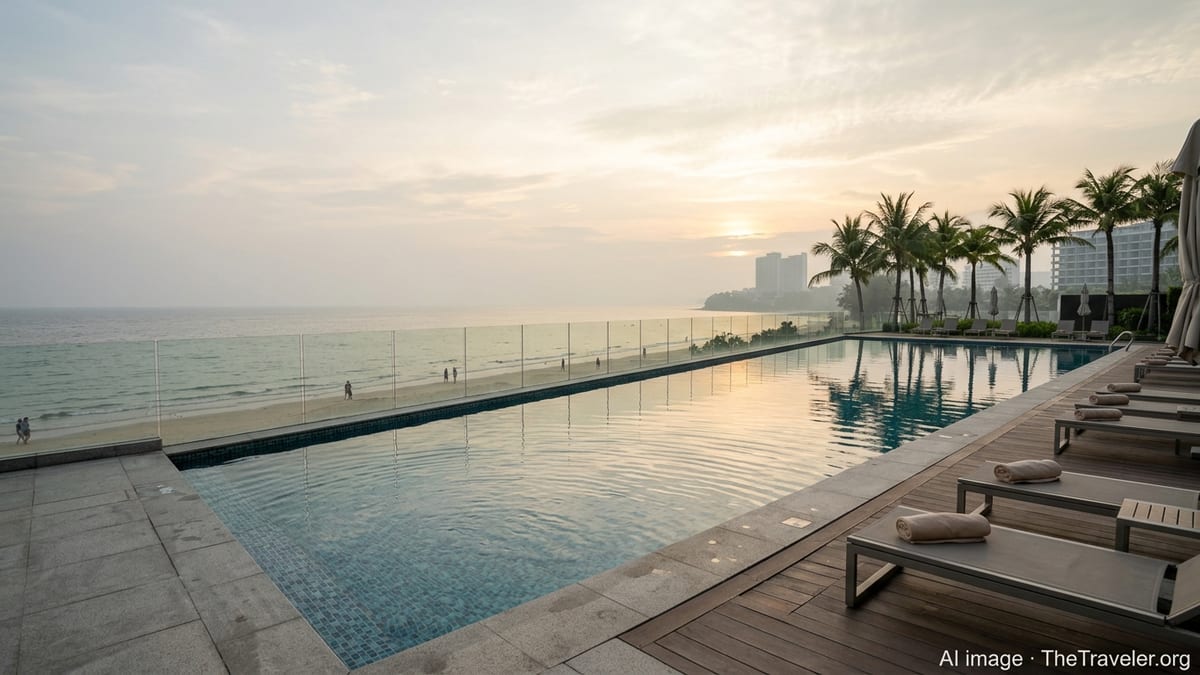
More recently, anecdotal reports from coastal cities such as Pattaya in March 2026 point to visible reductions in room rates at some hotels compared with the previous high season. While a number of international brands appear to be holding published prices steady, smaller operators and independent resorts are said to be cutting rates aggressively through online travel agencies in order to fill inventories as forward bookings soften.
Regional Neighbors Share in the Setback
Thailand’s challenges are mirrored, to varying degrees, across neighboring Southeast Asian destinations. In Singapore, the planned introduction of a sustainability related levy on air tickets and some award bookings from 2026 adds further cost to an already expensive long haul gateway. Analysts note that while the actual fee for short haul journeys within Southeast Asia is modest, long range connections to Europe and North America from Changi will face some of the highest surcharges in the region when combined with fuel driven fare rises.
Malaysia, Vietnam and Cambodia, traditionally positioned as relatively affordable alternatives, are also navigating the consequences of higher airfares and shifting demand. Industry commentary on Vietnam’s hotel sector in late 2025 described concerns about oversupply in major cities and resort areas, with new upscale properties coming on stream faster than long haul visitor numbers were growing. Cambodia’s beach destinations and heritage hubs, which rely heavily on flights via Bangkok, Singapore and Kuala Lumpur, are particularly exposed when fares on regional connectors and long haul legs both climb at once.
In Malaysia, operators in Kuala Lumpur and Langkawi have reported greater reliance on domestic and short haul ASEAN guests to stabilize occupancy. However, when airlines throughout the Asia Pacific move at the same time to pass on fuel costs, even intra regional leisure travel becomes more expensive. That can limit the willingness of middle income travelers from nearby markets to book extended stays in five star resorts, especially at a time when inflation is eroding disposable income.
Market observers point out that destinations that compete directly with Thailand for high spending tourists, such as Bali and certain Japanese cities, may benefit if they are able to maintain more competitive overall trip costs or offer stronger perceived value. This heightens the urgency for Thailand, Singapore, Vietnam and Cambodia to differentiate their offerings beyond price alone.
Luxury Hotels Struggle to Fill High Priced Rooms
The combined hit from softer long haul demand and more expensive air travel is acutely felt at the luxury end of the hotel market. Benchmarking data for Thailand through 2024 showed five star properties leading price increases across the country, with average daily rates climbing faster than in midscale and budget segments. At the same time, a construction pipeline heavy in high end projects has continued to add thousands of rooms in Bangkok, Phuket, Samui and other resort islands.
By mid 2025, consultants tracking the Bangkok and Phuket markets were already warning of a gap between supply and sustainable demand in some luxury clusters. Reports indicated that while headline occupancy for the city as a whole remained comparatively healthy during peak months, many newly opened or repositioned high end hotels were relying on discounted packages, event business and domestic promotions to keep occupancy above critical thresholds.
Across the wider region, similar patterns are emerging. In Singapore, the opening of new integrated resort and luxury waterfront developments is raising the bar on product quality but also pushing average rate expectations higher. In Vietnam’s coastal enclaves and Cambodia’s resort corridors, international brands are competing in a crowded space where online reviews, package deals and air access can quickly shift demand from one destination to another. When potential guests face higher flight prices into the region, they may favor villas, apartment rentals or midrange hotels that leave more room in the budget for experiences.
Some hoteliers are beginning to report a greater mix of domestic and regional guests in suites and club rooms that were once targeted primarily at long haul Western or Northeast Asian markets. This can help fill beds in the short term, but often at lower average spend per stay, particularly on ancillary revenue such as spa, dining and excursions. As a result, revenue per available room for luxury properties in several Southeast Asian cities is under pressure even when occupancy figures look respectable on paper.
Destinations Race to Recalibrate Value and Access
In response to these headwinds, tourism boards and hotel associations across Southeast Asia are intensifying efforts to stimulate demand and rebalance their markets. In Thailand, campaigns emphasizing “high value” tourism and longer stays, along with visa waivers for selected countries, are designed to attract visitors who are less sensitive to airfare fluctuations and more likely to spend heavily once on the ground.
Observers note that a pivot toward diversified source markets is also under way, with greater attention on India, the Middle East and secondary European cities rather than a narrow reliance on China and traditional Western feeders. However, as long as airlines are constrained by high fuel costs and route disruptions, capacity additions into secondary airports may lag, limiting how quickly these strategies can alter the demand profile for luxury hotels.
Neighboring countries are adopting similar tactics. Vietnam and Cambodia are promoting new heritage trails, river cruises and eco tourism products, while Malaysia and Singapore continue to invest in events, meetings and cruise infrastructure that can deliver more predictable visitor flows. The success of these initiatives will partly depend on whether carriers can stabilize operating costs and restore more competitive fares as fuel markets adjust.
For now, publicly available data points to a more fragile phase for Southeast Asia’s tourism recovery. Higher long haul airfares from airlines such as Cathay Pacific and Singapore Airlines, combined with a global fuel crisis and uneven economic conditions, are testing the resilience of luxury hotels that expanded rapidly during the rebound years. How quickly the region can recalibrate its value proposition and air connectivity will shape whether this setback proves temporary or becomes a longer term structural challenge.