

More news on this day
A rapid spike in jet fuel prices linked to conflict in the Middle East is rippling through global travel, with airlines from Australia to Scandinavia adding fuel surcharges and raising fares, while early booking data point to softening hotel demand in key leisure markets including France, Spain and the United States.
Get the latest news straight to your inbox!
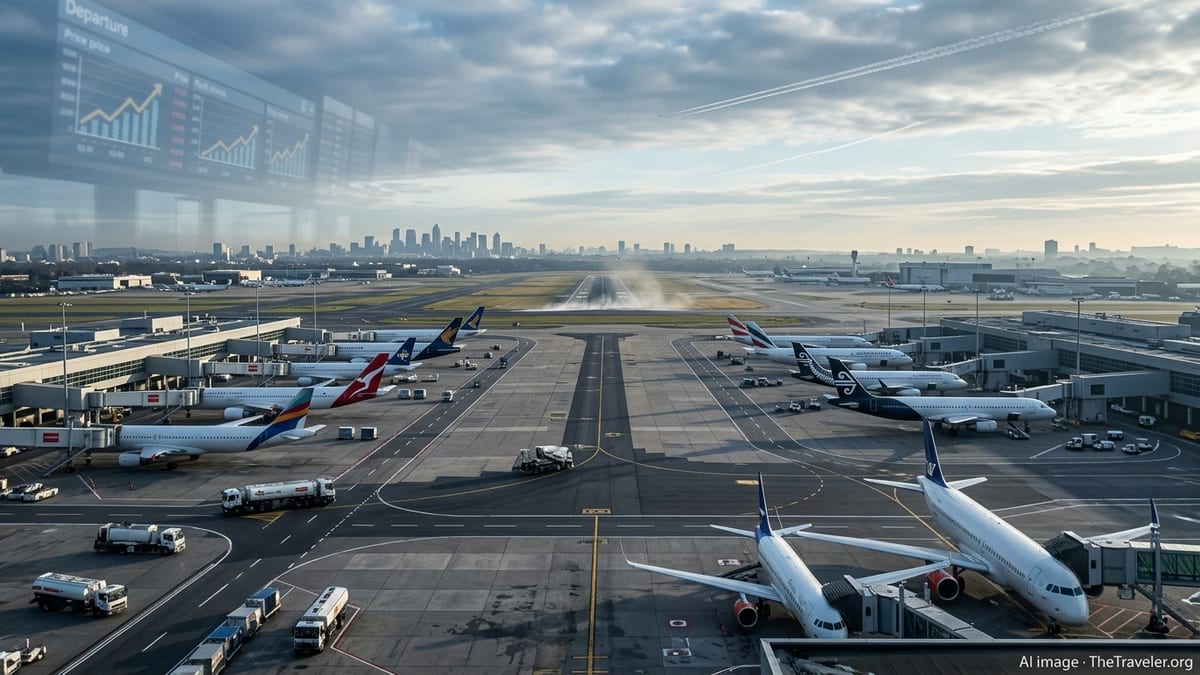
Fuel Price Shock Hits Virgin Australia, Qantas, Air New Zealand and SAS
The latest surge in aviation fuel costs has forced major carriers to adjust pricing and networks within days, underscoring how exposed the sector remains to geopolitical shocks. Market coverage indicates that benchmark jet fuel prices, which had been relatively stable earlier in the year, have jumped sharply since strikes and renewed tensions disrupted oil supply routes in and around the Middle East.
According to recent financial and market disclosures, Air New Zealand has suspended its earnings outlook for the 2026 financial year, pointing directly to what it describes as unprecedented volatility in jet fuel markets and warning of potential route and schedule changes as it seeks to contain costs. Separate industry reporting notes that the airline has moved to lift one way economy fares by around 10 to 90 New Zealand dollars across domestic, short haul and long haul services in response to the spike in fuel expenses.
Scandinavian carrier SAS has meanwhile introduced what it characterises as a temporary price adjustment on tickets after the latest rise in aviation fuel prices. Coverage of the move highlights that SAS is layering fuel related increases on top of previously announced cost challenges stemming from longer routings around closed airspace and higher operating expenses on long haul services linking Scandinavia with Asia.
Virgin Australia and Qantas, both heavily exposed to long range services that are sensitive to fuel costs and routing changes, are also navigating the new price environment. Investor materials and fleet planning documents show both groups had been counting on more fuel efficient aircraft and hedging strategies to moderate costs, but the scale and speed of recent jet fuel movements are now feeding through to publicly advertised fares and ancillary charges.
Middle East Conflict Sends Jet Fuel Costs Soaring
Analysts tracking the conflict’s economic effects report that the latest escalation in the Middle East has driven a sharp rise in crude and refined products, including aviation fuel. Commentary from airline executives and sector analysts suggests that carriers are facing jet fuel price ranges well above levels seen earlier in the year, with some references to spot prices pushing toward 150 to 200 dollars a barrel for certain uplift points.
Publicly available information indicates that the conflict has disrupted shipping lanes and pipeline flows that supply key aviation hubs, while also prompting precautionary stockpiling and tighter refinery margins. This combination is amplifying price volatility and complicating hedging strategies that airlines rely on to smooth fuel costs over time.
For long haul operators such as Qantas and Air New Zealand, routing constraints compound the fuel shock. Reports note that detours around sensitive airspace on Europe and Middle East bound services can add significant flying time, burning more fuel precisely when each additional tonne is becoming more expensive. Scandinavian carriers have faced similar pressures in recent years due to closed airspace over Russia and parts of Eastern Europe, and the renewed fuel spike is intensifying those headwinds.
Industry analysts caution that while some airlines are partially shielded by existing hedges or access to sustainable aviation fuel blends at fixed prices, the scale of the recent move is large enough that even well hedged carriers are resorting to fare increases, surcharges and selective capacity reductions to protect margins.
Airfare Surge Spreads Across Key Leisure and Business Routes
The immediate consequence for travelers is a broad based rise in airfares across both leisure and business focused routes. Booking data cited in recent media coverage show higher ticket prices on transpacific and Europe bound flights from Australia and New Zealand following the latest announcements, with the steepest increases concentrated on long haul economy and premium economy cabins where fuel costs represent a larger share of the total fare.
Qantas is reported to have raised prices on several international routes as fuel costs climbed, with particular pressure on Europe services that already face longer flight times because of airspace restrictions and operational constraints. Travelers on popular domestic trunk routes in Australia are also flagging noticeable fare jumps compared with just a few weeks earlier, although part of that change reflects strong demand and limited low fare inventory.
In New Zealand, a series of developments have combined to push fares higher and reduce options. Alongside Air New Zealand’s fare increases, a regional carrier has imposed a flat per sector fuel surcharge, citing significantly higher aviation fuel prices. Separate coverage indicates that higher fuel costs and engine availability issues have already led Air New Zealand to cancel or consolidate hundreds of flights through early May, affecting tens of thousands of passengers and constraining seat supply into the southern winter.
In Scandinavia, SAS is using both pricing and capacity adjustments to respond. Reports in Nordic media and passenger forums describe selective cancellations on short haul routes, particularly in Norway, as the airline works to limit exposure on flights where fuel and operating costs are no longer adequately covered by current demand and pricing.
Hotel Demand in France, Spain and the United States Shows Early Strain
Higher airfares tend to filter into hotel markets with a lag, but early signals suggest that popular destinations in France, Spain and the United States are already feeling the impact. Travel analytics firms tracking forward bookings report a softening in long haul leisure demand into Western Europe from markets that are heavily reliant on air travel, including Australia, New Zealand and parts of Asia.
In France, preliminary data for late spring and early summer indicate slower growth in bookings for Paris and major regional cities compared with the same period last year. Analysts attribute part of the moderation to higher transatlantic and long haul fares, which are discouraging some price sensitive travelers from committing to multi country European itineraries that include France as one of several stops.
Spain, which has seen sustained inbound tourism growth since the pandemic, is also showing signs of turbulence in its booking pipeline. Industry commentary points to a cooling in early season demand for coastal resorts and island destinations that depend on air arrivals from Northern Europe and long haul markets. While domestic and short haul European visitors continue to show resilience, the prospect of more expensive flights is leading some travelers to shorten trips or downgrade hotel categories.
In the United States, hotel markets that rely on international visitors appear more vulnerable than those driven primarily by domestic travel. Travel industry reporting notes that gateway cities such as New York, Los Angeles and San Francisco are seeing softer booking momentum from long haul origin markets, even as domestic demand remains relatively robust. Higher airfares on transpacific and transatlantic routes, combined with broader economic uncertainty, are prompting some travelers to delay or reconsider trips that would have involved significant accommodation spending.
Travelers Adjust Plans as Industry Braces for a Volatile Season
Across both aviation and hospitality, companies are preparing for a volatile peak travel season shaped by fuel costs, geopolitical risk and shifting consumer confidence. Airlines are signalling that further price and capacity adjustments are possible if jet fuel remains elevated or becomes harder to source, while hotel operators in key destinations are reassessing revenue forecasts and promotional strategies in light of softening long haul demand.
Travel agents and online booking platforms are already reporting changes in customer behaviour as households adapt to the new cost environment. Some travelers are bringing forward bookings in the hope of locking in fares before further increases, while others are pivoting to closer destinations reachable by short haul flights or ground transport, which are less exposed to the most severe fuel related cost pressures.
For tourism boards in France, Spain and the United States, the challenge will be to sustain interest among long haul visitors without resorting to deep discounting that could undermine recovery in sector profitability. Marketing campaigns are increasingly highlighting value, shoulder season travel and multi night offers that can help offset higher transport costs.
Industry analysts note that much will depend on how quickly fuel markets stabilise and whether the current conflict driven spike proves temporary or ushers in a more prolonged period of elevated prices. Until there is greater clarity, airlines such as Virgin Australia, Qantas, Air New Zealand and SAS are likely to keep a tight grip on capacity and pricing, while hotel markets in major destinations brace for continued booking turbulence.