

More news on this day
Rising jet fuel prices and renewed pressure on major European airline stocks are beginning to ripple through Mediterranean tourism markets, tightening fares to Italy and Spain and adding fresh uncertainty for hotel operators from local independents to global groups such as Hilton.
Get the latest news straight to your inbox!
Airline Stocks Under Pressure as Jet Fuel Climbs
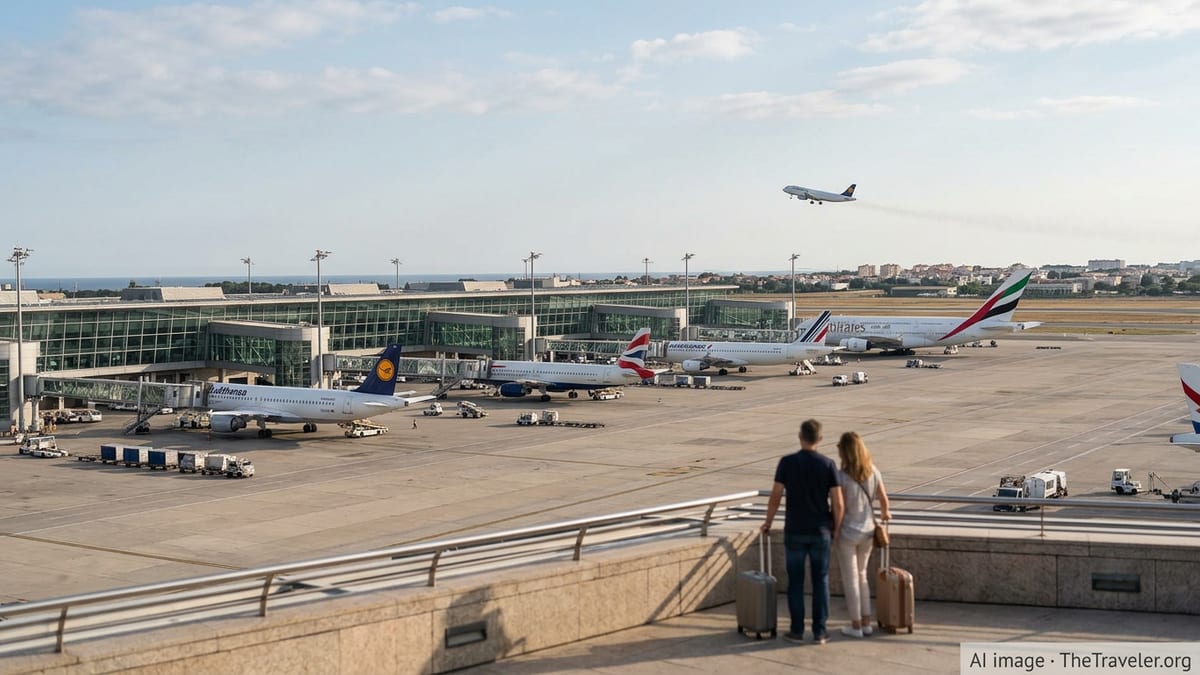
Shares of large European and Gulf carriers including Lufthansa, British Airways parent IAG, Air France KLM and Emirates have come under renewed pressure in early 2026 trading as jet fuel benchmarks trend higher after a relatively stable 2024. Market commentary across financial news outlets points to fuel as a key driver, with rising geopolitical tensions and refinery constraints feeding into the cost of aviation kerosene.
Publicly available financial disclosures show that fuel and emissions typically account for around a quarter to a third of full service airlines’ operating costs, leaving earnings highly sensitive to rapid swings in energy markets. Even when demand remains robust, investors tend to discount airline valuations when fuel costs rise faster than carriers can adjust capacity or pricing, leading to share price declines despite healthy load factors.
Lufthansa and Air France KLM have both highlighted fuel volatility and environmental charges in recent guidance, while IAG, which owns British Airways, continues to emphasize fleet renewal and efficiency measures to offset higher input costs. Emirates, heavily exposed to long haul services between Europe, the Gulf and Asia, is similarly affected by fuel trends given the length and energy intensity of its core routes.
Analysts tracking the sector note that hedging programs smooth some of the immediate shock, but higher forward prices ultimately filter through to income statements and, by extension, to investor sentiment. As a result, share price weakness is increasingly tied not only to demand indicators, but also to expectations about where jet fuel will settle over the coming summer season.
Higher Fuel Costs Feeding Into Fares to Italy and Spain
For travelers bound for Italy and Spain, the fuel surge is most visible in fares. Industry data and published analysis on airfare trends indicate that jet fuel remains a core component in ticket pricing, especially on long haul routes from North America, the Middle East and Asia into Europe. When underlying fuel benchmarks rise, full service airlines typically respond with surcharges or incremental fare increases on transcontinental and connecting services.
Recent reporting on fare adjustments shows European network carriers already signaling higher prices on select long haul itineraries, particularly in premium cabins. While some low cost competitors continue to advertise aggressive sale fares within Europe, the total cost of reaching Mediterranean gateways such as Rome, Milan, Barcelona and Madrid from intercontinental origins is edging higher, especially during peak travel months.
Dynamic pricing algorithms are amplifying the impact. Airlines now adjust fares in near real time based on load factors, booking curves and competitor activity. Rising fuel costs narrow the room for discounting, so routes into leisure destinations with historically strong demand see fewer deep promotions and a faster upward drift in average paid fares. This is especially evident on services operated or codeshared by Lufthansa, British Airways, Air France and Emirates via their main hubs.
Travel analysts suggest that while price sensitive travelers may still find options by flying midweek, connecting through secondary hubs or booking far in advance, the era of consistently cheap shoulder season flights to southern Europe appears to be under renewed pressure. At the same time, any further escalation in fuel prices could prompt additional surcharges ahead of the 2026 summer peak.
Tourism Demand in Italy and Spain Faces New Headwinds
Italy and Spain, two of Europe’s most tourism dependent economies, are particularly exposed to shifts in air connectivity and pricing. Tourism agencies and statistical offices in both countries have reported that international arrivals recovered strongly in 2024 and remained resilient through much of 2025, supported by pent up leisure demand and a renewed focus on cultural and coastal experiences.
However, higher flight costs introduce a new headwind just as growth appears to be normalizing. Travel industry commentary suggests that some long haul visitors from North America and parts of Asia are beginning to reconsider trip length or frequency, opting for fewer European vacations or combining multiple countries into a single, longer journey to justify rising airfare. This behavior change can reduce per destination spend, particularly in secondary cities and resort areas that rely on repeat visitors.
Tour operators selling package holidays to Spain’s Balearic and Canary Islands, as well as to Italian coastal regions, are also facing tighter margins as they negotiate with airlines for group allotments. When carriers raise base fares or cut back on seasonal capacity to protect profitability, packages become more expensive and less flexible. In response, some operators are shifting marketing toward higher spending segments or promoting shoulder season travel, where they can still secure relatively competitive air rates.
Domestic tourism partially offsets these effects, with Italians and Spaniards continuing to travel within their own countries, often by rail or car. Yet international arrivals remain critical for foreign exchange earnings and for the viability of many tourism businesses that depend on summer peaks. Any sustained increase in flight costs risks cooling the pace of expansion, particularly for long haul source markets.
Hotel Operators, Including Hilton, Navigate Rising Costs and Softer Bookings
The hotel sector across Italy and Spain, including major international chains such as Hilton, is closely monitoring the interaction between air travel costs and booking patterns. Publicly available results from global hotel groups over the past year have highlighted strong average daily rates in key European cities, but also growing sensitivity to macroeconomic conditions and travel affordability.
As flights become more expensive, some travelers are trimming accommodation budgets, trading down from upscale urban properties to midscale brands, short term rentals or secondary locations. This shift is evident in industry commentary pointing to slower growth in premium segments in certain Mediterranean destinations, even as overall occupancy remains relatively high during peak months.
Hotel owners and operators are simultaneously contending with their own input cost pressures, including energy, staffing and financing. Rising airline costs can compound these challenges by limiting the pool of long haul guests who typically stay longer and spend more on property. In response, international brands active in Italy and Spain are leaning more heavily on loyalty programs, targeted promotions and partnerships with tour operators to stabilize demand.
For global players like Hilton, diversified geographic footprints help offset localized softness, but performance in flagship Mediterranean markets remains strategically important. Any prolonged squeeze on airline capacity or spike in airfares into gateway cities such as Rome, Florence, Venice, Barcelona and Madrid could weigh on revenue per available room, particularly outside of major events and holiday periods.
Travelers Adjust Strategies Amid Uncertain Outlook
For individual travelers, the combination of airline stock volatility, higher fuel costs and shifting hotel dynamics is translating into a more complex planning environment. Consumer finance and travel advice columns increasingly recommend booking key summer flights earlier, favoring flexible fares where possible, and monitoring prices across multiple departure airports to capture occasional dips triggered by competition or schedule changes.
Italy and Spain are unlikely to lose their status as top European destinations, but travelers may respond to cost pressures by shortening stays, visiting fewer cities per trip, or choosing accommodations outside traditional tourist cores. This could disperse tourism benefits to smaller towns and emerging regions, even as headline destinations face more pronounced seasonality and price sensitivity.
Looking ahead to the remainder of 2026, the trajectory of jet fuel prices will be a critical variable. If energy markets stabilize or retreat, airlines such as Lufthansa, British Airways, Air France and Emirates may regain some share price momentum and ease off the most aggressive fare increases. If fuel continues to climb, however, the Mediterranean tourism ecosystem, from airports and airlines to hotels and local businesses, will need to navigate another phase of adjustment just as it seemed to be returning to pre pandemic patterns.