

More news on this day
Europe’s latest travel rush is unfolding not at beaches or city squares but at fuel pumps along its internal borders, as Dutch motorists join a growing wave of drivers criss-crossing into neighboring countries in search of cheaper petrol and diesel.
Get the latest news straight to your inbox!
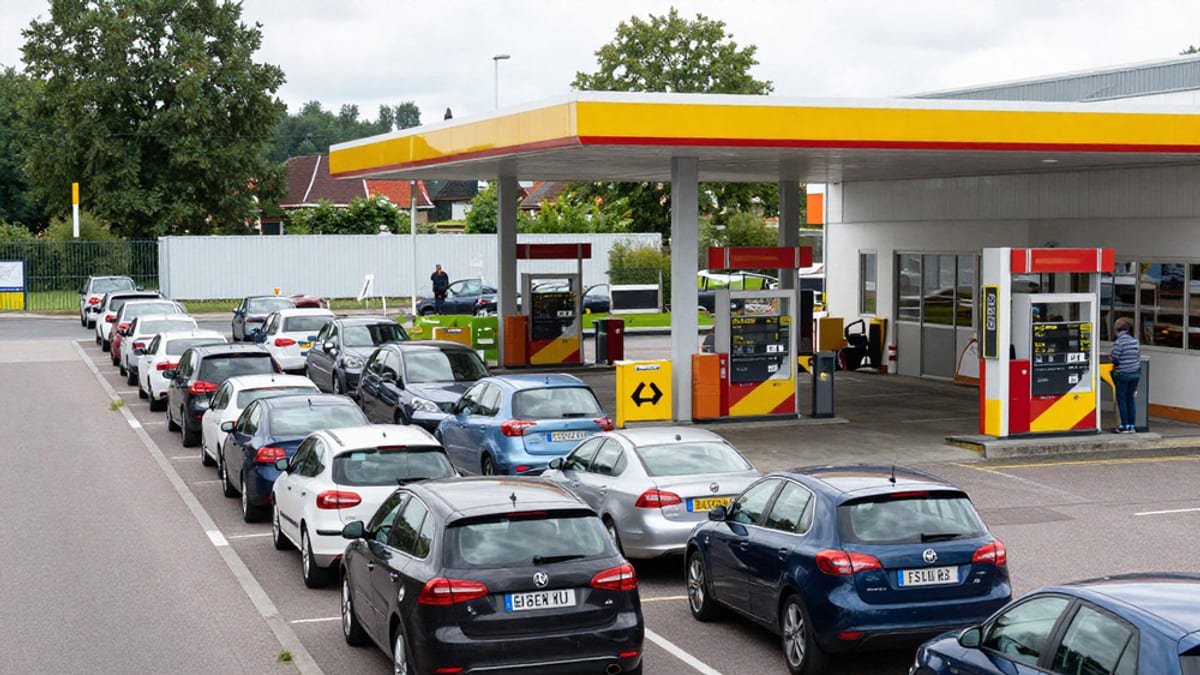
Image by Latest International / Global Travel News, Breaking World Travel News
Record Prices Push Dutch Motorists Over the Border
The Netherlands, already among Europe’s most expensive countries for fuel, has seen pump prices climb sharply in recent months. Publicly available data from the European Commission’s Weekly Oil Bulletin and independent price trackers show Dutch petrol averaging well above most EU peers in 2025 and early 2026, with diesel frequently surpassing 2.50 euros per liter in March as global oil benchmarks responded to instability in the Middle East and wider tensions involving Iran.
The price spike has made short cross-border detours suddenly attractive. Dutch press coverage in January and March 2026 described queues of cars at German and Belgian stations just beyond the frontier, as drivers sought to avoid higher excise duties at home. Reports indicate that some filling stations in the Dutch border regions have responded with loyalty schemes, bundled services and discounts, but many still struggle to match prices available a few kilometers away in Belgium or Germany.
Economic comparisons illustrate the attraction. Recent analyses of 2025 average retail fuel prices across Europe show Dutch petrol and diesel typically 10 to 20 euro cents per liter higher than in Belgium and several cents more than in Germany, primarily due to higher national taxes and levies. For households and small businesses with high mileage, that differential can translate into savings of 10 to 20 euros on a single full tank, enough to justify a detour for those living near the frontier.
The phenomenon is not confined to private cars. Coverage of the inland shipping and logistics sectors notes that Dutch barge and truck operators are increasingly planning refueling stops in neighboring countries, where commercial diesel excise rates and road-use charges can be lower. Industry-focused reports suggest that large vessels can save several thousand euros per refuel by taking advantage of cross-border price gaps, reinforcing the financial logic behind the shift.
Germany, Portugal and Spain Showcase a Wider European Pattern
The Dutch surge in fuel tourism is unfolding against a European backdrop in which cross-border refueling has become a structural feature of road transport economics. Earlier waves of price-driven travel emerged along the borders of Germany, Portugal and Spain, where uneven national tax regimes and volatile wholesale markets have encouraged drivers to cross into neighboring states whenever pump prices diverge.
In Germany, a central transit hub for European freight, long-distance truck operators routinely optimize routes to exploit price differences between the country and lower-cost neighbors such as Poland, the Czech Republic and Luxembourg. Analytical reports by transport organizations highlight that heavy goods vehicles, with ranges reaching up to 2,000 kilometers on a single tank, can be strategically fueled where diesel is cheapest, sometimes bypassing higher-priced markets almost entirely.
On Europe’s southwestern flank, border regions between Portugal and Spain have become established hot spots for fuel tourism. National tax policy and periodic discounts have, at different moments, made either side of the frontier more attractive. Media coverage from both countries has tracked a steady pattern of residents crossing to fill up, particularly in areas where daily commuting spans the border. Local businesses in fuel, retail and hospitality are reported to adapt quickly to these shifts, adjusting opening hours and ancillary services to capture passing trade.
Together, these experiences in Germany, Portugal and Spain form a template that now appears to be repeating in and around the Netherlands. As Dutch prices move further above the EU average, the same set of incentives that previously drove Iberian and central European fuel tourism is taking root in the Benelux and German borderlands.
Geopolitical Tensions and Tax Policy Intensify Price Gaps
The current surge in cross-border refueling is closely tied to a succession of geopolitical shocks that have rippled through global energy markets. Analysts note that Russia’s invasion of Ukraine in 2022 first sent European fuel costs sharply higher, particularly for diesel, while subsequent tensions in the Middle East and disruptions linked to Iran have kept crude prices elevated and volatile into 2026.
Business outlets and European energy monitors report that pump prices in Germany and the Netherlands have been especially sensitive to these swings, reflecting both their high base of fuel taxation and their dependence on refined product imports. In March 2026, some pan-European price comparisons pointed to Dutch and German petrol among the highest in the European Union, outpaced only by a handful of Nordic markets, even as incomes vary within the bloc.
National tax policy amplifies the impact of these external shocks. Comparative studies of excise duties and road-charging regimes for commercial diesel indicate that the Netherlands levies significantly higher duties than Belgium, and generally more than Germany, on fuel used in road freight. The result is a persistent price wedge at the pump, which widens further whenever crude prices spike. Consumer-facing analyses emphasize that in such periods, taxes constitute a particularly large share of the final price per liter in high-duty countries.
The political debate over whether to cut excise duties in response to geopolitical crises remains active in several European capitals. Some governments have introduced temporary tax reductions or rebates during past price spikes, while others have opted to preserve fuel levies to fund transport infrastructure and climate policies. For motorists, however, the immediate effect is simple: as long as national responses diverge, the incentive to refuel across the border remains strong.
Border Communities Feel the Strain and Opportunity
For communities along the Dutch borders with Belgium and Germany, the new wave of fuel tourism is reshaping daily life in subtle yet visible ways. Recent coverage from local and regional outlets describes early-morning and weekend traffic build-ups near popular cross-border routes, as motorists queue for cheaper fuel before heading back to the Netherlands.
Belgian stations close to the Dutch frontier have reported notable swings in turnover and staffing needs as demand fluctuates with each new round of price increases. When Dutch advisory prices leap higher, inbound traffic from the Netherlands tends to rise quickly, boosting sales not only of fuel but also of convenience goods and food. Conversely, when policy changes or currency moves narrow the price gap, these same businesses can see revenue fall back toward previous levels.
On the Dutch side, independent operators in border regions face intense competitive pressure. Industry commentary suggests that some are experimenting with loyalty points, bundled car-wash offers, expanded shop assortments and fast-charging services for electric vehicles to retain a share of local custom. Others increasingly focus on passing traffic that values convenience over price, particularly on major arterial routes where detours into Belgium or Germany would be impractical.
Local residents also weigh environmental and quality-of-life considerations. While cheaper fuel offers immediate relief for household budgets, increased cross-border traffic can add congestion and emissions to rural roads not designed for sustained surges of transit vehicles. Municipal planning documents and public discussions in several border municipalities now reference fuel tourism as a factor in road safety, parking, and retail zoning decisions.
A Test Case for Europe’s Energy and Mobility Transition
The expansion of fuel tourism into the Netherlands highlights broader questions about how Europe manages its transition away from fossil fuels while maintaining social and political support. Several European cities and countries, including Dutch municipalities, have set timelines to phase out conventional petrol and diesel vehicles, yet recent price shocks demonstrate that millions of drivers remain highly exposed to swings in fossil fuel markets.
Transport and climate analysts argue that sustained price differentials between neighboring countries can complicate efforts to steer consumers toward cleaner alternatives. When high national fuel taxes are not aligned with visible investments in public transport, cycling infrastructure or charging networks, drivers may view them primarily as a cost to be avoided, reinforcing cross-border refueling habits rather than encouraging a shift in behavior.
At the same time, the logistical sophistication underlying current fuel tourism practices may offer a glimpse of how future mobility patterns will adapt to economic signals. Haulage firms already optimize routes and refueling stops across multiple countries, and similar planning tools are spreading to private motorists through fuel-price comparison apps and digital navigation services. As electricity tariffs, hydrogen prices and road-usage fees evolve, comparable cross-border arbitrage could emerge in low- and zero-emission energy sources for transport.
For now, Europe’s fuel tourism surge underscores the resilience of internal borders in shaping everyday economic decisions, even in a largely borderless Schengen travel zone. With Dutch drivers now firmly part of this continent-wide refueling circuit, the service stations clustered around Europe’s frontier towns are likely to remain unexpected focal points of the region’s intertwined energy, tax and travel debates.