

More news on this day
As the Iran war sends shockwaves through global oil markets and pushes European pump prices sharply higher, cross-border fuel runs from Germany into Poland are surging, turning a once routine price difference into a full-blown wave of “petrol tourism.”
Get the latest news straight to your inbox!
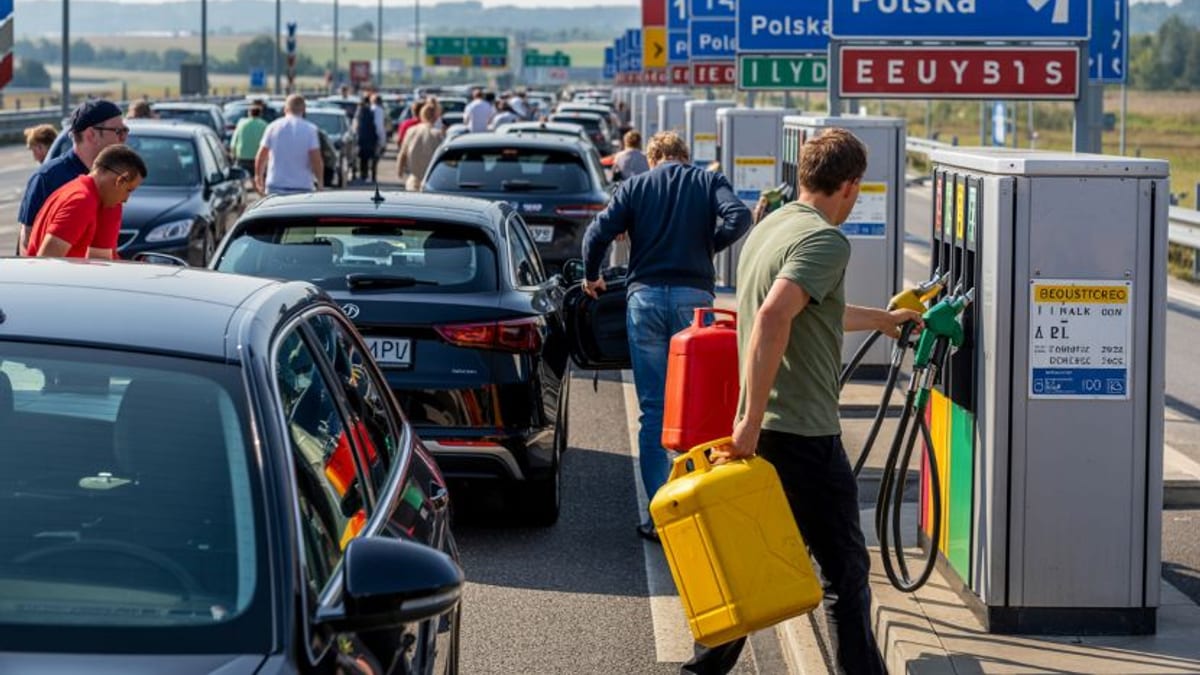
Image by Latest International / Global Travel News, Breaking World Travel News
Oil shock from Iran war hits European wallets
The latest conflict centered on Iran has triggered one of the most severe energy disruptions in decades, with Middle East shipping routes and key production facilities repeatedly targeted. Publicly available analyses describe a sharp jump in global oil benchmarks and natural gas contracts, with price swings outpacing some earlier crises.
European consumers are feeling the impact directly at filling stations. Reports indicate that petrol and diesel prices have climbed within weeks, reflecting both higher crude costs and renewed anxiety about long term supply security. In many EU countries, drivers are again confronting figures above 2 euros per liter for standard unleaded on motorway forecourts, reviving memories of the 2022 inflation spike.
Economic assessments highlight that the euro area’s largest economies, including Germany, are particularly exposed because of their dependence on imported energy. The European Central Bank has warned that the oil shock could prolong inflationary pressures even as growth slows, intensifying the squeeze on household budgets and travel expenses.
In response, European institutions are drawing on strategic reserves and urging governments to coordinate on storage and demand reduction. While such measures may soften some of the upward pressure, analysts caution that retail fuel prices will remain volatile for as long as the conflict disrupts trade flows through the Persian Gulf and the Strait of Hormuz.
Why German drivers are flocking to Polish pumps
The price gap between German and Polish filling stations is not new, but the current energy shock has widened it to striking levels. Data aggregators tracking retail fuel costs across Europe show that, on average, petrol in Poland is significantly cheaper per liter than in Germany once national taxes, duties, and distribution margins are factored in.
According to recent snapshots of European fuel prices, Polish Euro 95 gasoline has been trading well below comparable German levels in early 2026, even after the latest war related spike. This differential reflects Poland’s lower excise taxes and a more aggressive use of state owned refiners’ pricing policies to shield domestic consumers, alongside currency and wholesale sourcing factors.
With German forecourt prices jumping in the wake of the Iran war, this gap has become large enough to justify cross-border trips for many motorists in border regions. Published coverage from Polish and German media describes long lines of German registered cars at stations just across the frontier, with some outlets noting that a full tank plus canisters can yield savings of 20 to 30 euros per visit for larger vehicles.
The phenomenon is particularly visible in western Pomerania and along the Oder and Neisse corridors, where short bridge crossings or ferry links make it easy to slip into Poland, refuel, stock up at supermarkets, and return the same day. For many households living in these regions, such cross-border routines are rapidly becoming part of their weekly cost saving strategy.
Local strains and policy debates on the Polish side
The sharp increase in petrol tourism has created visible strains in some Polish border communities. Local media reports from towns such as Świnoujście and smaller villages nearby describe episodes where stations temporarily ran out of fuel after days of heavy demand from foreign license plates, prompting concerns among residents about availability for daily commuting.
Polish commentators note that operators face a balancing act between keeping prices attractive and managing logistics. Higher volume can be good for business, but sudden surges strain storage capacity and delivery schedules, especially when upstream supply chains are already unsettled by global market volatility and refinery adjustments to the Iran war.
The situation has fed into a broader political and economic debate in Poland over how aggressively to shield domestic fuel prices. Analysts point out that sustained discounts compared with neighboring states effectively subsidize non resident motorists, while Polish taxpayers underwrite part of the cost through state energy firms and budget measures. Some policy experts are calling for closer regional coordination to avoid distortions that encourage large scale arbitrage across borders.
At the same time, Polish authorities are wary of abrupt price hikes that could erode purchasing power at home. Public discussions reflect a tension between maintaining social stability through lower fuel prices and allowing market forces to pass on more of the global shock to end users.
How travelers can navigate petrol tourism and save money
For individual travelers, the surge in cross-border fuel runs highlights how strategic planning can soften the impact of sudden price spikes. Motorists heading from Germany into Poland are increasingly timing refueling stops to coincide with the cheapest border area stations, often checking up to date pump prices through widely used comparison tools and navigation apps before departure.
Travel specialists recommend that drivers calculate the full cost of a detour, including distance, traffic, and potential waiting times at busy stations, against the expected savings from filling up abroad. In practice, the economics tend to favor those who already live near the border or are planning trips that naturally pass through Polish territory, such as journeys toward the Baltic coast or Central and Eastern Europe.
Beyond fuel choice, travelers are also adjusting driving behavior to stretch each liter further. Road safety organizations in Europe continue to promote eco driving techniques such as moderating speed on motorways, maintaining steady acceleration, and ensuring proper tire inflation. These approaches, while modest individually, can yield notable savings over long distances when fuel prices are elevated by geopolitical shocks.
Some tourism operators along the frontier are beginning to package the trend into broader cross-border experiences, combining shopping, wellness, or cultural stops with refueling runs. For budget conscious travelers, this can transform a necessary cost cutting measure into part of a short break, provided that they remain attentive to local regulations on carrying additional fuel and the documentation required when moving goods across EU internal borders.
Risks, regulations and what to watch next
The rapid growth of petrol tourism between Germany and Poland also carries risks that travelers must consider. Safety agencies warn that transporting excessive amounts of fuel in portable containers increases the danger of fire and environmental damage in the event of an accident, and most European countries limit how much can be carried legally in standard passenger vehicles.
Insurance policies may also impose restrictions or conditions related to fuel transport and cross-border use of vehicles. Travelers are therefore advised, according to consumer guidance circulated in both countries, to verify coverage terms and avoid overfilling tanks or storing containers in passenger compartments.
Another consideration is the possibility of policy shifts if the Iran war and the associated fuel crisis persist. Governments could introduce temporary tax adjustments, targeted subsidies, or even quantity controls at border stations in response to domestic pressure. Analysts monitoring the situation suggest that changes to excise regimes or strategic stock policies in either Germany or Poland could narrow the price gap and reduce the incentive for long distance fuel runs.
For now, however, the combination of global energy turmoil and longstanding regional price differences is keeping cross-border fuel tourism very much alive. As the conflict in Iran continues to shape energy markets, travelers on the Germany–Poland frontier are likely to remain on the front line of Europe’s search for cheaper kilometers.